
DbcultAccessing Vault...
Director's Spotlight
Senior Film Conservator
Director's Spotlight: United States
A Deep Dive into the 1915 Vision of Lois Weber
Peeling back the layers of Lois Weber's It's No Laughing Matter exposes the collaborative alchemy between Lois Weber and the 1915 creative team. Anchored by a narrative that is both personal and universal, it reinforces the idea that cinema is a medium of infinite possibilities.
In It's No Laughing Matter, Lois Weber pushes the boundaries of conventional narrative. The film's unique approach to its subject matter has sparked endless debates and interpretations among cinephiles and critics alike.
While deeply rooted in United States, It's No Laughing Matter has achieved a global reach, influencing directors from various backgrounds. Its ability to translate cult tropes into a universal cinematic language is why it remains a cult staple decades after its 1915 release.
| Cinematography | Static |
| Soundtrack | Orchestral |
| Editing | Invisible |
| Art Direction | Kitsch |
Visualizing the convergence of Lois Weber's style and the core cult narrative.
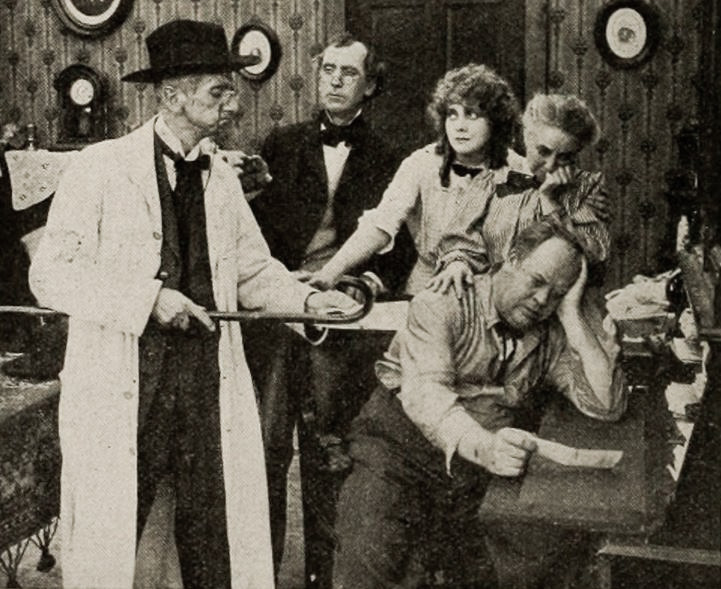
Hi Judd, poet, postmaster and philosopher, is the sunshine of the village, a veritable doctor of happiness. His right arm the little world of the village leans on, the kind words he scatters broadcast reap their harvest of love for the old postmaster and the verses he writes (sometimes when he should be working) proclaims him the wit of the village. And because of the verse writing Mrs. Judd is often discouraged. Hi confides in his daughter, Bess, that he often stands in awe of Mrs. Judd when she catches him pencil in hand, with the woodpile untouched and the chores not done. But Bess is consoling and when Hi is not around she makes a collection of the verses and sends them on to a great newspaper. Theirs is a peaceful life that must have its dramatic climax and it all descends upon them at once. Jim Skinner, an unscrupulous, grasping old miser, holds the mortgage on the house and also has designs upon Hi's position as postmaster. Then the bank fails and shadows hang low. In the meantime drama is stirring within their home. Bess who had thought she cared for Hal, the station master is under the spell of Sam who has come from the city to be the new ticket agent. Hi, dubious of his character and regretting his daughter's change of heart, before it is too late, finds a picture of Sam, his wife and their baby. Hi recognizes in the wife, Belle, the long-missing daughter of Mother Wilkins, a widow of the village whose home has burned and who would have suffered privation had it not been for the generosity of Hi. He sends for Belle, making her believe the money and message come from Sam and when Sam is confronted with the wife and baby he sees there is nothing to be done but face the unexpected situation. The mortgage is due. Heartbroken, they are preparing to leave the little home when word comes from the newspaper: "Verses accepted, send them as fast as you can write them." Thus ends the story. Hi, with his $500 check from the newspaper pays off the mortgage, the future holds its promise; Mother Wilkins is happy with her daughter and the little baby, and Hal and Bess are engaged to be married.
Decades after its release, It's No Laughing Matter remains a vital piece of the cinematic puzzle. Its influence can be seen in countless modern works, solidifying Lois Weber's status as a master of the craft in United States and beyond.