
DbcultAccessing Vault...
Director's Spotlight
Senior Film Conservator
Director's Spotlight: United States
A Deep Dive into the 1927 Vision of Lois Weber
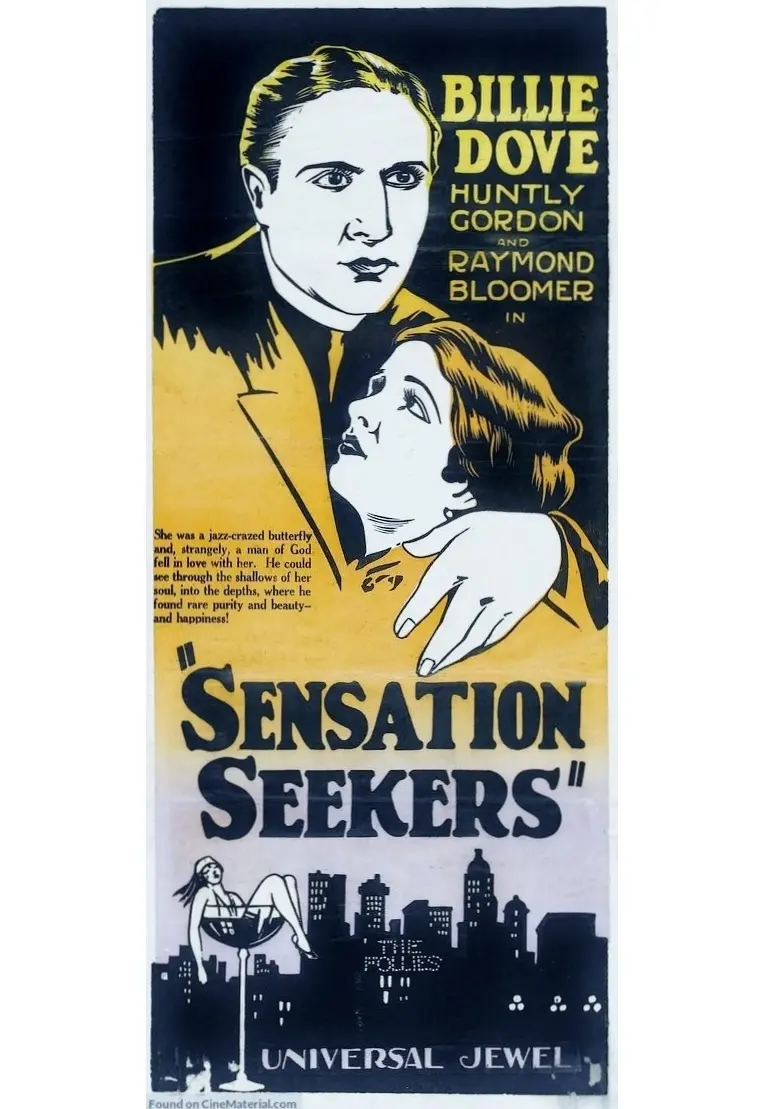
Analyzing Sensation Seekers (1927) requires a deep dive into the defining moment in Romance history that Lois Weber helped create. Defining a new era of United States artistic expression, it transcends regional boundaries to tell a universal story.

In Sensation Seekers, Lois Weber pushes the boundaries of conventional narrative. The film's unique approach to its subject matter has sparked endless debates and interpretations among cinephiles and critics alike.
| Cinematography | High-Contrast |
| Soundtrack | Orchestral |
| Editing | Invisible |
| Art Direction | Kitsch |
Visualizing the convergence of Lois Weber's style and the core Romance narrative.
Ray Sturgis, leader of the fashionable Long Island jazz set, is engaged to "Egypt" Hagen, an up-to-date girl in every respect. Egypt is arrested at a roadhouse raid, and at her mother's bidding, the Reverend Norman Lodge arranges for her freedom. At a fancy-dress ball, when Ray wears a costume made of newspaper headlines concerning her arrest, Egypt is offended. Seen constantly in the company of Reverend Lodge, her reputation causes church people to take up the matter with the bishop. Leaving the country club, Egypt goes to the Lodge home and hides behind the door when the bishop arrives; Reverend Lodge wants to marry her, and they admit their love; but humiliation causes her to leave with Sturgis that night. Their yacht is wrecked, but Lodge and the bishop follow and rescue Egypt, though Sturgis is drowned. The bishop, realizing the depth of their love, consents to marry them.
Decades after its release, Sensation Seekers remains a vital piece of the cinematic puzzle. Its influence can be seen in countless modern works, solidifying Lois Weber's status as a master of the craft in United States and beyond.