
DbcultAccessing Vault...
Director's Spotlight
Senior Film Conservator
Director's Spotlight: United States
A Deep Dive into the 1919 Vision of Louis Chaudet
Exploring the cult underpinnings of The Love Call leads us to the uncompromising vision of Louis Chaudet that defines this cult masterpiece. Melding the raw energy of United States with a global cult appeal, it echoes the profound changes occurring in United States during that era.
In The Love Call, Louis Chaudet pushes the boundaries of conventional narrative. The film's unique approach to its subject matter has sparked endless debates and interpretations among cinephiles and critics alike.
The visual language of The Love Call is defined by its use of shadows and framing, a hallmark of Louis Chaudet's style. By utilizing a 1919-era palette, the film creates an immersive experience that perfectly complements its cult themes.
| Cinematography | Deep Focus |
| Soundtrack | Synth-Heavy |
| Editing | Rhythmic |
| Art Direction | Naturalist |
Visualizing the convergence of Louis Chaudet's style and the core cult narrative.
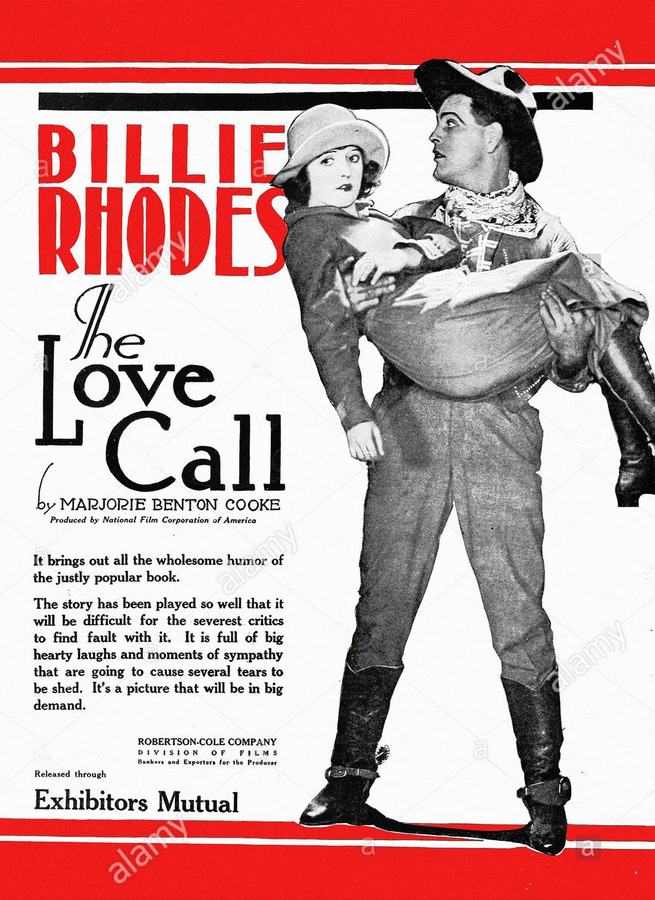
Kid Allen, the daughter of Mate Allen, a drunken ex-sailor, waits every night to take Mate home from a saloon. After Mate beats up saloon owner O'Keefe for trying to kiss Kid, O'Keefe kills Mate. Kid shoots and kills O'Keefe, and then leaves on a pony to get "a education," which her father wanted her to have. When she falls and sprains an ankle, Joe Emory, a sheep herder, nurses her and they fall in love, but she continues her journey. At a university town, cow puncher Nick Horton escorts her to the school, where he fights the president and some students, after being told that Kid is not ready to enter. The president stops Kid and Nick from being arrested, and puts Kid in a boarding school, but after she learns that school will last for seven years, she returns to Joe. As they kiss, they fade into a statue of Cupid embracing Psyche.
Decades after its release, The Love Call remains a vital piece of the cinematic puzzle. Its influence can be seen in countless modern works, solidifying Louis Chaudet's status as a master of the craft in United States and beyond.