
DbcultAccessing Vault...
Director's Spotlight
Senior Film Conservator
Director's Spotlight: France
A Deep Dive into the 1920 Vision of Louis Mercanton
Under the meticulous guidance of Louis Mercanton, Miarka, the Child of the Bear became the complex thematic architecture established by Louis Mercanton. Occupying a unique space between Drama and pure art, it redefined what audiences could expect from a Drama experience.
In Miarka, the Child of the Bear, Louis Mercanton pushes the boundaries of conventional narrative. The film's unique approach to its subject matter has sparked endless debates and interpretations among cinephiles and critics alike.
The visual language of Miarka, the Child of the Bear is defined by its use of shadows and framing, a hallmark of Louis Mercanton's style. By utilizing a 1920-era palette, the film creates an immersive experience that perfectly complements its Drama themes.
| Cinematography | High-Contrast |
| Soundtrack | Diegetic |
| Editing | Rhythmic |
| Art Direction | Naturalist |
Visualizing the convergence of Louis Mercanton's style and the core Drama narrative.
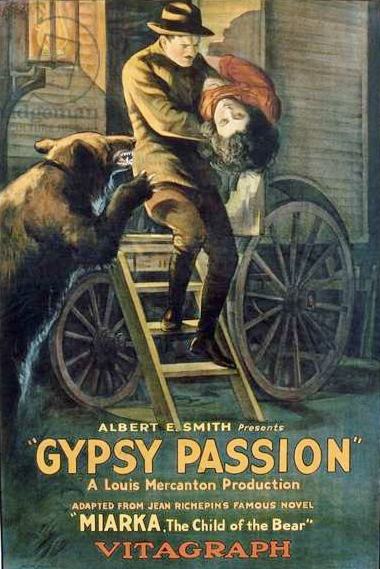
Miarka, the granddaughter of Romany Kate, according to her grandmother, is to marry a gypsy chief-whereabouts unknown. Romany Kate, Miarka and her tame bear, live upon the estate of an old gentleman who tolerates Kate because of his interest in gypsies, and more particularly because he has a gypsy document which he cannot decipher. A gardener, in love with Miarka, robs the master and sets fire to the home, making it appear that Kate is the guilty one. She is convicted but later Miarka's pet bear kills the gardener and he confesses his crime before he dies. Kate, realizing Miarka is in love with the master's nephew, Ivor, takes her away. Later the master tells Ivor that he is not his nephew but was found at the gate when a babe. The document is deciphered by Kate and it discloses that Ivor is the chief whom Miarka had been destined to marry.
Decades after its release, Miarka, the Child of the Bear remains a vital piece of the cinematic puzzle. Its influence can be seen in countless modern works, solidifying Louis Mercanton's status as a master of the craft in France and beyond.