
DbcultAccessing Vault...
Director's Spotlight
Senior Film Conservator
Director's Spotlight: United States
A Deep Dive into the 1917 Vision of Lynn Reynolds
Analyzing Mutiny (1917) requires a deep dive into the unique directorial voice that Lynn Reynolds brought to the screen. By challenging the status quo of 1917 cinema, it continues to spark endless debates among critics and cinephiles alike.
In Mutiny, Lynn Reynolds pushes the boundaries of conventional narrative. The film's unique approach to its subject matter has sparked endless debates and interpretations among cinephiles and critics alike.

In this work, Lynn Reynolds explores the intersection of cult and United States cultural identity. The meticulous attention to detail suggests a deep-seated commitment to pushing the boundaries of the medium, ensuring that Mutiny remains a relevant topic of study for cult enthusiasts.
| Cinematography | Noir-Inspired |
| Soundtrack | Minimalist |
| Editing | Slow-Burn |
| Art Direction | Brutalist |
Visualizing the convergence of Lynn Reynolds's style and the core cult narrative.
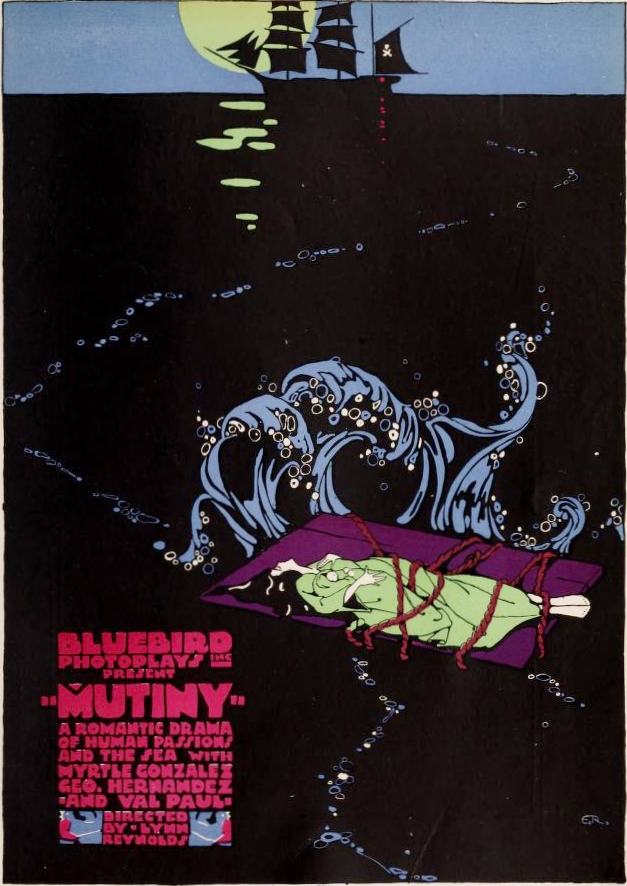
Aaron Whitaker is a seafaring man, owner of the sailing ship Alden Besse. He has promised Jacob Babcock, his first mate, that his daughter Esther shall become Babcock's wife. But Esther is in love with Caleb Tilden, her childhood sweetheart, and her grandfather, in sympathetic interest, advises her to marry Caleb and run the chance of gaining her father's forgiveness. The Alden Besse is at sea when Esther's marriage to Tilden takes place. At about the same time Grandfather Whitaker dies. Jacob Babcock has remained ashore for the purpose of marrying Esther, and when the Alden Besse returns and her skipper finds that his daughter has not married Babcock, his anger is intense. Accidentally he discovers, in Esther's sewing basket, a baby's stocking, and divines the truth. He compels Esther to board the Alden Besse and locks her in a cabin. Then he seeks out Caleb Tilden, and in a fight believes he has killed him. Tilden, however, has simply been stunned and when Whitaker throws him from the wharf his sudden immersion in the cold water revives him and he manages to crawl into a string-piece under the dock, At that moment the Alden Besse is sailing, and Tilden watches her with frenzied interest. He sees Esther as she runs to the stern and attempts to jump overboard. Esther's father drags her back to her cabin and securely imprisons her there. The cook of the craft, Eben Wiggs, is the only man on board who has any sympathy for her. The cook cares for her, even when her child is born. Babcock is sailing on the Alden Besse, and when Whitaker tries to compel his daughter to marry the mate, Esther declares that she will throw herself into the sea before allowing her father to conclude the marriage ceremony. Whitaker, in disgust, abandons his purpose. Later the seamen join in mutiny and kill Whitaker, their leader being Jacob Babcock. In the meantime, Tilden has tried to come upon the Alden Besse by shipping as a sailor in a craft that sailed the same sea the Besse usually did, and has found her lying in Panama Bay. When he attempts to board the Besse, Captain Whitaker thinks he sees the ghost of the man he believes he has killed, and drives Tilden from the ship. Tilden returns home and waits for the return of the Alden Besse. The mutiny has broken out as the ship is approaching her home port. There is a fierce storm approaching at the time, and when it breaks the Besse is wrecked. Tilden heads the villagers who go to the rescue, and is the one who wades into the water and secures a raft upon which Esther and her baby have been lashed by the cook. The reunion follows and the final cruise of the Alden Besse becomes tradition.
Decades after its release, Mutiny remains a vital piece of the cinematic puzzle. Its influence can be seen in countless modern works, solidifying Lynn Reynolds's status as a master of the craft in United States and beyond.