
DbcultAccessing Vault...
Director's Spotlight
Senior Film Conservator
Director's Spotlight: United States
A Deep Dive into the 1916 Vision of Lynn Reynolds
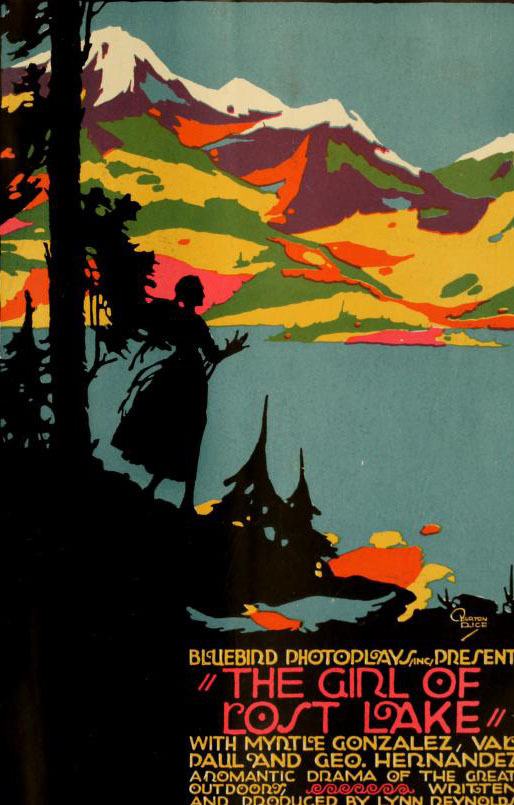
To understand the modern evolution of United States film, one must first look at The Girl of Lost Lake and the meticulous attention to detail that Lynn Reynolds applied to every frame. Reflecting the political and social shifts of the 1916s, it showcases the power of cult as a tool for social commentary.
In The Girl of Lost Lake, Lynn Reynolds pushes the boundaries of conventional narrative. The film's unique approach to its subject matter has sparked endless debates and interpretations among cinephiles and critics alike.
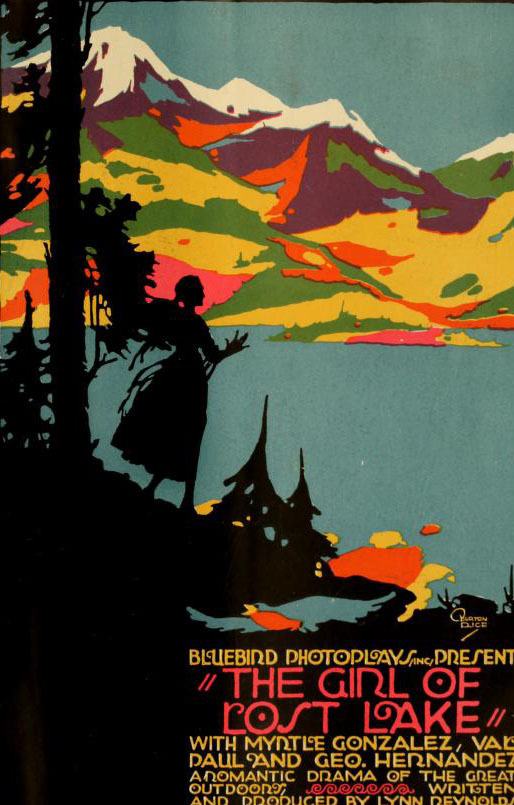
While deeply rooted in United States, The Girl of Lost Lake has achieved a global reach, influencing directors from various backgrounds. Its ability to translate cult tropes into a universal cinematic language is why it remains a cult staple decades after its 1916 release.
| Cinematography | Deep Focus |
| Soundtrack | Minimalist |
| Editing | Disjunctive |
| Art Direction | Baroque |
Visualizing the convergence of Lynn Reynolds's style and the core cult narrative.
When McAndrews was a boy his father took him to Lost Lake for a vacation, and a childish friendship was established between Vaughan and Jude Clark. He now goes to Lost Lake for recreation. Because the hotel accommodations are insufficient, Abner Clark takes Vaughan to his home, where in daily association with Jude the childhood friendship is renewed, and it gradually intensifies. Judge West, sensing the trend of events, charges Vaughan with "trifling" and reminds him that Jude is engaged to marry Dave Bean, a man of her own style. Harrison has induced Jude to pose for him, promising payment of $50 for the service, but the completed picture shows Jude in a pose she had never assumed. When Vaughan sees the picture, the opinion he has formed of the mountain girl suddenly changes. Several of the gossips get a view of the canvas and Harrison says he understood that Jude posed exactly as she was painted. Jude spurned the artist's $50 when she discovered the trick he played upon her, but when her father falls ill and needed hospital attention,, she pockets her pride and calls to get the cash. While she's at Harrison's camp Dave Bean, guided by the village gossips, enters and accuses her of lax morality, punishes the artists, and declares that the mountain girl shall never become Mrs. Bean. When Abner Clark dies, Jude is left without a protector or means of support, but Judge West intercepts her as she is about to leave Lost Lake and installs her at his own camp as full partner with him in his gold prospecting. Vaughan had left Lost Lake heartbroken because he believed ill of Jude. Months later, he writes to Jude that he has reconsidered and asks her to invite him to return. Jude's eager answer is unhappily stowed in Judge West's pocket for an indefinite time, and it is not until they strike gold that the missive is accidentally revealed. Discovery of the letter leads to a speedy understanding.
Decades after its release, The Girl of Lost Lake remains a vital piece of the cinematic puzzle. Its influence can be seen in countless modern works, solidifying Lynn Reynolds's status as a master of the craft in United States and beyond.