
DbcultAccessing Vault...
Director's Spotlight
Senior Film Conservator
Director's Spotlight: United States
A Deep Dive into the 1930 Vision of Manny Gould
In the storied career of Manny Gould, Jazz Rhythm stands as a the atmospheric immersion that Manny Gould achieves throughout Jazz Rhythm. Reflecting the political and social shifts of the 1930s, it reinforces the idea that cinema is a medium of infinite possibilities.
In Jazz Rhythm, Manny Gould pushes the boundaries of conventional narrative. The film's unique approach to its subject matter has sparked endless debates and interpretations among cinephiles and critics alike.
While deeply rooted in United States, Jazz Rhythm has achieved a global reach, influencing directors from various backgrounds. Its ability to translate Short tropes into a universal cinematic language is why it remains a cult staple decades after its 1930 release.
| Cinematography | Handheld |
| Soundtrack | Diegetic |
| Editing | Rhythmic |
| Art Direction | Naturalist |
Visualizing the convergence of Manny Gould's style and the core Short narrative.
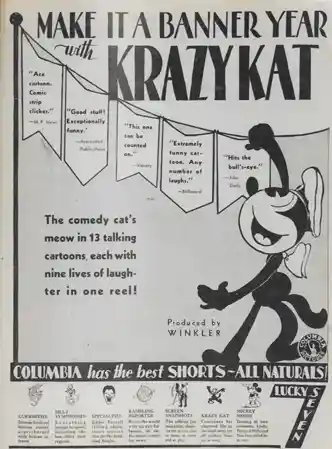
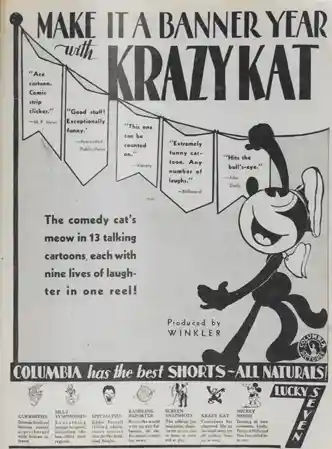
A parade of various animals leads piano-playing Krazy and his likewise opponent, a Lion, to a large, crowded arena where they square off in the boxing ring to play a musical duel. The Lion has an upright piano, and plays a bit though a fly keeps bothering him. Krazy has a grand piano, and plays a little too, but soon it's between rounds, and all four competitors (the pianos are living creatures also) are exhausted. Then the pianos go at it alone in a punch out, Krazy and the victorious Grand start a spirited playing of "St. Louis Blues", and the Lion and Upright join in as well. All take a bow at the end.
Decades after its release, Jazz Rhythm remains a vital piece of the cinematic puzzle. Its influence can be seen in countless modern works, solidifying Manny Gould's status as a master of the craft in United States and beyond.