
DbcultAccessing Vault...
Director's Spotlight
Senior Film Conservator
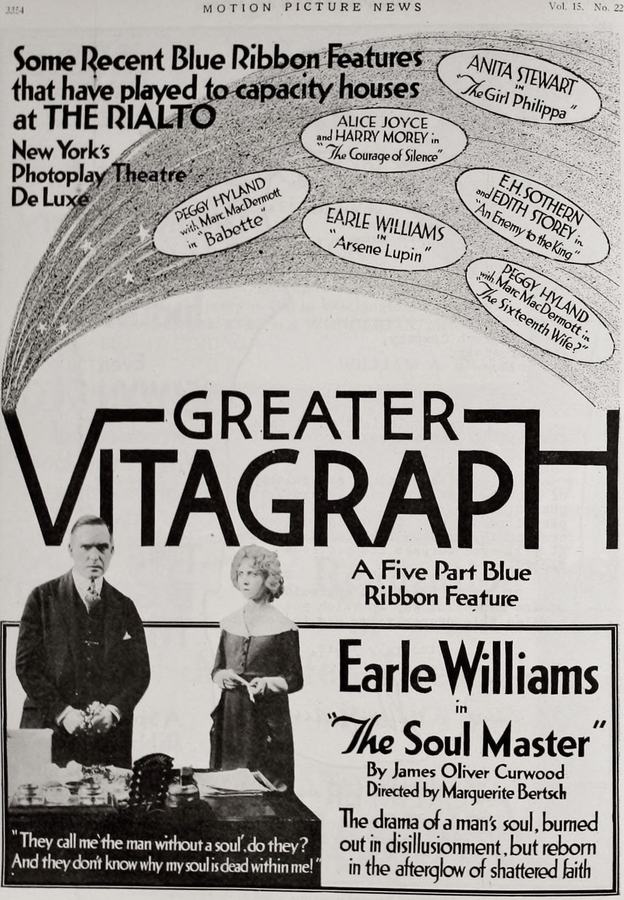
Director's Spotlight: United States
A Deep Dive into the 1917 Vision of Marguerite Bertsch
The brilliance of The Soul Master (1917) is inseparable from the visionary mind of its creator, Marguerite Bertsch. Serving as a mirror to the anxieties of a changing world, it persists as a haunting reminder of our own cinematic history.
In The Soul Master, Marguerite Bertsch pushes the boundaries of conventional narrative. The film's unique approach to its subject matter has sparked endless debates and interpretations among cinephiles and critics alike.
While deeply rooted in United States, The Soul Master has achieved a global reach, influencing directors from various backgrounds. Its ability to translate cult tropes into a universal cinematic language is why it remains a cult staple decades after its 1917 release.
| Cinematography | Noir-Inspired |
| Soundtrack | Minimalist |
| Editing | Slow-Burn |
| Art Direction | Brutalist |
Visualizing the convergence of Marguerite Bertsch's style and the core cult narrative.
After his wife Arline takes their baby daughter Ruth and elopes with her old sweetheart, Robert Travers loses all faith in women. Years later, Travers, now known as the man without a soul, is the owner of a chain of department stores in which young Ruth Carroll is employed as a ribbon clerk. Finding himself strangely attracted to the girl, he takes a fatherly interest in her and offers Ruth a position in his office. This causes Laura Wilson, who has designs on Travers, to become jealous. When Travers, alarmed that he cares so much for Ruth, sends her back to the ribbon counter, Laura takes advantage of the situation and offers the girl a job as her companion. The girl leaves Travers a note of thanks and Travers, suspicious, follows her to Laura's, arriving in time to save her from the advances of the lecherous Monty Fitzburgh. Travers then notices a framed picture of Ruth and Arline and realizes that the ribbon clerk is his own daughter.
Decades after its release, The Soul Master remains a vital piece of the cinematic puzzle. Its influence can be seen in countless modern works, solidifying Marguerite Bertsch's status as a master of the craft in United States and beyond.