
DbcultAccessing Vault...
Director's Spotlight
Senior Film Conservator
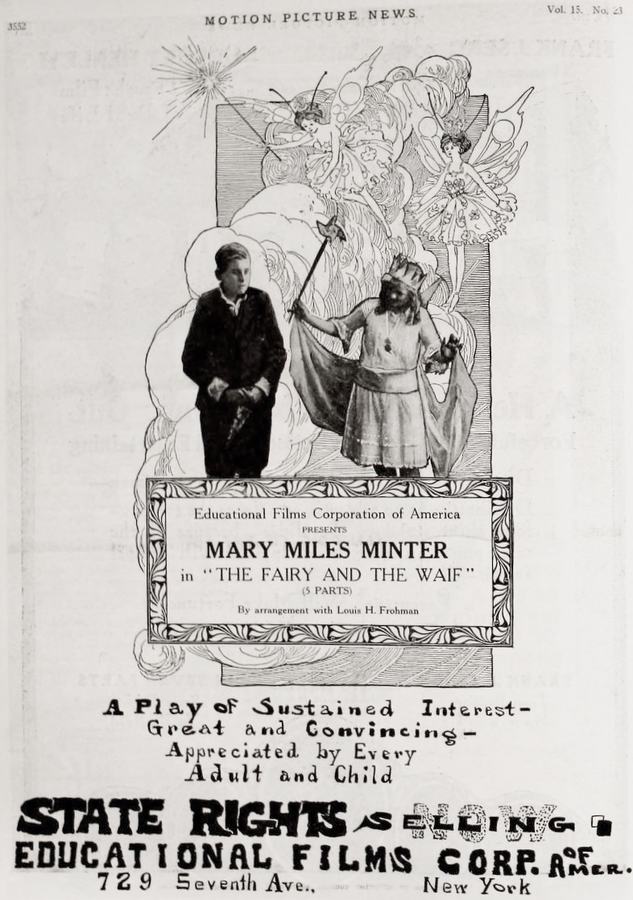
Director's Spotlight: United States
A Deep Dive into the 1915 Vision of Marie Hubert Frohman
The 1915 release of The Fairy and the Waif marked a significant moment for the stylistic boundaries pushed by Marie Hubert Frohman during the production. In the context of United States's rich cinematic history, it invites us to question our own perceptions of cult narratives.
In The Fairy and the Waif, Marie Hubert Frohman pushes the boundaries of conventional narrative. The film's unique approach to its subject matter has sparked endless debates and interpretations among cinephiles and critics alike.
To fully appreciate The Fairy and the Waif, one must consider the cinematic climate of 1915. During this period, United States was undergoing significant artistic shifts, and Marie Hubert Frohman was at the forefront of this cult movement, often challenging established norms.
| Cinematography | Static |
| Soundtrack | Synth-Heavy |
| Editing | Rhythmic |
| Art Direction | Naturalist |
Visualizing the convergence of Marie Hubert Frohman's style and the core cult narrative.
Major Drayton, an Englishman living in America with his daughter Viola, goes to England on business leaving his attorney Nevinson to look after Viola. When war is declared, Drayton joins his regiment and sends Nevinson $30,000 to invest for Viola. After learning that Drayton has been killed, the Nevinsons lose the money in speculation and must take in boarders. Viola, who dreams of being a fairy on the stage, runs away from the drudgery and harsh treatment and joins the chorus of a musical comedy, but again she is treated brutally. Terrified when, dressed as a fairy she is lifted into a cloud, she runs away and meets a waif sleeping in a barrel; the waif thinks that Viola is a real fairy and saves her from freezing. When word arrives that Drayton is alive, the Nevinsons offer a reward for Viola's recovery. After a policeman finds the children, Mrs. Nevinson sells her possessions to repay Drayton, who returns to raise Viola and the waif.
Decades after its release, The Fairy and the Waif remains a vital piece of the cinematic puzzle. Its influence can be seen in countless modern works, solidifying Marie Hubert Frohman's status as a master of the craft in United States and beyond.