
DbcultAccessing Vault...
Director's Spotlight
Senior Film Conservator
Director's Spotlight: United States
A Deep Dive into the 1925 Vision of Mark Goldaine
Analyzing Tin Hoss (1925) requires a deep dive into the unique directorial voice that Mark Goldaine brought to the screen. By challenging the status quo of 1925 cinema, it continues to spark endless debates among critics and cinephiles alike.
In Tin Hoss, Mark Goldaine pushes the boundaries of conventional narrative. The film's unique approach to its subject matter has sparked endless debates and interpretations among cinephiles and critics alike.
The visual language of Tin Hoss is defined by its use of shadows and framing, a hallmark of Mark Goldaine's style. By utilizing a 1925-era palette, the film creates an immersive experience that perfectly complements its Short themes.
| Cinematography | Static |
| Soundtrack | Minimalist |
| Editing | Disjunctive |
| Art Direction | Baroque |
Visualizing the convergence of Mark Goldaine's style and the core Short narrative.
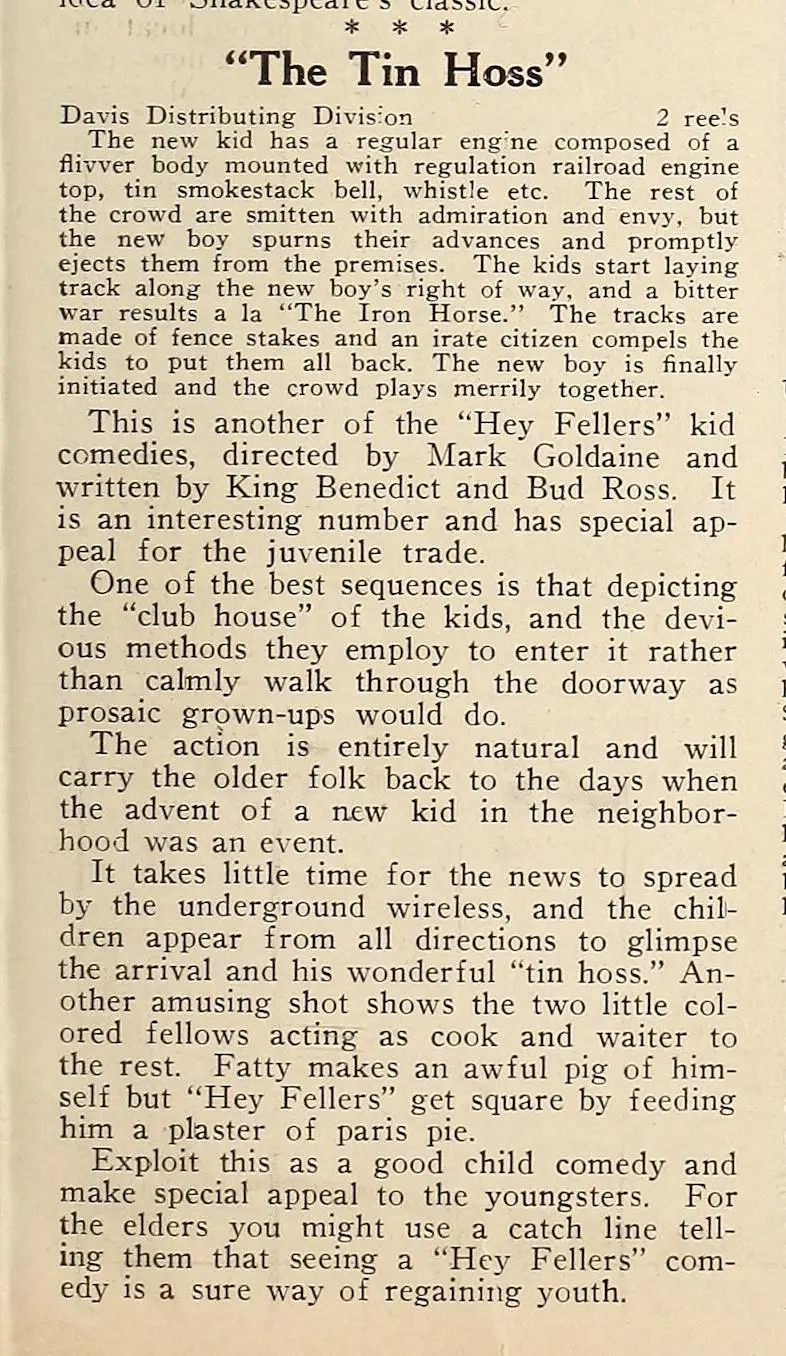
A neighborhood kids' club stretching across races and classes (but no girls allowed) hears "President" Denny's summoning bell and tumbles into the top-secret clubhouse for their latest round of (mis-)adventures. This time they get into hot water including Plaster of Paris ingestion, invading females and the attempted rehabilitation of a broken down old jalopy. Eventually they stir such havoc that the police, not to mention a lot of angry mothers, come a-running. Begun in 1922, Hal Roach's "Our Gang" comedies, featuring multiracial children's antics, were such a hit that they inspired blatant imitations from other producers. This was the last of several such "Hey Fellas!" two-reelers created by fledgling First Division Pictures, which would soon turn from producing movies to distributing them regionally (primarily western and exploitation movies) for another decade. - Dennis Harvey
Decades after its release, Tin Hoss remains a vital piece of the cinematic puzzle. Its influence can be seen in countless modern works, solidifying Mark Goldaine's status as a master of the craft in United States and beyond.