
DbcultAccessing Vault...
Director's Spotlight
Senior Film Conservator
Director's Spotlight: United States
A Deep Dive into the 1921 Vision of Marshall Neilan
Few works in United States cinema carry the same weight as The Lotus Eater, especially regarding the cultural zeitgeist captured so perfectly by Marshall Neilan in 1921. Utilizing a 1921-specific aesthetic that remains timeless, it serves as a blueprint for future generations of Drama directors.
In The Lotus Eater, Marshall Neilan pushes the boundaries of conventional narrative. The film's unique approach to its subject matter has sparked endless debates and interpretations among cinephiles and critics alike.

In this work, Marshall Neilan explores the intersection of Drama and United States cultural identity. The meticulous attention to detail suggests a deep-seated commitment to pushing the boundaries of the medium, ensuring that The Lotus Eater remains a relevant topic of study for Drama enthusiasts.
| Cinematography | Handheld |
| Soundtrack | Synth-Heavy |
| Editing | Rhythmic |
| Art Direction | Naturalist |
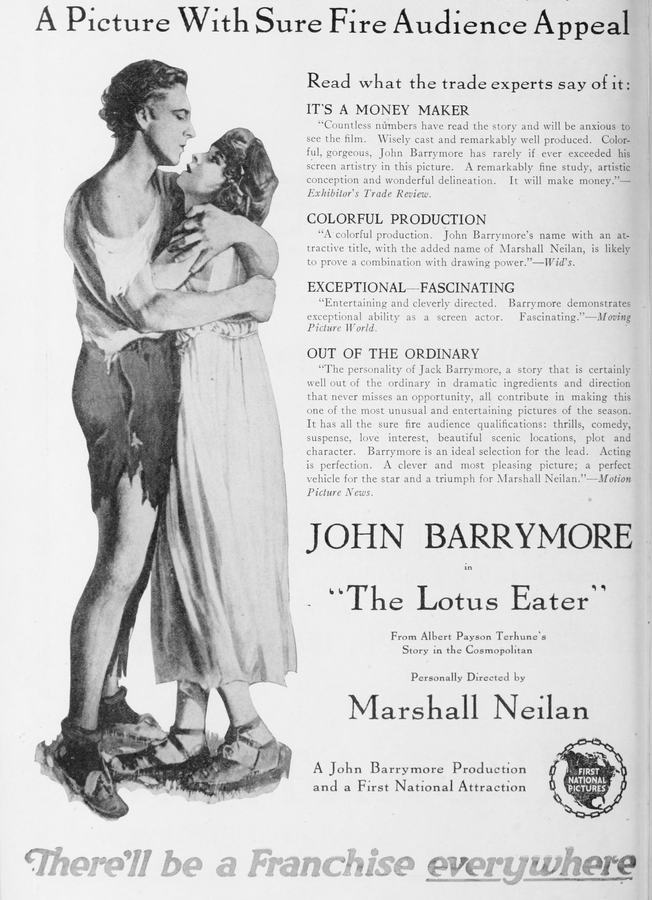
Visualizing the convergence of Marshall Neilan's style and the core Drama narrative.
Disillusioned in marriage, Jacques Leroi attempts an airship flight across the Pacific Ocean, but crashes and washes ashore on an island populated by a peaceful tribe of completely happy people. The islanders have divested themselves of selfish motives and social conventions and live in perfect harmony. There Jacques falls in love, but although he senses the island is his only hope of true happiness, his conscience demands that he try to repair his wrecked life back in civilization. Returning to New York, he finds a difficult decision awaiting him.
Decades after its release, The Lotus Eater remains a vital piece of the cinematic puzzle. Its influence can be seen in countless modern works, solidifying Marshall Neilan's status as a master of the craft in United States and beyond.