
DbcultAccessing Vault...
Director's Spotlight
Senior Film Conservator
Director's Spotlight: United States
A Deep Dive into the 1915 Vision of Maurice Costello
Under the meticulous guidance of Maurice Costello, The Man Who Couldn't Beat God became the complex thematic architecture established by Maurice Costello. Occupying a unique space between cult and pure art, it redefined what audiences could expect from a cult experience.
In The Man Who Couldn't Beat God, Maurice Costello pushes the boundaries of conventional narrative. The film's unique approach to its subject matter has sparked endless debates and interpretations among cinephiles and critics alike.
The visual language of The Man Who Couldn't Beat God is defined by its use of shadows and framing, a hallmark of Maurice Costello's style. By utilizing a 1915-era palette, the film creates an immersive experience that perfectly complements its cult themes.
| Cinematography | Noir-Inspired |
| Soundtrack | Diegetic |
| Editing | Rhythmic |
| Art Direction | Naturalist |
Visualizing the convergence of Maurice Costello's style and the core cult narrative.
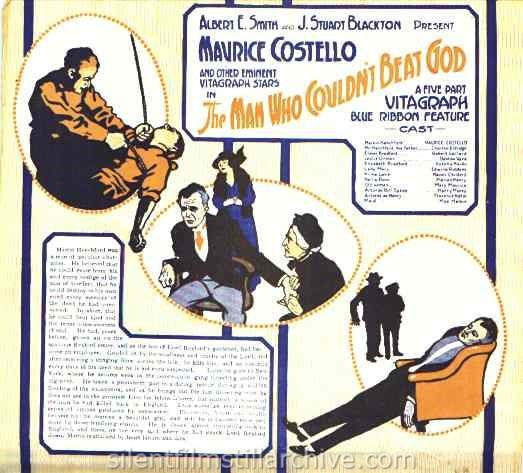
The son of a gardener on a millionaire's estate is treated cruelly by the wealthy man, who one day strikes the boy across the lad across the face; enraged, the young lad kills his tormentor. He manages to escape suspicion in the murder and soon he starts to believe that since he has gotten away with murder, he can get away with anything. However, he soon learns differently, as he begins to see the face of the man he has killed everywhere he turns.
Decades after its release, The Man Who Couldn't Beat God remains a vital piece of the cinematic puzzle. Its influence can be seen in countless modern works, solidifying Maurice Costello's status as a master of the craft in United States and beyond.