
DbcultAccessing Vault...
Director's Spotlight
Senior Film Conservator
Director's Spotlight: United States
A Deep Dive into the 1917 Vision of Maurice Tourneur
Peeling back the layers of Maurice Tourneur's Law of the Land exposes the collaborative alchemy between Maurice Tourneur and the 1917 creative team. Anchored by a narrative that is both personal and universal, it reinforces the idea that cinema is a medium of infinite possibilities.
In Law of the Land, Maurice Tourneur pushes the boundaries of conventional narrative. The film's unique approach to its subject matter has sparked endless debates and interpretations among cinephiles and critics alike.
| Cinematography | Handheld |
| Soundtrack | Minimalist |
| Editing | Disjunctive |
| Art Direction | Baroque |
Visualizing the convergence of Maurice Tourneur's style and the core cult narrative.
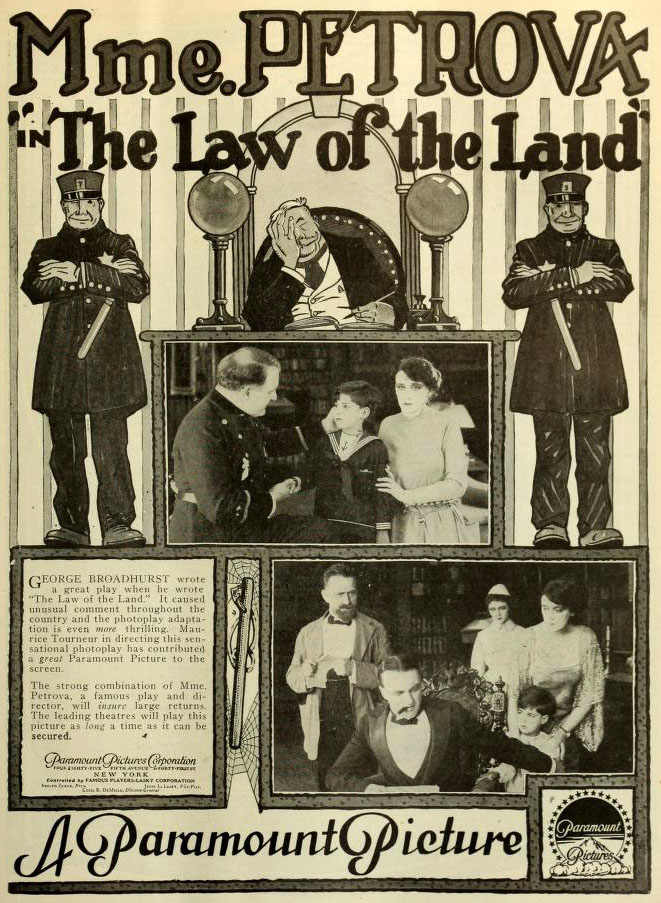
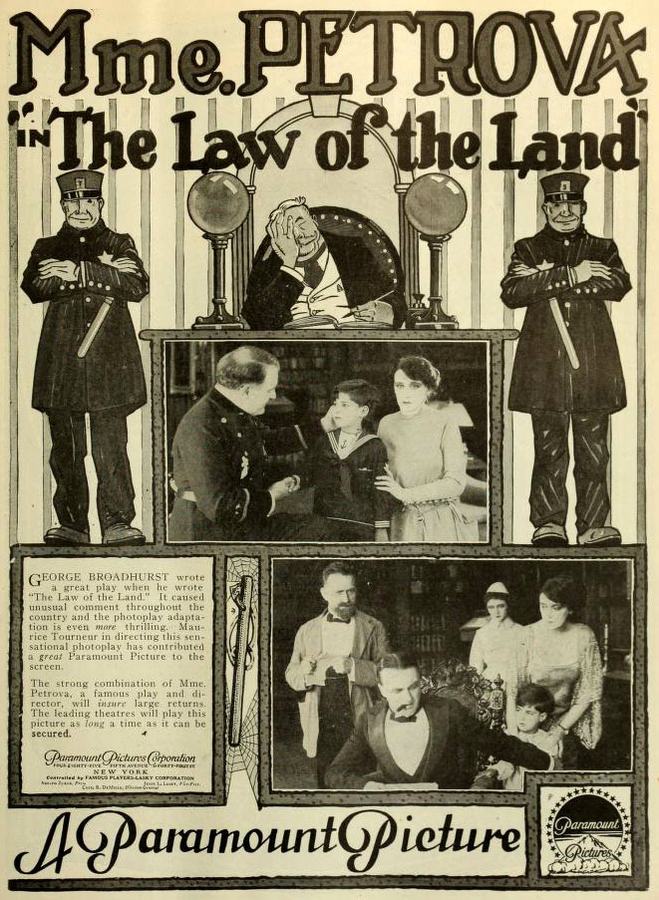
In order to save her mother from disgrace, Margaret marries Richard Harding even though she really loves Geoffrey Morton. Five years later, the Hardings have a little son, and Margaret's life has been made almost unbearable by her husband; she lives for nothing but her son. Morton, returning after an absence of two years, learns that Harding has made some false accusations against him and goes to his home to demand a retraction. While there, he witnesses an exhibition of Harding's cruelty as he whips his little son. After Morton leaves, Harding threatens to beat the boy again, and Margaret tells him that she will shoot him if he does. Harding defies Margaret's plea, and she carries out her threat. Together, Harding's secretary and Margaret place the revolver so that it will appear to be a suicide, but the police are not deceived. After a desperate defense by her lawyers, however, the death is ruled accidental and Margaret is free to begin life anew.
Decades after its release, Law of the Land remains a vital piece of the cinematic puzzle. Its influence can be seen in countless modern works, solidifying Maurice Tourneur's status as a master of the craft in United States and beyond.