
DbcultAccessing Vault...
Director's Spotlight
Senior Film Conservator
Director's Spotlight: United States
A Deep Dive into the 1916 Vision of Maurice Tourneur
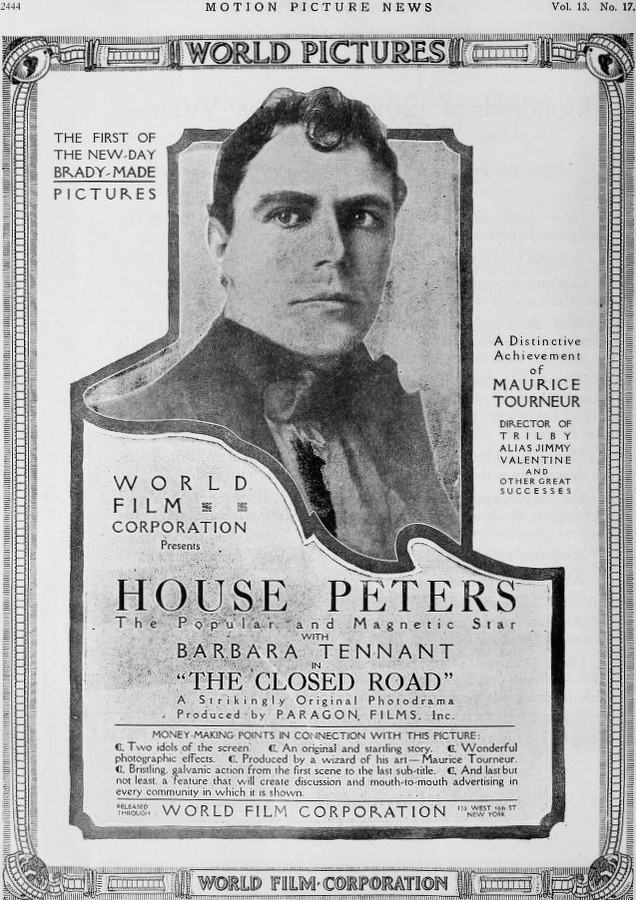
The 1916 release of The Closed Road marked a significant moment for the stylistic boundaries pushed by Maurice Tourneur during the production. In the context of United States's rich cinematic history, it invites us to question our own perceptions of cult narratives.
In The Closed Road, Maurice Tourneur pushes the boundaries of conventional narrative. The film's unique approach to its subject matter has sparked endless debates and interpretations among cinephiles and critics alike.
To fully appreciate The Closed Road, one must consider the cinematic climate of 1916. During this period, United States was undergoing significant artistic shifts, and Maurice Tourneur was at the forefront of this cult movement, often challenging established norms.
| Cinematography | Handheld |
| Soundtrack | Experimental |
| Editing | Invisible |
| Art Direction | Kitsch |
Visualizing the convergence of Maurice Tourneur's style and the core cult narrative.
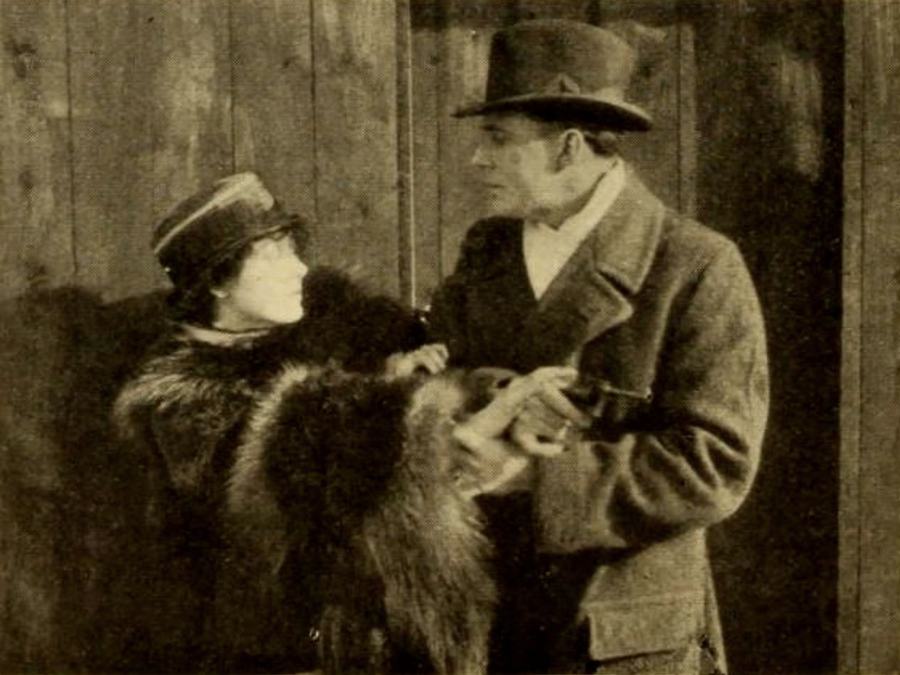
Dr. Hugh Annersley, assisted by Dr. Appledan, has succeeded in finding a cure for cancer. Julia, Dr. Annersley's sister, comes home with Griswold, a former client of the doctor, and to whom he still owes money. Griswold did not enter the house, Annersley saying to Appledan that if Griswold would pay him what he owes, he could then continue his work with the medical discovery. Griswold, now being attended by Appledan, Annersley decides to write him a letter, in which he states that unless he is paid within twenty-four hours, that he will go to Griswold's apartment to collect the account himself. Appledan takes the letter to Griswold himself. In giving medicine to Griswold, Appledan gives him an overdose, resulting in his sudden death. To ward off suspicion, Appledan places Annersley's letter threatening violence to Griswold on the latter's table, and firing two shots out of a revolver, the aged doctor leaves the room. When the police investigate they find the revolver on the floor, and on it is carved Hugh Annersley's name. Circumstantial evidence in the form of the revolver and letter points to Annersley. He is placed under arrest and charged with the murder. Julia, calling upon Appledan, notices the old doctor laughing hysterically as Frank Sargeant, a well-to-do young man, leaves his office. He tells Julia that he has just warned Sargeant he could not live more than a couple of months on account of the poor condition of his heart. With this knowledge, Julia starts in search of Sargeant, and finds him in an old quarry just as he was to commit suicide. She persuades him to listen to her. She unravels to him the story of her brother's plight, and of the fact that he could save millions of lives were he able to continue with his cancer cure. That as he, Sargeant, could not live long and was on the verge of committing suicide, would assume the murder of Griswold, clear Annersley of the charge, and thereby be of some good to humanity. Sargeant agrees and fabricates circumstantial evidence against himself so strongly that he is arrested and convicted of the crime. While awaiting electrocution, Sargeant learns that his heart was never affected, that old Doctor Appledan was mentally unbalanced, and then confined to an insane asylum. Upon learning this, Julia sets out to clear Sargeant and reverse the wheels of destiny against him. The old doctor confesses that he gave Griswold an overdose of medicine and to clear himself had placed Annersley's letter and pistol near him, thereby clearing Sargeant. How Julia repaid Sargeant for his great sacrifice by her love and affection brings the picture to a dramatic and happy ending.
Decades after its release, The Closed Road remains a vital piece of the cinematic puzzle. Its influence can be seen in countless modern works, solidifying Maurice Tourneur's status as a master of the craft in United States and beyond.