
DbcultAccessing Vault...
Director's Spotlight
Senior Film Conservator
Director's Spotlight: United States
A Deep Dive into the 1919 Vision of Maurice Tourneur
Analyzing The Life Line (1919) requires a deep dive into the unique directorial voice that Maurice Tourneur brought to the screen. By challenging the status quo of 1919 cinema, it continues to spark endless debates among critics and cinephiles alike.
In The Life Line, Maurice Tourneur pushes the boundaries of conventional narrative. The film's unique approach to its subject matter has sparked endless debates and interpretations among cinephiles and critics alike.
In this work, Maurice Tourneur explores the intersection of cult and United States cultural identity. The meticulous attention to detail suggests a deep-seated commitment to pushing the boundaries of the medium, ensuring that The Life Line remains a relevant topic of study for cult enthusiasts.
| Cinematography | High-Contrast |
| Soundtrack | Orchestral |
| Editing | Slow-Burn |
| Art Direction | Brutalist |
Visualizing the convergence of Maurice Tourneur's style and the core cult narrative.
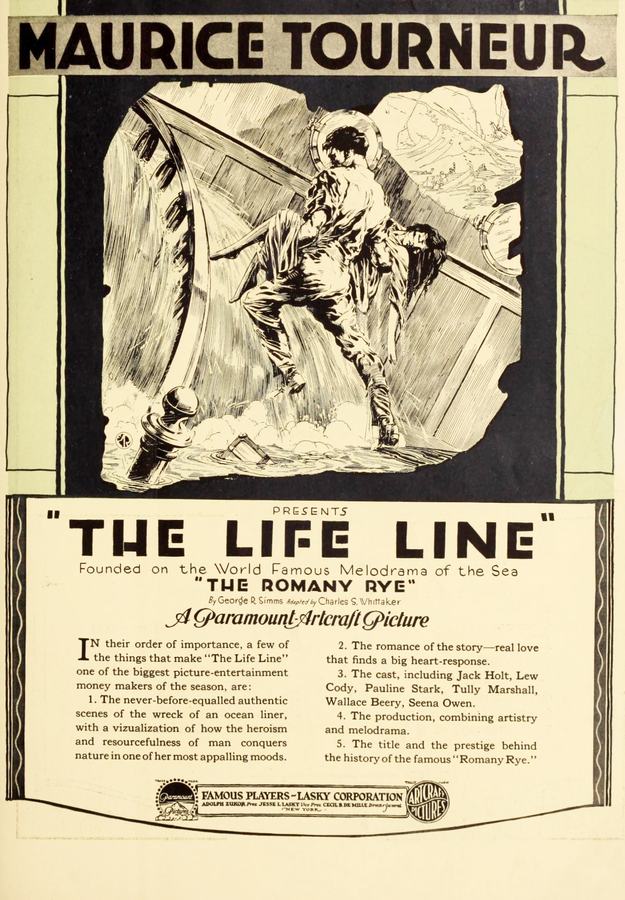
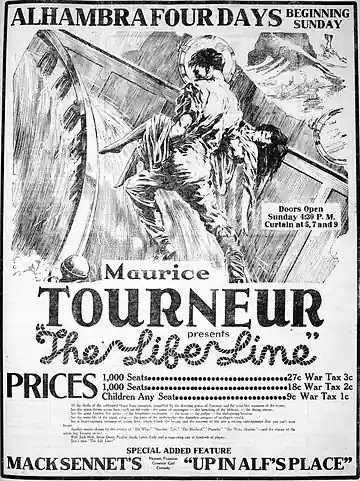
Jack Hearne, known as the Romany Rye, prefers living with the gypsies rather than claiming the right to his part of his half brother Phillip Royston's country estate, Cragsnest. When he saves Ruth Heckett, the daughter of his friend Joe, a London bird shop owner and burglar, from a theater fire, however, he changes his mind and marries her. As Ruth and Jack board a steamer for America to find witnesses to his parents' wedding for proof of his inheritance, Joe's partner Bos gives Ruth a Bible that he stole from Cragsnest, as a present. Unknown to them, the Bible contains the wedding certificate of Jack's parents, which Royston has been trying to recover so that he could destroy it. After Jack is lured off the steamer by Laura, a gypsy infatuated with Royston, blackjacked, drugged, and thrown into the water, Bos rescues him. At Southampton, where the steamer is wrecked, they save Ruth, who has discovered the certificate, and others in a breeches buoy, while Royston and Laura drown.
Decades after its release, The Life Line remains a vital piece of the cinematic puzzle. Its influence can be seen in countless modern works, solidifying Maurice Tourneur's status as a master of the craft in United States and beyond.