
DbcultAccessing Vault...
Director's Spotlight
Senior Film Conservator
Director's Spotlight: Austria
A Deep Dive into the 1920 Vision of Michael Curtiz
As we revisit the 1920 masterpiece Der Stern von Damaskus, we are struck by the atmospheric immersion that Michael Curtiz achieves throughout Der Stern von Damaskus. Exploring the nuances of the human condition with Drama flair, it solidifies Michael Curtiz's reputation as a master of the craft.
In Der Stern von Damaskus, Michael Curtiz pushes the boundaries of conventional narrative. The film's unique approach to its subject matter has sparked endless debates and interpretations among cinephiles and critics alike.
While deeply rooted in Austria, Der Stern von Damaskus has achieved a global reach, influencing directors from various backgrounds. Its ability to translate Drama tropes into a universal cinematic language is why it remains a cult staple decades after its 1920 release.
| Cinematography | Static |
| Soundtrack | Orchestral |
| Editing | Invisible |
| Art Direction | Kitsch |
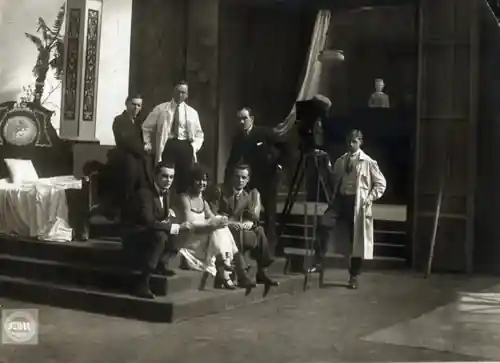
Visualizing the convergence of Michael Curtiz's style and the core Drama narrative.
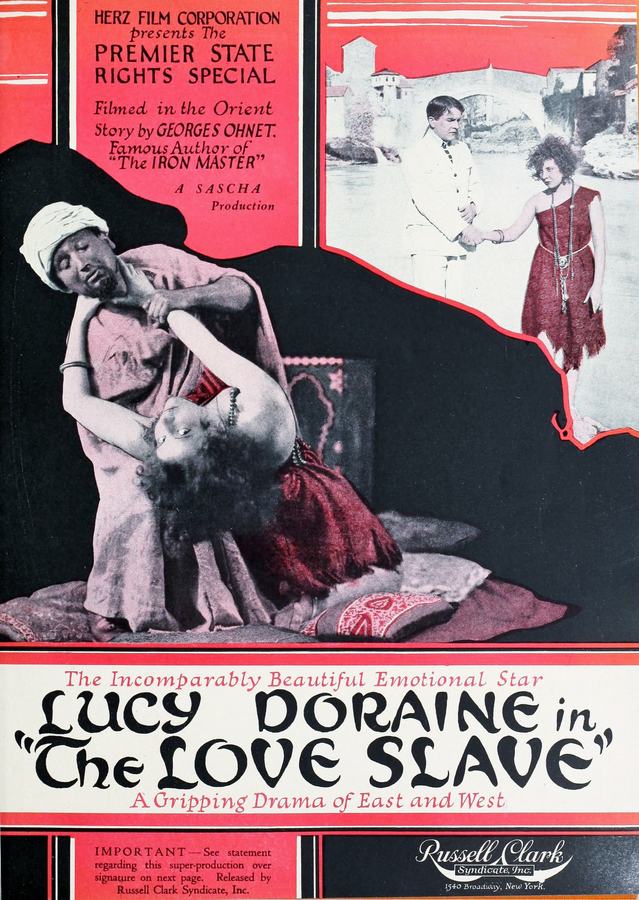
While walking the streets of Damascus, Georges Hanet, French artist, hears a woman's screams. He rushes to the place and finds Kora tied to a whipping post and swaying from the unmerciful beating of her master. He rescues and frees her. This wins her love and she follows him until he takes her into his home. Their love dream is finally interrupted by a letter from Hanet's mother. His father has been killed in an earthquake and it is necessary for him to return home. Kora pleads to be taken. Piqued by Hanet's secluding her in the cabin of the ship she eludes him and carries on a flirtation with Count Ceretti. When they arrive at Triest, Hanet goes to his mother. This further enrages Kora, who wants his entire attention and she leaves with the Count. Crazed with love and grief, Hanet searches until he finally finds Kora living in a palatial mansion as Ceretti's mistress. He effects an entrance, sees Kora in Ceretti's arms, and shoots, wounding Kora in the face and badly disfiguring her. At the trial Kora lies in testimony, and Hanet is sentenced to five years hard labor. At the end of three years he makes his escape. Under the name of Fred Jevons he wins a reputation as a painter and teacher. One of his pupils is Suzanne, daughter of the Marquis De Rives. Their love is mutual and Suzanne becomes his wife. During this time Kora has come to Paris and under the name of Madame Des Champs conducts a gambling house. The Marquis is a frequenter of the house. An important message takes Hanet to the resort and there he and Kora meet again. Kora tells Hanet that she has always loved him and demands that he come every night to her home. Otherwise she will denounce him to the police and thus force him to return to jail. The Marquis and Suzanne are amazed at Hanet's actions. Unable to endure the burden of her grief, Suzanne goes to Kora. She is followed by Hanet. Kora tells Suzanne of her relations with Hanet, declares that she will not allow them to be happy and sends a letter to the police. Before the letter can be mailed her insane jealousy and rage, long indulged, result in madness and she dies. The Count reads the letter, realizes Hanet's suffering and destroys it. Thus Hanet is freed and he and Suzanne find true happiness.
Decades after its release, Der Stern von Damaskus remains a vital piece of the cinematic puzzle. Its influence can be seen in countless modern works, solidifying Michael Curtiz's status as a master of the craft in Austria and beyond.