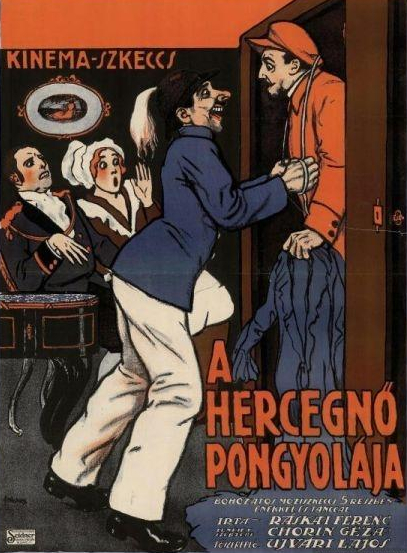
Summary
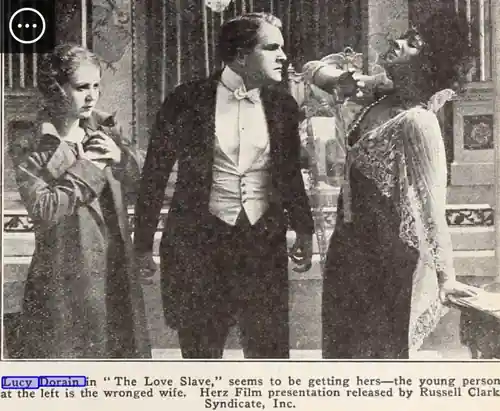
In sun-bleached Damascus, Georges Hanet—pampered brush-for-hire from Montmartre—stumbles upon Kora, a Circassian slave lashed to a cedar post, her back ribboned like a torn manuscript; one flash of his Parisian gallantry and the girl grafts her fate to his shadow. Together they drift through bazaars that smell of cumin and smelted brass, sharing nights of jasmine-saturated rapture until a telegram—ink still wet with the dust of a Rhône valley quake—yanks him home. Kora smuggles herself aboard, hides like contraband silk, then flirts with Count Ceretti’s pomaded boredom out of sheer claustrophobia. At Trieste she exits Hanet’s life trailing musk and malice, only to resurface months later in a Venetian neo-Pallazzo, skin lacquered in pearls, voice lacquered in poison. Georges, half-deranged, fires a solitary bullet; it kisses her cheek, carves a crater of crimson, and buys him five years of penal servitude. Escape, exile, reinvention: under the alias Fred Jevons he becomes the darling of Paris ateliers, weds the pastel-skinned Suzanne, yet the past barges in wearing a new corset—Madame Des Champs, queen of an opium-laced gambling den, face half-veiled, soul wholly vengeful. Blackmail blooms; daggers of jealousy glitter; Suzanne confronts the harpy in her gilded lair. Before the gendarmes can unseal the incriminating letter, Kora’s mind snaps like a violin string; she dies in a spasm of delirium, and the Count—suddenly sporting a conscience—burns the evidence. Dawn finds Georges and Suzanne free to exhale at last.
Synopsis
While walking the streets of Damascus, Georges Hanet, French artist, hears a woman's screams. He rushes to the place and finds Kora tied to a whipping post and swaying from the unmerciful beating of her master. He rescues and frees her. This wins her love and she follows him until he takes her into his home. Their love dream is finally interrupted by a letter from Hanet's mother. His father has been killed in an earthquake and it is necessary for him to return home. Kora pleads to be taken. Piqued by Hanet's secluding her in the cabin of the ship she eludes him and carries on a flirtation with Count Ceretti. When they arrive at Triest, Hanet goes to his mother. This further enrages Kora, who wants his entire attention and she leaves with the Count. Crazed with love and grief, Hanet searches until he finally finds Kora living in a palatial mansion as Ceretti's mistress. He effects an entrance, sees Kora in Ceretti's arms, and shoots, wounding Kora in the face and badly disfiguring her. At the trial Kora lies in testimony, and Hanet is sentenced to five years hard labor. At the end of three years he makes his escape. Under the name of Fred Jevons he wins a reputation as a painter and teacher. One of his pupils is Suzanne, daughter of the Marquis De Rives. Their love is mutual and Suzanne becomes his wife. During this time Kora has come to Paris and under the name of Madame Des Champs conducts a gambling house. The Marquis is a frequenter of the house. An important message takes Hanet to the resort and there he and Kora meet again. Kora tells Hanet that she has always loved him and demands that he come every night to her home. Otherwise she will denounce him to the police and thus force him to return to jail. The Marquis and Suzanne are amazed at Hanet's actions. Unable to endure the burden of her grief, Suzanne goes to Kora. She is followed by Hanet. Kora tells Suzanne of her relations with Hanet, declares that she will not allow them to be happy and sends a letter to the police. Before the letter can be mailed her insane jealousy and rage, long indulged, result in madness and she dies. The Count reads the letter, realizes Hanet's suffering and destroys it. Thus Hanet is freed and he and Suzanne find true happiness.
Review Excerpt
"
The first time I watched Der Stern von Damaskus I emerged as though dragged across cobblestones by my own collar—breathless, abraded, drunk on its toxic perfume. Michael Curtiz’s 1920 German-produced fever dream is not a film you merely see; it is a contagion you contract. Shot in the waning twilight of European silent melodrama, it marries orientalist fantasy to proto-noir fatalism, then douses the union in kerosene and strikes a match.
A Canvas Splashed with Scars & Moonlight
Visually, the..."