
DbcultAccessing Vault...
Director's Spotlight
Senior Film Conservator
Director's Spotlight: United States
A Deep Dive into the 1926 Vision of Milburn Morante
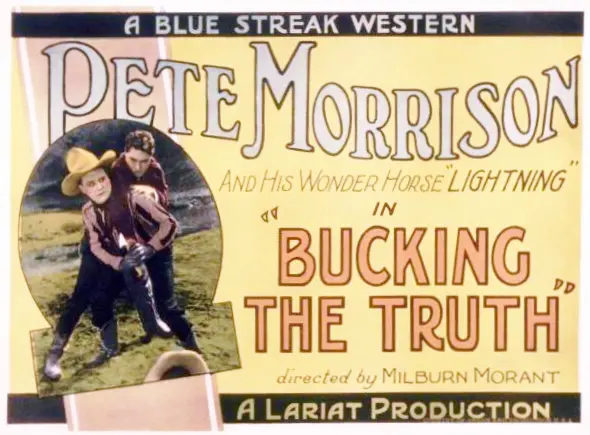
As we revisit the 1926 masterpiece Bucking the Truth, we are struck by the atmospheric immersion that Milburn Morante achieves throughout Bucking the Truth. Exploring the nuances of the human condition with Western flair, it solidifies Milburn Morante's reputation as a master of the craft.
In Bucking the Truth, Milburn Morante pushes the boundaries of conventional narrative. The film's unique approach to its subject matter has sparked endless debates and interpretations among cinephiles and critics alike.
In this work, Milburn Morante explores the intersection of Western and United States cultural identity. The meticulous attention to detail suggests a deep-seated commitment to pushing the boundaries of the medium, ensuring that Bucking the Truth remains a relevant topic of study for Western enthusiasts.
| Cinematography | Noir-Inspired |
| Soundtrack | Minimalist |
| Editing | Slow-Burn |
| Art Direction | Brutalist |
Visualizing the convergence of Milburn Morante's style and the core Western narrative.
"Slim" Duane, a wandering cowboy, having being forced to exchange clothes with an escaped fugitive, draws suspicion upon himself for the murder of Sheriff Findlay. He escapes the posse, discovers a gang of rustlers hiding in the hills and they make him a captive. Meanwhile, another innocent man has been blamed for the killing and is about to be hanged. Slim's friend, "Course-Gold" Charlie and his girlfriend, Anne, ride to his rescue.
Decades after its release, Bucking the Truth remains a vital piece of the cinematic puzzle. Its influence can be seen in countless modern works, solidifying Milburn Morante's status as a master of the craft in United States and beyond.