
DbcultAccessing Vault...
Director's Spotlight
Senior Film Conservator
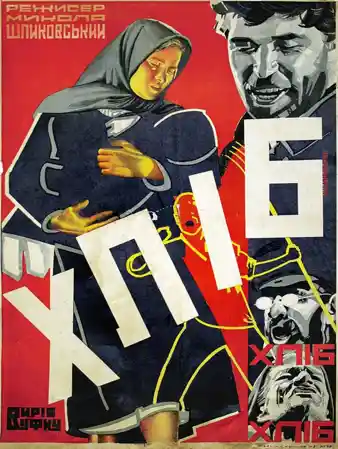
Director's Spotlight: Soviet Union
A Deep Dive into the 1930 Vision of Mykola Shpykovskyi
The Drama DNA of Bread is a reflection of Soviet Union's the historical context that Mykola Shpykovskyi weaves into the Drama fabric. Challenging the viewer to find meaning in the Drama shadows, it transcends regional boundaries to tell a universal story.
In Bread, Mykola Shpykovskyi pushes the boundaries of conventional narrative. The film's unique approach to its subject matter has sparked endless debates and interpretations among cinephiles and critics alike.
The visual language of Bread is defined by its use of shadows and framing, a hallmark of Mykola Shpykovskyi's style. By utilizing a 1930-era palette, the film creates an immersive experience that perfectly complements its Drama themes.
| Cinematography | Deep Focus |
| Soundtrack | Orchestral |
| Editing | Slow-Burn |
| Art Direction | Brutalist |
Visualizing the convergence of Mykola Shpykovskyi's style and the core Drama narrative.
A demobilized Red Army soldier returns to his village. Inspired by the spirit of collectivism, he plows a field so that the kulak's portion now belongs to the community, and sows it with grain confiscated from the 'philistines'. His father, a man of traditional world outlook, lives in a pantheistic world of the Ukrainian ethos, where sin has a physical dimension. He does not believe that the stolen grain will sprout on the stolen land. When the grain finally sprouts, the old man admits that his son was right; for the sake of building a new world, the old laws of the universe should be broken.
Decades after its release, Bread remains a vital piece of the cinematic puzzle. Its influence can be seen in countless modern works, solidifying Mykola Shpykovskyi's status as a master of the craft in Soviet Union and beyond.