
DbcultAccessing Vault...
Director's Spotlight
Senior Film Conservator
Director's Spotlight: United States
A Deep Dive into the 1919 Vision of Noel M. Smith
The enduring fascination with Squabs and Squabbles is a testament to the artistic risks taken by Noel M. Smith that eventually paid off. Challenging the viewer to find meaning in the cult shadows, it reminds us of the fragility and beauty of the 1919s.
In Squabs and Squabbles, Noel M. Smith pushes the boundaries of conventional narrative. The film's unique approach to its subject matter has sparked endless debates and interpretations among cinephiles and critics alike.
While deeply rooted in United States, Squabs and Squabbles has achieved a global reach, influencing directors from various backgrounds. Its ability to translate cult tropes into a universal cinematic language is why it remains a cult staple decades after its 1919 release.
| Cinematography | Deep Focus |
| Soundtrack | Minimalist |
| Editing | Slow-Burn |
| Art Direction | Brutalist |
Visualizing the convergence of Noel M. Smith's style and the core cult narrative.
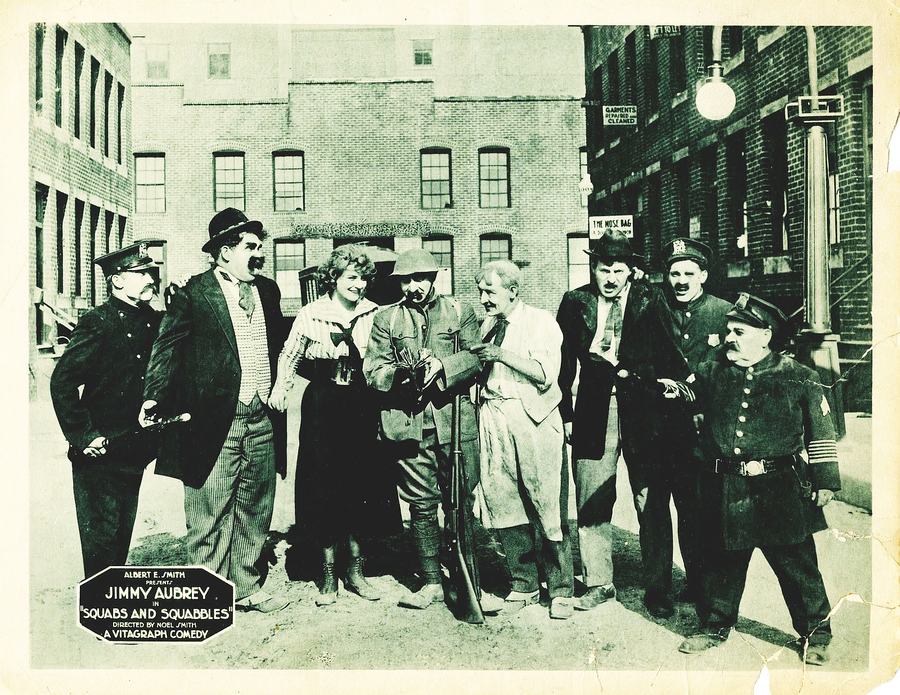
Paradise Alley is a street in a tough neighborhood in which every inhabitant has a grudge against every other one. Consequently the street is a constant battle field. Ruler of the street is the Big Boss. His slumbers are disturbed by the tumult and he appears at the door of his house and yells an order. Instantly the street is cleared. The Boss then goes to a beanery where a beautiful girl presides over the cash register. Around the corner a cop sleeps undisturbed by the constant fighting. As the Boss disappears, the combatants resume their fight. A "man of Mystery" gets in the way of several thrown vegetables and determines to stop the fracas as the Boss did. He goes to the restaurant, borrows the Boss' hat and goes out on the street. He is mistaken for the Boss and the fighters again disappear. The man of mystery then returns the hat, steals the Boss' cigar and disappears. Two or three harmless urchins come forth and play craps. The cop wakes up, seizes them, calls the patrol wagon and the urchins are hustled off to the lock-up. At the far end of the street is a mission. James, our hero is one of the congregation. He sits with wide-staring eyes. The minister gets nervous under his gaze and others the congregation grow restive. It is finally discovered that James has painted the eyes on his eyelids, thus enabling him to appear awake, while he is really sound asleep. He wakes up and in walking out, steals the poor-box. Outside he finds the Boss beating two crooks for stealing. James hurries back and replaces the poor-box. The pretty cashier sees this and extends her sympathy. A fat man is thrown out of the beanery. James and the man of mystery get into his clothes and go in to eat. James hides inside the suit and the man of mystery feeds him. The ruse is discovered and James is put to work in the kitchen. He manages to almost wreck the place. The Boss conspires with the mystery man to rob the restaurant. The Boss passes out the money from the cash register, but James accidentally gets it. The proprietor discovers the loss and pursues the man of mystery. James is required to still the noise of a German street band. He proves a target for all the vegetables thrown at the band. He acquires a soldier's uniform and puts them all to rout. He also helps regain the stolen money of the proprietor and thus proves himself a hit with the girl.
Decades after its release, Squabs and Squabbles remains a vital piece of the cinematic puzzle. Its influence can be seen in countless modern works, solidifying Noel M. Smith's status as a master of the craft in United States and beyond.