
DbcultAccessing Vault...
Director's Spotlight
Senior Film Conservator
Director's Spotlight: United States
A Deep Dive into the 1917 Vision of O.A.C. Lund
Witnessing the stylistic transformation of cult through Her New York reveals the global recognition that O.A.C. Lund garnered after the release of Her New York. Serving as a mirror to the anxieties of a changing world, offering layers of thematic complexity that demand repeated viewing.
In Her New York, O.A.C. Lund pushes the boundaries of conventional narrative. The film's unique approach to its subject matter has sparked endless debates and interpretations among cinephiles and critics alike.
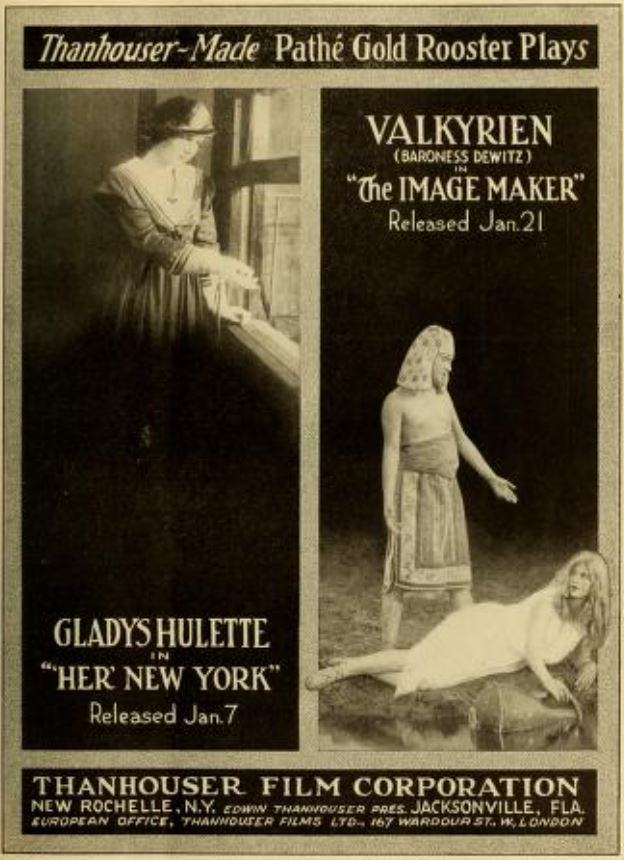
The visual language of Her New York is defined by its use of shadows and framing, a hallmark of O.A.C. Lund's style. By utilizing a 1917-era palette, the film creates an immersive experience that perfectly complements its cult themes.
| Cinematography | High-Contrast |
| Soundtrack | Minimalist |
| Editing | Disjunctive |
| Art Direction | Baroque |
Visualizing the convergence of O.A.C. Lund's style and the core cult narrative.
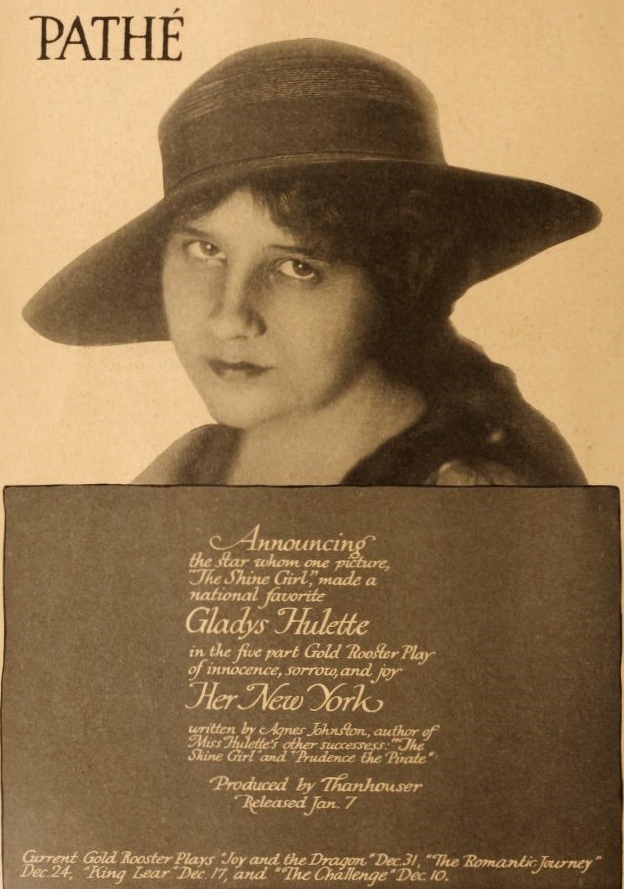
Phoebe Lester, a little country girl, whispers to her pet hen, "You've laid an egg for a man from New York. Ain't you proud?" and while taking breakfast to Philip, the new boarder, who came from that distant place, she gazes at him as if he has come from an unknown land. Returning to the city with a newfound love and regained health, Philip struggles to sell his poems to bring his "egg" girl to her New York. In the meantime, Phoebe's brown hen proves to be a golden one, and her egg money buys a ticket to Philip and her Wonderland. On the train, Laura, a flashily-dressed woman, meets Phoebe and, tempting her with a nice new dress, takes her to her house. There, Owen, a former employer of Philip, is fascinated by her simplicity. Such grandeur and strange "fizzy" drinks overwhelm her, but Providence intervenes, when the little brown hen hops into the street with Phoebe scrambling after. A big-hearted policeman finds her and takes her to Philip, and acts as "bridesmaid" at their wedding. Their little home, built on much love and little food, is brightened by the adoption of Johnny, an abandoned baby, that Philip finds on the dumbwaiter. Johnny brings good luck and Philip secures a good job through Owen and in nicer quarters their cup of happiness seems to be full, when Owen, to further his ends, contrives to get Philip to gamble with borrowed money. Phoebe, convinced by trickery, that Philip is unfaithful, is heart-broken and believes that love and her New York are unreal after all. But, the yielding, grief-stricken country girl awakens Owen's better self, and with his help the unhappy household is reunited.
Decades after its release, Her New York remains a vital piece of the cinematic puzzle. Its influence can be seen in countless modern works, solidifying O.A.C. Lund's status as a master of the craft in United States and beyond.