
DbcultAccessing Vault...
Director's Spotlight
Senior Film Conservator
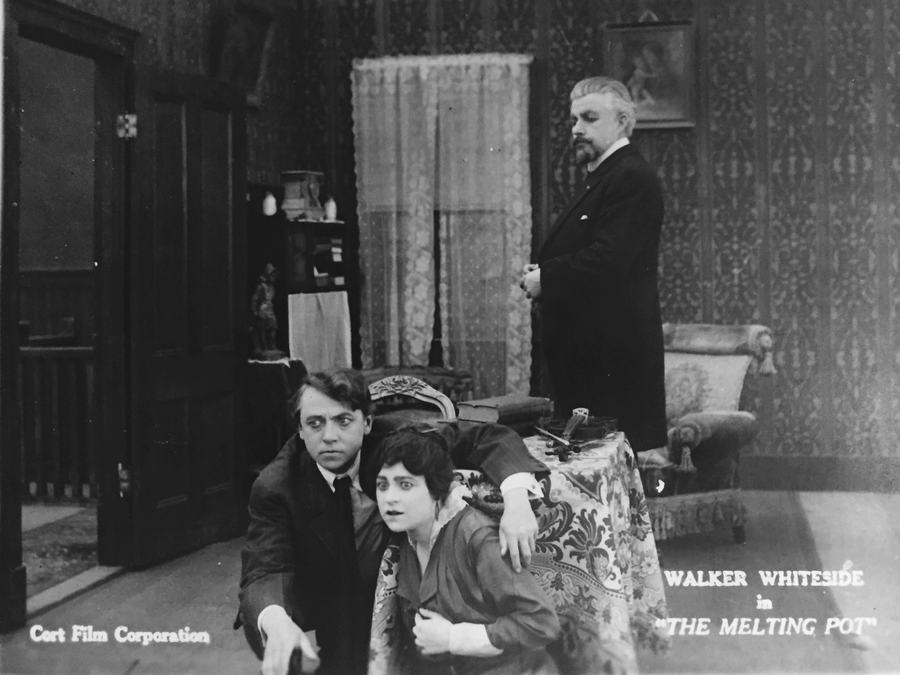
Director's Spotlight: United States
A Deep Dive into the 1915 Vision of Oliver D. Bailey
To understand the modern evolution of United States film, one must first look at The Melting Pot and the meticulous attention to detail that Oliver D. Bailey applied to every frame. Reflecting the political and social shifts of the 1915s, it showcases the power of cult as a tool for social commentary.
In The Melting Pot, Oliver D. Bailey pushes the boundaries of conventional narrative. The film's unique approach to its subject matter has sparked endless debates and interpretations among cinephiles and critics alike.
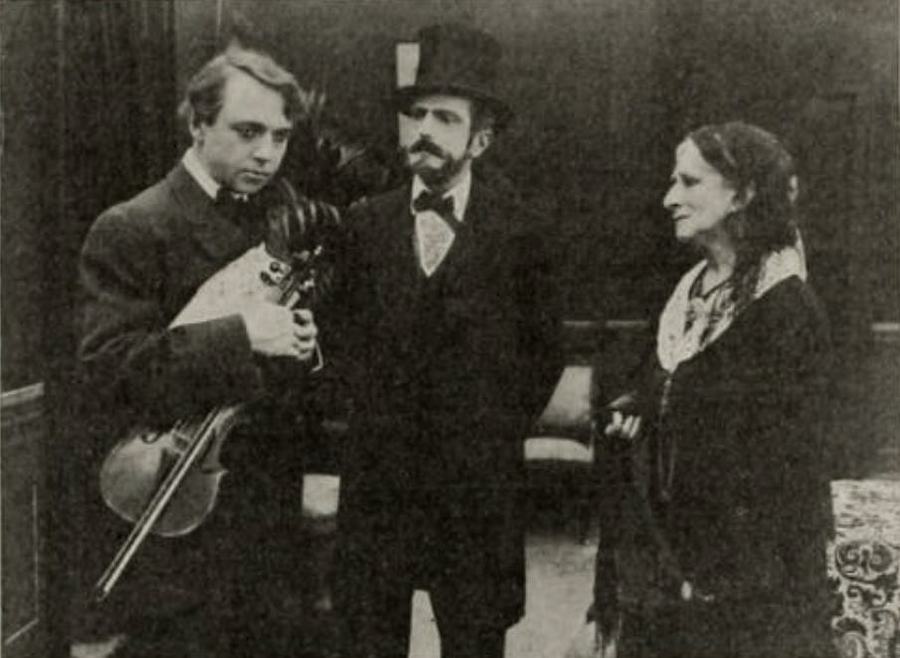
In this work, Oliver D. Bailey explores the intersection of cult and United States cultural identity. The meticulous attention to detail suggests a deep-seated commitment to pushing the boundaries of the medium, ensuring that The Melting Pot remains a relevant topic of study for cult enthusiasts.
| Cinematography | Deep Focus |
| Soundtrack | Orchestral |
| Editing | Slow-Burn |
| Art Direction | Brutalist |
Visualizing the convergence of Oliver D. Bailey's style and the core cult narrative.
David Quixans. a young Jewish violinist living in the town of Kishineff, Russia, is left an orphan through the massacre of the orthodox Jews upon the "Black Easter" of Russia, when under the leadership of Baron Revandel, Governor of Kishineff, who has been commissioned by the Czar to baptize one-third and massacre one-third of all the Jews in Russia, he is left orphaned in his ruined home. The sympathy of Vera, the daughter of the Baron, is aroused in connection with the Jewish outrage of which she is a witness. While upon an errand of mercy, she attracts the attention of the Czar's spies and is subsequently made a prisoner, where her father refuses to recognize her and she is sentenced to Siberia. A Jewish woman who wishes to join her husband in Siberia induces Vera to change places with her and Vera successfully makes her escape upon a trading vessel bound for America. David is exiled with the Jews to America. He joins his uncle in "The Music Master" and "Grandmother" in New York. Vera in America finds employment in a Russian Mission upon the East Side, where she attracts the attention, by her beauty and culture, of Quincy Davenport, a patron of music in search of genius upon the East Side. Vera interests Davenport in David, whom she has met, and Davenport offers to send him abroad to study, realizing the possibilities of his music. David refuses to be patronized by a man who had no greater aim in life than amusement. Instead, he interests a German music master in a wonderful symphony symbolic of the amalgamation of all the foreign races in the great "melting pot" of America. David and Vera through a bond of music find themselves in love with each other to the horror of David's uncle, who considers David false to his race in loving a Christian. Davenport cables Vera's father of her presence in America and her engagement to a common Jew peddler. The Baron hastens to America, where meeting Vera he reproaches her for forgetting her country and birth. Vera finally induces him to meet David. Throughout the year the memory of the man who ordered the massacre that left him an orphan has been an obsession with David, and when he sees and recognizes in Vera's father the specter of the past, he is overcome with horror, declaring that a river of blood separates them forever. Overcome with sorrow, the Baron offers to let David take his life, but at the crucial moment David discovers a broken string upon his violin and realizes that rage had for the moment swept aside the brotherhood of the great land of the free. He controls himself and leaves the Baron. The great symphony finished, David appears before a brilliant audience and is proclaimed a genius. The audience is swept to its feet with enthusiasm as the music vividly portrays the saving of all the races in the great crucible of the "melting pot" of America. Overpowered by his success, David leaves the theater seeking refuge in the solemn quiet of the night, where he is followed by Vera, who convinces him that here in the new land all race prejudice has been swept aside and love and liberty can walk unmolested together.
Decades after its release, The Melting Pot remains a vital piece of the cinematic puzzle. Its influence can be seen in countless modern works, solidifying Oliver D. Bailey's status as a master of the craft in United States and beyond.