
DbcultAccessing Vault...
Director's Spotlight
Senior Film Conservator
Director's Spotlight: United States
A Deep Dive into the 1926 Vision of Oscar Apfel
The Crime DNA of Somebody's Mother is a reflection of United States's the subversive storytelling techniques employed by Oscar Apfel in 1926. Breaking the traditional rules of Crime engagement, it leaves an indelible mark on the soul of the viewer.
In Somebody's Mother, Oscar Apfel pushes the boundaries of conventional narrative. The film's unique approach to its subject matter has sparked endless debates and interpretations among cinephiles and critics alike.
While deeply rooted in United States, Somebody's Mother has achieved a global reach, influencing directors from various backgrounds. Its ability to translate Crime tropes into a universal cinematic language is why it remains a cult staple decades after its 1926 release.
| Cinematography | Noir-Inspired |
| Soundtrack | Minimalist |
| Editing | Slow-Burn |
| Art Direction | Brutalist |
Visualizing the convergence of Oscar Apfel's style and the core Crime narrative.
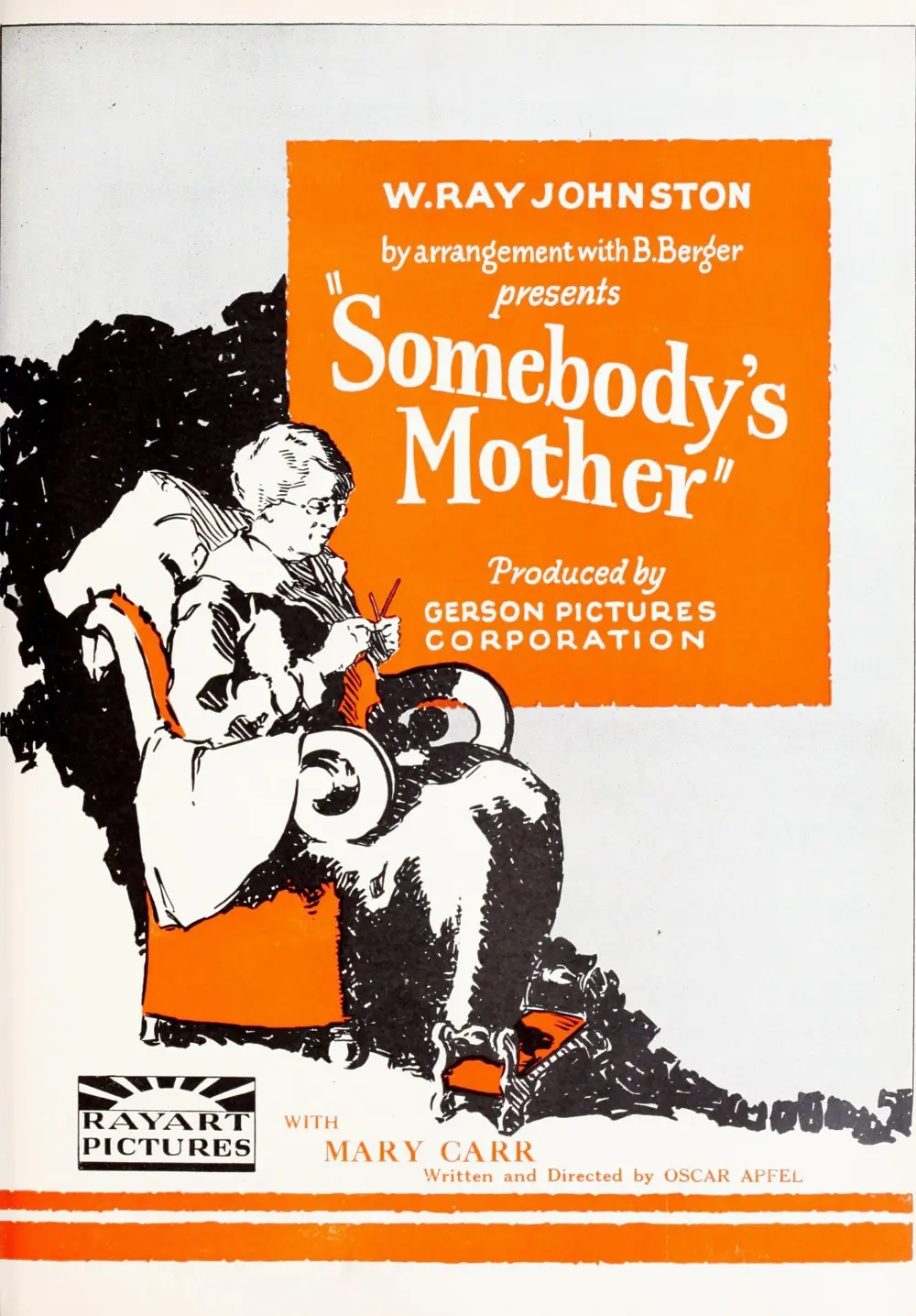
"Matches Mary" has sold matches on the streets of New York for many years and nobody knows her real identity. The truth is that Mary's young son had been kidnapped many years ago and she donned ragged attire while searching for the man, whom she knew, who did it. Years later day she meets him on the street and demands to know about her son, now grown to manhood. The man, now calling himself Foster, escapes but Mary track him to his home. Foster's nephew comes in and announces that he has gotten married while in college. Foster is furious and threatens violence. That night he is found murdered and Peter is accused of the crime, and is put on trial. Mary testifies she was the one who murdered Foster. She is about to be sentenced when a detective brings in a confession from two burglars who admit killing Foster. Peter asks Mary who she is and she replies she is just "somebody's mother." Later, an old friend and a lawyer bring evidence that reunites Mary with her lost son, Peter.
Decades after its release, Somebody's Mother remains a vital piece of the cinematic puzzle. Its influence can be seen in countless modern works, solidifying Oscar Apfel's status as a master of the craft in United States and beyond.