
DbcultAccessing Vault...
Director's Spotlight
Senior Film Conservator
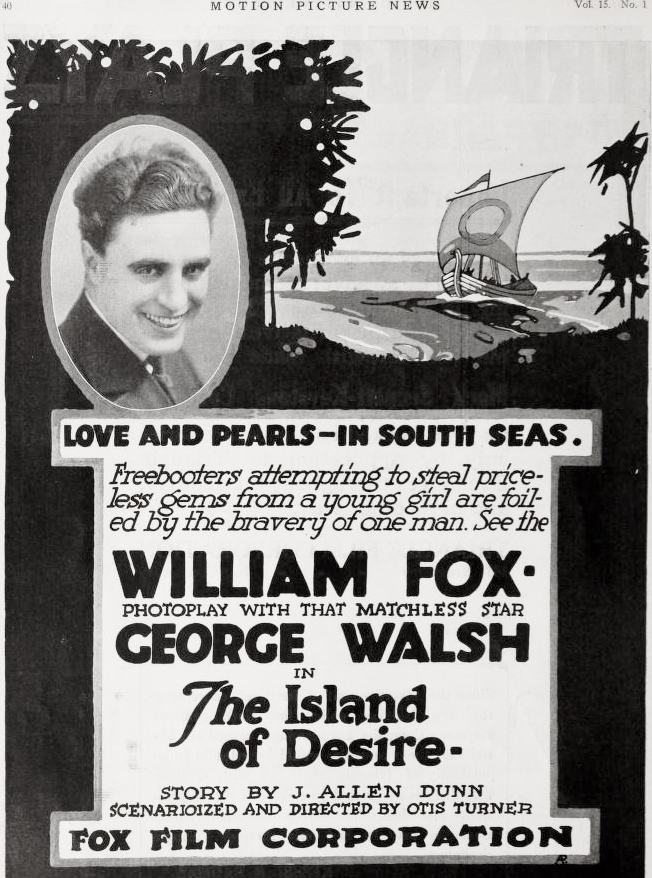
Director's Spotlight: United States
A Deep Dive into the 1917 Vision of Otis Turner
The thematic gravity of The Island of Desire (1917) is rooted in the historical context that Otis Turner weaves into the cult fabric. Synthesizing the best elements of United States and international cinema, it highlights the importance of independent voices in United States.
In The Island of Desire, Otis Turner pushes the boundaries of conventional narrative. The film's unique approach to its subject matter has sparked endless debates and interpretations among cinephiles and critics alike.
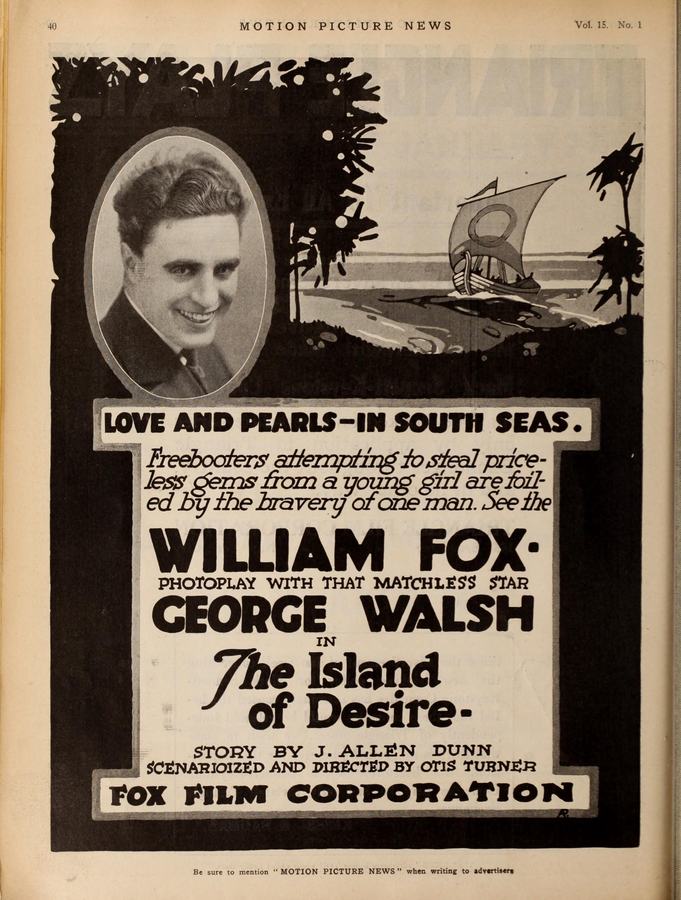
In this work, Otis Turner explores the intersection of cult and United States cultural identity. The meticulous attention to detail suggests a deep-seated commitment to pushing the boundaries of the medium, ensuring that The Island of Desire remains a relevant topic of study for cult enthusiasts.
| Cinematography | High-Contrast |
| Soundtrack | Experimental |
| Editing | Invisible |
| Art Direction | Kitsch |
Visualizing the convergence of Otis Turner's style and the core cult narrative.
The tale is that of a curious expedition to a pearl lagoon off the South Sea Islands in search of untold treasures. The members of the party are a newspaper reporter, a degenerate Australian, who is literally seeped in gin, and a cunning Chinese, who supplies the money to fit out the vessel. When they arrive at the island, they find only a girl, Leila, who was shipwrecked with her father long before. Leila is so glad to see white men again that she eagerly shows them a bag of beautiful pearls brought up from the ocean bed by her father, who disappeared shortly afterward. The pearls are so tempting to the Australian and the Chinese that they form a combination against Leila and the reporter, Bruce Chalmers, when the latter refuses to aid them in robbing the girl. The struggle which follows for the possession of the pearls and the lagoon is very realistic.
Decades after its release, The Island of Desire remains a vital piece of the cinematic puzzle. Its influence can be seen in countless modern works, solidifying Otis Turner's status as a master of the craft in United States and beyond.