
DbcultAccessing Vault...
Director's Spotlight
Senior Film Conservator

Director's Spotlight: United States
A Deep Dive into the 1923 Vision of Otto Messmer
The 1923 release of Felix Gets Broadcasted marked a significant moment for the stylistic boundaries pushed by Otto Messmer during the production. In the context of United States's rich cinematic history, it invites us to question our own perceptions of Short narratives.
In Felix Gets Broadcasted, Otto Messmer pushes the boundaries of conventional narrative. The film's unique approach to its subject matter has sparked endless debates and interpretations among cinephiles and critics alike.
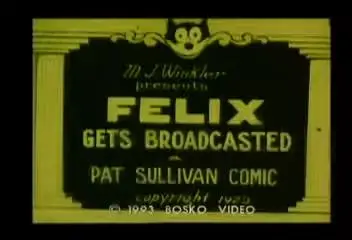
The visual language of Felix Gets Broadcasted is defined by its use of shadows and framing, a hallmark of Otto Messmer's style. By utilizing a 1923-era palette, the film creates an immersive experience that perfectly complements its Short themes.
| Cinematography | Noir-Inspired |
| Soundtrack | Orchestral |
| Editing | Invisible |
| Art Direction | Kitsch |
Visualizing the convergence of Otto Messmer's style and the core Short narrative.
Felix spots a fisherman on his way to his fishing spot, and figures he can follow the guy and grab a quick lunch by stealing his catch. Although he successfully nabs a few fish, the angler catches on and finally captures Felix. To get his revenge, he sends Felix through the telephone wires ("broadcasted") to Egypt, and Felix finds out that the Egyptians don't want him there, either.
Decades after its release, Felix Gets Broadcasted remains a vital piece of the cinematic puzzle. Its influence can be seen in countless modern works, solidifying Otto Messmer's status as a master of the craft in United States and beyond.