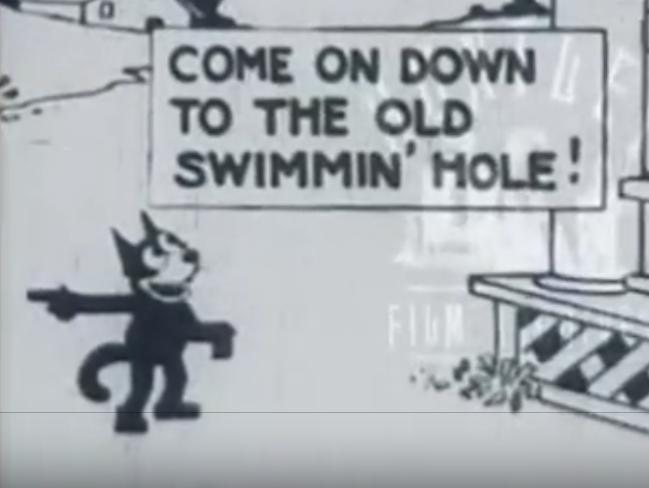
Felix spots a fisherman on his way to his fishing spot, and figures he can follow the guy and grab a quick lunch by stealing his catch. Although he successfully nabs a few fish, the angler catches on and finally captures Felix.
United States
To witness Felix Gets Broadcasted in the modern era is to look directly into the chaotic, unbridled furnace of early 20th-century imagination. Otto Messmer, the unsung architect behind the Pat Sullivan brand, wasn't merely drawing a cat; he was manifesting a trickster god for the radio age. This 1923 short is a kalei...
still_frame


Comparing the cinematic DNA and archive impact of two defining moments in cult history.
Otto Messmer
Edgar Jones
Community
Log in to comment.
" To witness Felix Gets Broadcasted in the modern era is to look directly into the chaotic, unbridled furnace of early 20th-century imagination. Otto Messmer, the unsung architect behind the Pat Sullivan brand, wasn't merely drawing a cat; he was manifesting a trickster god for the radio age. This 1923 short is a kaleidoscopic journey that begins with a mundane act of larceny and ends in a surrealist nightmare of technological displacement. It is a film that captures the zeitgeist of an era terr..."

Deep dive into the cult classic
Discover similar cinematic experiences
A Directorial Spotlight on Otto Messmer