
DbcultAccessing Vault...
Director's Spotlight
Senior Film Conservator
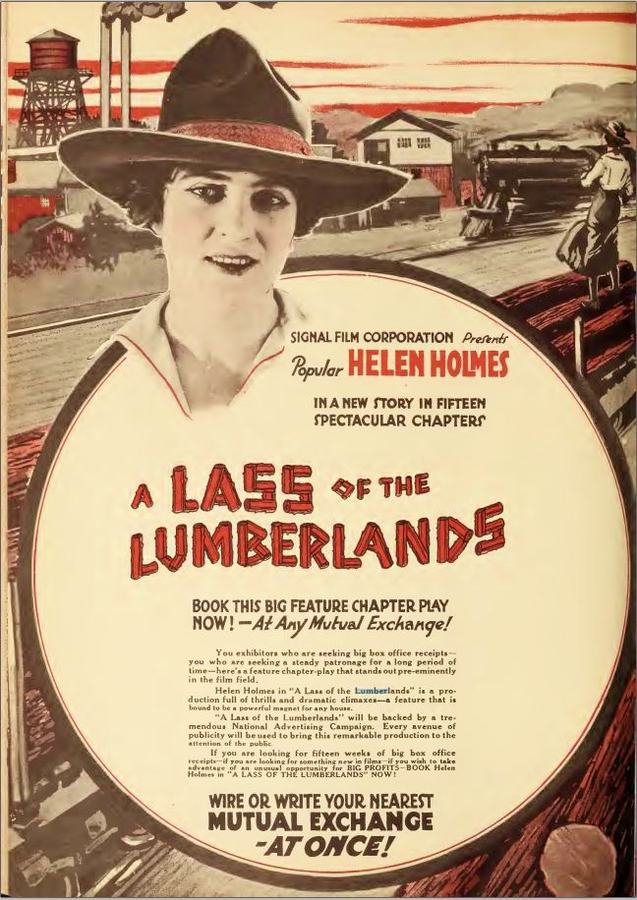
Director's Spotlight: United States
A Deep Dive into the 1916 Vision of Paul Hurst
The artistic breakthrough represented by A Lass of the Lumberlands in 1916 highlights the philosophical inquiries that Paul Hurst embeds within the narrative. Framed by the hauntingly beautiful landscapes of the production, it leaves an indelible mark on the soul of the viewer.
In A Lass of the Lumberlands, Paul Hurst pushes the boundaries of conventional narrative. The film's unique approach to its subject matter has sparked endless debates and interpretations among cinephiles and critics alike.
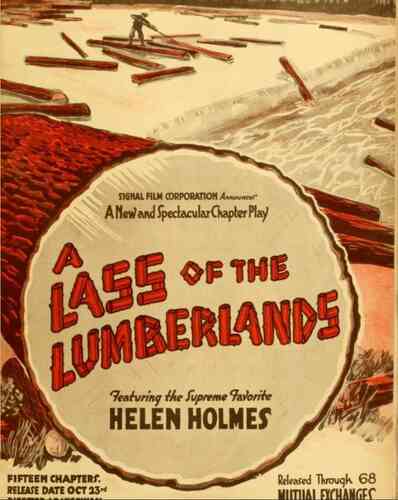
The visual language of A Lass of the Lumberlands is defined by its use of shadows and framing, a hallmark of Paul Hurst's style. By utilizing a 1916-era palette, the film creates an immersive experience that perfectly complements its cult themes.
| Cinematography | Noir-Inspired |
| Soundtrack | Experimental |
| Editing | Elliptical |
| Art Direction | Expressionist |
Visualizing the convergence of Paul Hurst's style and the core cult narrative.
Episode 1: "The Lumber Pirates" "Dollar" Holmes, so called because of his greed for money and power, is a small timberland owner in a region where both the trust and a tribe of Klamath Indians hold similar lands. He is under contract to the combine to deliver to it 10,000,000 feet of timber by a specified date. It is a rich deal. His wife is about to become a mother, and Holmes has set his heart fiercely on a boy to inherit the fortune he means to pile up. A forest fire sweeps away half of Holmes' standing timber. Greer, president of the trust, learning of this, writes a sneering letter hinting at Holmes' ruin unless he fulfills his contract on time. This he cannot do unless he obtains possession of the Indian lands adjoining his. Sleepy Dog, chief of the tribe, refuses to sell. Holmes' wife gives birth to a daughter, and he in a wild rage of double disappointment curses her and the babe, and rushes out of the cabin into the deep woods. He comes upon Dill, a bootlegger, surreptitiously selling whiskey to his loggers. Holmes promises to forebear punishing him if he will go into the Indian camp, from which Sleepy Dog is absent on a trip, and sell his stuff to the savages. The Klamaths are made drunk, and when they demand more whiskey Holmes offers them $100 apiece if they will deed their timber lands to him. They do so, and Holmes wires Greer that he will fulfill his contract; also that with acquisition of the Indian lands he has obtained exclusive right to use of the region's one river for log-floating purposes, thus cutting off the trust's lands from the market. The trust capitulates and accepts Holmes' terms, by which he is given a heavy interest in the combine and made a director. Sleepy Dog returns. Holmes quarrels with him, murders him and throws his body over a cliff. The crime is witnessed by Holmes' wife, a fact which he discovers. In terror of her life, the woman flees the cabin, carrying her infant in her arms. In trying to reach the farther bank of the river over a jam of logs she is hurled into the stream when a blast of dynamite blows up the king-log, and is whirled away in the current, clinging to a log and holding the babe in her arms.
Decades after its release, A Lass of the Lumberlands remains a vital piece of the cinematic puzzle. Its influence can be seen in countless modern works, solidifying Paul Hurst's status as a master of the craft in United States and beyond.