
DbcultAccessing Vault...
Director's Spotlight
Senior Film Conservator
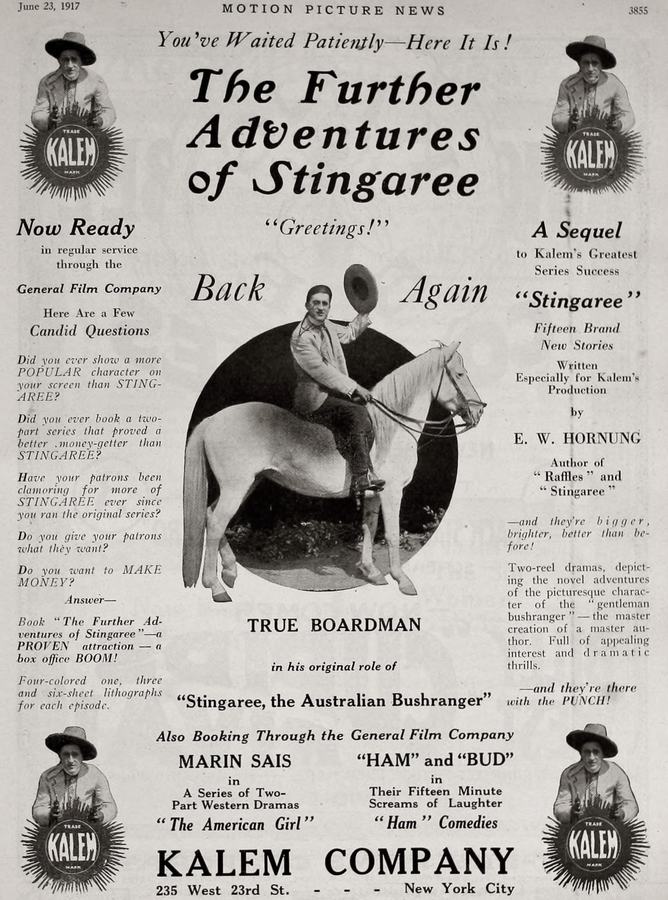
Director's Spotlight: United States
A Deep Dive into the 1917 Vision of Paul Hurst
The enduring fascination with The Further Adventures of Stingaree is a testament to the artistic risks taken by Paul Hurst that eventually paid off. Challenging the viewer to find meaning in the cult shadows, it reminds us of the fragility and beauty of the 1917s.
In The Further Adventures of Stingaree, Paul Hurst pushes the boundaries of conventional narrative. The film's unique approach to its subject matter has sparked endless debates and interpretations among cinephiles and critics alike.
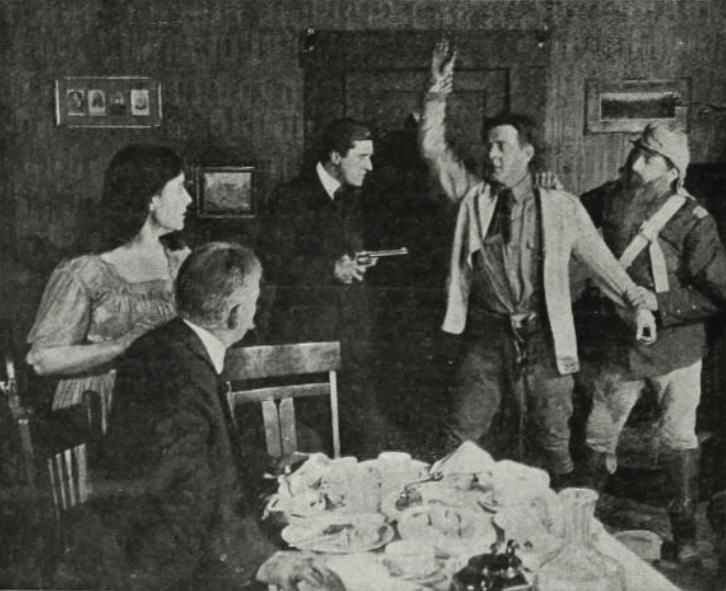
In this work, Paul Hurst explores the intersection of cult and United States cultural identity. The meticulous attention to detail suggests a deep-seated commitment to pushing the boundaries of the medium, ensuring that The Further Adventures of Stingaree remains a relevant topic of study for cult enthusiasts.
| Cinematography | Static |
| Soundtrack | Experimental |
| Editing | Elliptical |
| Art Direction | Expressionist |
Visualizing the convergence of Paul Hurst's style and the core cult narrative.
Episode 1: "The Jackaroo" Maud Norman, the owner of the G Block Station, an Australian sheep run, points out to her manager, Glover, that her flocks have been seriously ravaged by the continued droughts of the past year. But her financial difficulties are somewhat lessened by the arrival of Jack Tabourdin, whose father sends Maud a check for one hundred pounds in payment for taking his son on as a "jackaroo" or apprentice on the sheep run. The following April when a payment of 500 pounds is due on the purchase of the sheep station, and Maud, foreseeing that, she will be unable to meet the payment, advertises for sale her favorite horse, Polly. Stingaree, the gentleman bushranger, and his partner, Howie, read this advertisement, and Stingaree decides that he must have Polly. Tabourdin, the jackaroo, overhears Maud and Glover discussing the sale of Polly. He remembers a handbill advertising 500 pounds reward for the capture of the bushranger, Stingaree. He wonders if he could spare Maud the loss of her favorite horse by capturing the outlaw. He receives an opportunity to do so, when, during the absence of Maud and Glover, Stingaree and Howie arrive at the station to get the horse. He fires at them as they are entering the stable. They run away, but by a subterfuge they make the jackaroo a prisoner. They take him to their camp, and are overjoyed to find that the jackaroo pursued them on the horse they had sought. In camp the jackaroo tells Stingaree the reason for his attempt to capture the bushranger. Stingaree, always too chivalrous to see a woman in trouble, proposes a plan to Howie and sends him away to the Kangaroo Hotel at Topanga. Then, feigning carelessness, he allows the jackaroo to make him a prisoner and take him to the troopers' quarters at Topanga, where Stingaree is locked up, and the jackaroo departs with his 500 pounds reward. Howie bursts into the Kangaroo Hotel at Topanga and holds up the bar. There is a trooper present, and Howie allows him to sneak away to give the alarm to the other troopers. The troopers rush away from the barracks, leaving only one man to guard Stingaree. Arriving at the hotel, they see what is apparently Howie riding away. They give pursuit and overtake the horse, only to find it is carrying only a dummy of straw, which Howie has rigged up for the occasion. Howie hurries to the barracks, where he overpowers the one trooper left in charge of Stingaree, and helps his partner to escape. Stingaree and Howie ride back to their old haunts, while the jackaroo returns to the G Block Station and persuades Maud to accept the 500 pounds as a loan to pay off the note on the sheep run.
Decades after its release, The Further Adventures of Stingaree remains a vital piece of the cinematic puzzle. Its influence can be seen in countless modern works, solidifying Paul Hurst's status as a master of the craft in United States and beyond.