
DbcultAccessing Vault...
Director's Spotlight
Senior Film Conservator
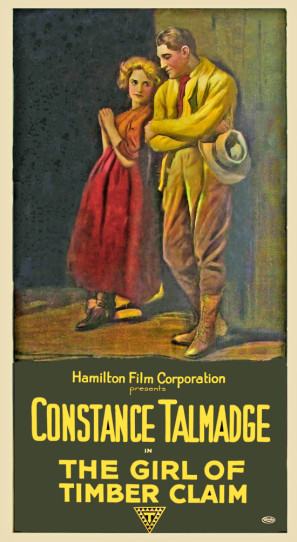
Director's Spotlight: United States
A Deep Dive into the 1917 Vision of Paul Powell
The cult DNA of A Girl of the Timber Claims is a reflection of United States's the subversive storytelling techniques employed by Paul Powell in 1917. Breaking the traditional rules of cult engagement, it leaves an indelible mark on the soul of the viewer.
In A Girl of the Timber Claims, Paul Powell pushes the boundaries of conventional narrative. The film's unique approach to its subject matter has sparked endless debates and interpretations among cinephiles and critics alike.
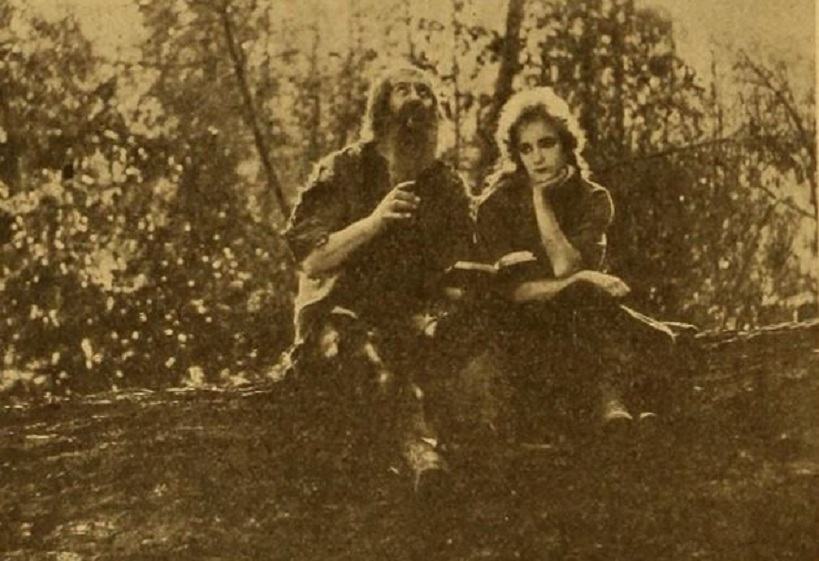
While deeply rooted in United States, A Girl of the Timber Claims has achieved a global reach, influencing directors from various backgrounds. Its ability to translate cult tropes into a universal cinematic language is why it remains a cult staple decades after its 1917 release.
| Cinematography | Handheld |
| Soundtrack | Synth-Heavy |
| Editing | Disjunctive |
| Art Direction | Baroque |
Visualizing the convergence of Paul Powell's style and the core cult narrative.
Jess Vance and her father are homesteaders in the Northwest. For some time land-frauds "engineered" by a "ring" controlled by Senator Hoyle have been going on. Francis Ames, a lawyer, is sent by the government to investigate. The homesteaders endeavor to see Ames, but by the manipulation of Senator Hoyle are prevented from doing so, and they feel that Ames has double-crossed them. Jess boasts bravely of what she would do if she found one of the "dummies" on her claim. Ames learns that one of Hoyle's henchmen has arranged to send dummies to the timberland to "establish a residence" and cinch the ring's claim to the township where Jess lives. Ames stating that he is going east, follows the dummies. Jess meets Ames on her claim and orders him off. He refuses to leave and at the expiration of three days Jess again orders him off, and when he still refuses she shoots him, inflicting only a slight wound. Meantime his secretary, Stanley, meets Cora Abbott, a former friend of Ames. She obtains information that Ames is laid up in his cabin and reports to Hoyle. He tells her to "get something" on Ames. She goes to the woods, and to Ames' dismay insists that she has come to nurse him back to health. In the meantime Jess, feeling sorry for him, has bandaged his wound. He learns of the contempt in which he is held by the settlers. Cora, to get rid of Jess, tells her that she and Ames are engaged. Ames asks Cora to leave, which she does, after a stormy scene, but she bribes two forest scouts to burn Ames' cabin on the night the settlers have decided to burn the cabin of the jumpers. Ames, hearing of the proposed attempt to drive out the jumpers, leaves his cabin in charge of a half-breed. When Jess is told of the burning of Ames' cabin, and the finding of a charred body, she is broken-hearted, and to forget her own heartache offers to go to Portland to see if anything can be done toward the settlement of the homesteaders' wrongs. She is granted an interview with Ames, and there are two very surprised people when Ames sees his forest girl and Jess discovers that her jumper and the despised Ames are one and the same. Later she gladly gives up her homestead rights to become Ames' bride.
Decades after its release, A Girl of the Timber Claims remains a vital piece of the cinematic puzzle. Its influence can be seen in countless modern works, solidifying Paul Powell's status as a master of the craft in United States and beyond.