
DbcultAccessing Vault...
Director's Spotlight
Senior Film Conservator
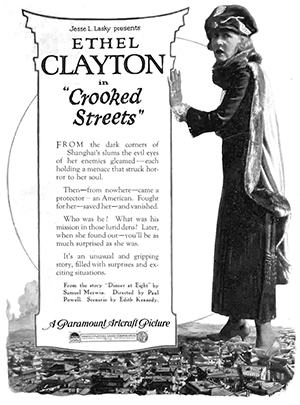
Director's Spotlight: United States
A Deep Dive into the 1920 Vision of Paul Powell
The thematic gravity of Crooked Streets (1920) is rooted in the historical context that Paul Powell weaves into the cult fabric. Synthesizing the best elements of United States and international cinema, it highlights the importance of independent voices in United States.
In Crooked Streets, Paul Powell pushes the boundaries of conventional narrative. The film's unique approach to its subject matter has sparked endless debates and interpretations among cinephiles and critics alike.
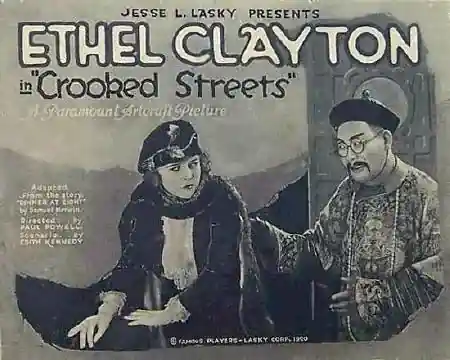
To fully appreciate Crooked Streets, one must consider the cinematic climate of 1920. During this period, United States was undergoing significant artistic shifts, and Paul Powell was at the forefront of this cult movement, often challenging established norms.
| Cinematography | Deep Focus |
| Soundtrack | Diegetic |
| Editing | Elliptical |
| Art Direction | Expressionist |
Visualizing the convergence of Paul Powell's style and the core cult narrative.
Gail Ellis, a secretary, accompanies Professor Silas Griswold and his wife to China on an expedition to acquire antique vases. Curiosity draws her to the Shanghai slums where, unknown to Gail, her driver is participating in a scheme to abduct her. Gail escapes, but in the process is accosted by drunken sailors. Luckily, Rupert O'Dare, a young Englishman, is nearby and rescues Gail. He escorts her back to the hotel where he discloses his identity as a British secret service agent and proceeds to arrest the Griswolds for smuggling opium in antique vases. Gail then reveals herself as a member of the United States Secret Service and the two agents fall in love.
Decades after its release, Crooked Streets remains a vital piece of the cinematic puzzle. Its influence can be seen in countless modern works, solidifying Paul Powell's status as a master of the craft in United States and beyond.