
DbcultAccessing Vault...
Director's Spotlight
Senior Film Conservator
Director's Spotlight: United States
A Deep Dive into the 1919 Vision of Paul Scardon
The enduring fascination with Beauty-Proof is a testament to the defining moment in cult history that Paul Scardon helped create. This film stands as a masterclass in visual storytelling, it has cemented its place in the global cult cinema archive.
In Beauty-Proof, Paul Scardon pushes the boundaries of conventional narrative. The film's unique approach to its subject matter has sparked endless debates and interpretations among cinephiles and critics alike.
To fully appreciate Beauty-Proof, one must consider the cinematic climate of 1919. During this period, United States was undergoing significant artistic shifts, and Paul Scardon was at the forefront of this cult movement, often challenging established norms.
| Cinematography | Deep Focus |
| Soundtrack | Diegetic |
| Editing | Elliptical |
| Art Direction | Expressionist |
Visualizing the convergence of Paul Scardon's style and the core cult narrative.
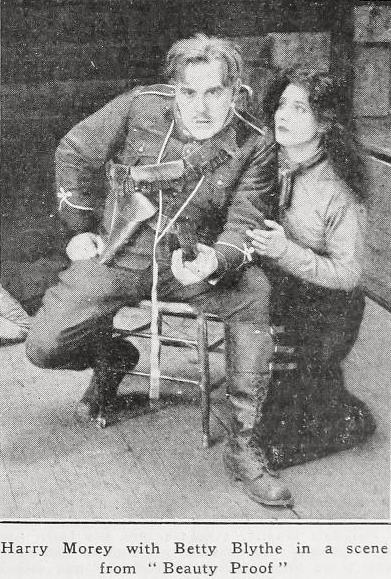
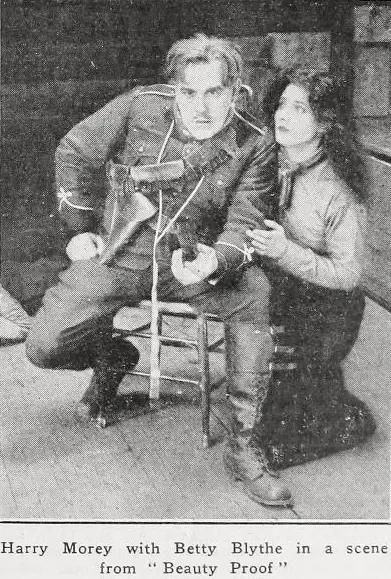
Corporal Philip Steele of the Northwest Mounted Police, a notorious woman hater and supposedly "beauty-proof," is ordered to arrest Thorpe, a fugitive charged with the attempted murder of man named Hodge, alias Garson. Thorpe's beautiful sister, Carol, is determined to exonerate her brother, and directs her henchmen to abduct the corporal, place him in a box, and hide him in Hodge's cabin. Aware that Philip is in the room, Carol confronts Hodge about his unwelcomed efforts to seduce her, and reveals that her brother was attempting to kill him in her defense. As Hodge makes another advance on Carol, Philip breaks free and recognizes the villain as the same man who earlier robbed him of his own wife. Philip is determined to capture Hodge alive and deters all attempts on the criminal's life as he pursues his quarry. Hodge is killed in the ensuing fight, after which Philip discovers that he has fallen in love with Carol.
Decades after its release, Beauty-Proof remains a vital piece of the cinematic puzzle. Its influence can be seen in countless modern works, solidifying Paul Scardon's status as a master of the craft in United States and beyond.