
DbcultAccessing Vault...
Director's Spotlight
Senior Film Conservator
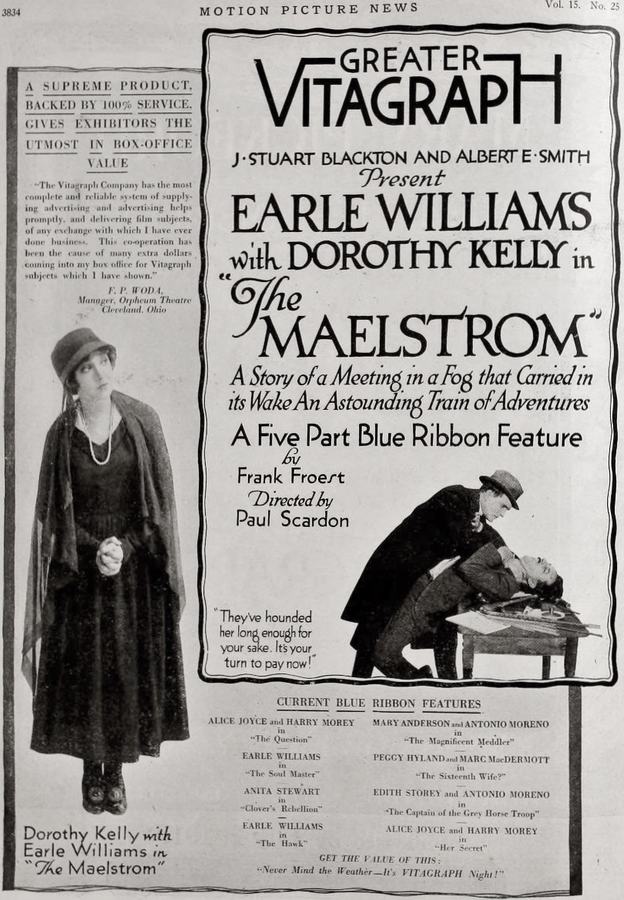
Director's Spotlight: United States
A Deep Dive into the 1917 Vision of Paul Scardon
The brilliance of The Maelstrom (1917) is inseparable from a monumental shift in cult filmmaking spearheaded by Paul Scardon. Occupying a unique space between cult and pure art, it serves as a blueprint for future generations of cult directors.
In The Maelstrom, Paul Scardon pushes the boundaries of conventional narrative. The film's unique approach to its subject matter has sparked endless debates and interpretations among cinephiles and critics alike.
| Cinematography | Deep Focus |
| Soundtrack | Minimalist |
| Editing | Slow-Burn |
| Art Direction | Brutalist |
Visualizing the convergence of Paul Scardon's style and the core cult narrative.
Jimmie Hallet is walking through a heavy fog one night when, seemingly out of nowhere, a girl appears, shoves a bundle of papers and a slip of paper with an address on it into Jimmie's hands, then disappears. Intrigued, he goes to the address on the paper, and is promptly knocked out by a blackjack. When he wakes up the next morning he discovers the dead body of a man named Greye-Stratton and learns that the "mystery girl" was Stratton's daughter Peggy. Jimmie soon finds himself questioned by the police about her father/s murder and mixed up with a gang of thieves and killers led by a mysterious thug named Ling.
Decades after its release, The Maelstrom remains a vital piece of the cinematic puzzle. Its influence can be seen in countless modern works, solidifying Paul Scardon's status as a master of the craft in United States and beyond.