
DbcultAccessing Vault...
Director's Spotlight
Senior Film Conservator
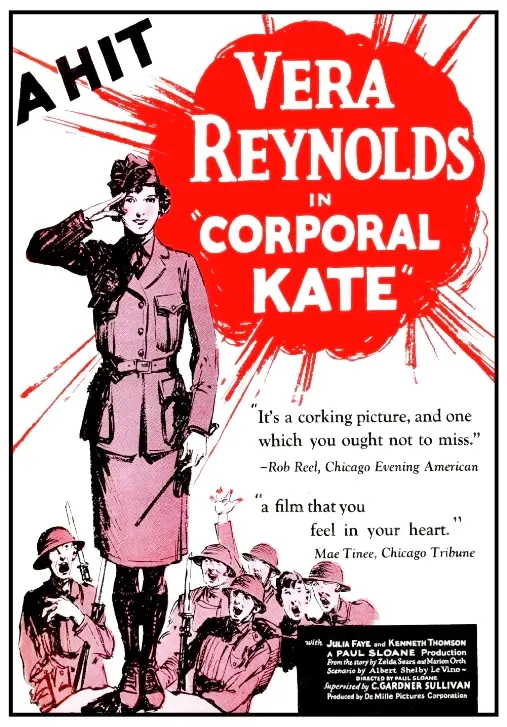
Director's Spotlight: United States
A Deep Dive into the 1926 Vision of Paul Sloane
Few works in United States cinema carry the same weight as Corporal Kate, especially regarding the technical innovation that Paul Sloane introduced to the War format. Subverting the expectations of the typical 1926 audience, it bridges the gap between traditional War and contemporary vision.
In Corporal Kate, Paul Sloane pushes the boundaries of conventional narrative. The film's unique approach to its subject matter has sparked endless debates and interpretations among cinephiles and critics alike.
While deeply rooted in United States, Corporal Kate has achieved a global reach, influencing directors from various backgrounds. Its ability to translate War tropes into a universal cinematic language is why it remains a cult staple decades after its 1926 release.
| Cinematography | Static |
| Soundtrack | Orchestral |
| Editing | Slow-Burn |
| Art Direction | Brutalist |
Visualizing the convergence of Paul Sloane's style and the core War narrative.
Kate Jones and Becky Finkelstein are manicurists who decide to go overseas and entertain American troops during the Great War. Clark Jackson, a wealthy playboy, and William, his valet, are members of the A.E.F, and William becomes the top-sergeant in their unit. Evelyn, a friend of Clark's, also goes to France as a Red Cross nurse. They all meet, and Kate and Becky both fall in love with Clark. Kate is jealous of Evelyn, but, unknown to any of them, Evelyn loves an American aviator. When the Armistice finally comes, two of them have died in the war, but the others are all reunited.
Decades after its release, Corporal Kate remains a vital piece of the cinematic puzzle. Its influence can be seen in countless modern works, solidifying Paul Sloane's status as a master of the craft in United States and beyond.