
DbcultAccessing Vault...
Director's Spotlight
Senior Film Conservator
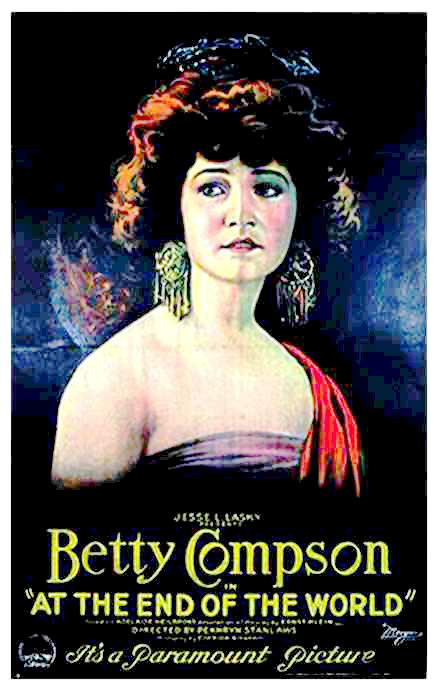
Director's Spotlight: United States
A Deep Dive into the 1921 Vision of Penrhyn Stanlaws
Analyzing At the End of the World (1921) requires a deep dive into the defining moment in Romance history that Penrhyn Stanlaws helped create. Defining a new era of United States artistic expression, it transcends regional boundaries to tell a universal story.
In At the End of the World, Penrhyn Stanlaws pushes the boundaries of conventional narrative. The film's unique approach to its subject matter has sparked endless debates and interpretations among cinephiles and critics alike.
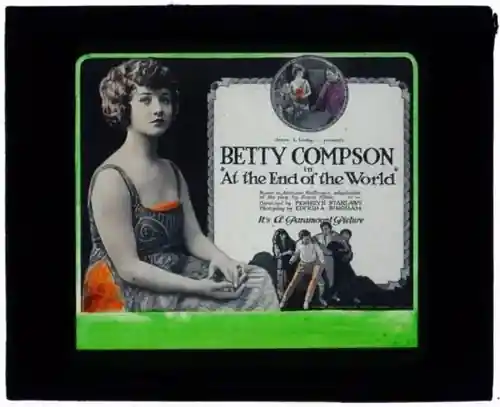
To fully appreciate At the End of the World, one must consider the cinematic climate of 1921. During this period, United States was undergoing significant artistic shifts, and Penrhyn Stanlaws was at the forefront of this Romance movement, often challenging established norms.
| Cinematography | Noir-Inspired |
| Soundtrack | Experimental |
| Editing | Invisible |
| Art Direction | Kitsch |
Visualizing the convergence of Penrhyn Stanlaws's style and the core Romance narrative.
Cherry O'Day is the daughter of Terence O'Day, who runs the Paper Lantern Café in Shanghai. She practices her father's philosophy to "play with men to her heart's content but always keep them at arm's length." Cherry has many suitors. She promises to marry a sailor named Donald MacGregor. But when he returns from the sea, he discovers Cherry's father has died. Cherry has married a rich man named William Blaine. A bank clerk named Harvel Allen tries to win Cherry's favor, but he is caught stealing bonds. Then Gordon Deane, a traveling novelist, meets Cherry but is the least interested of her suitors. Deane decides to take charge of a lighthouse on a lonely island, and brings MacGregor and Allen with him. Cherry gets a divorce and seeks Deane on the island. MacGregor and Allen engage in a fight at the top of the lighthouse, and both men plummet to their deaths. Cherry finds happiness with Deane.
Decades after its release, At the End of the World remains a vital piece of the cinematic puzzle. Its influence can be seen in countless modern works, solidifying Penrhyn Stanlaws's status as a master of the craft in United States and beyond.