
DbcultAccessing Vault...
Director's Spotlight
Senior Film Conservator
Director's Spotlight: United States
A Deep Dive into the 1926 Vision of Phil Rosen
As we revisit the 1926 masterpiece A Woman's Heart, we are struck by the atmospheric immersion that Phil Rosen achieves throughout A Woman's Heart. Exploring the nuances of the human condition with Crime flair, it solidifies Phil Rosen's reputation as a master of the craft.
In A Woman's Heart, Phil Rosen pushes the boundaries of conventional narrative. The film's unique approach to its subject matter has sparked endless debates and interpretations among cinephiles and critics alike.
| Cinematography | High-Contrast |
| Soundtrack | Minimalist |
| Editing | Slow-Burn |
| Art Direction | Brutalist |
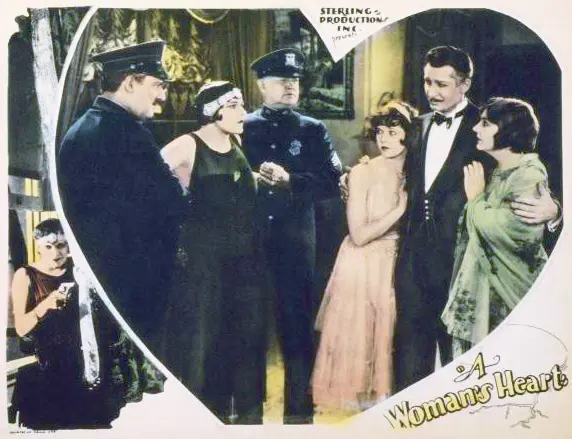
Visualizing the convergence of Phil Rosen's style and the core Crime narrative.
Eve Allen marries John Waring for his money and admits it, as she still has a lasting love for her old sweetheart, Ralph Deane. When the Warings return from their honeymoon, Ralph asks Eve to see him once more, and while driving in the country he breaks down Eve's resistance and she admits she loves him. She goes home and tells John, who begins divorce proceedings. Patsy Allen, Eve's sister, tries to break up Eve's affair with Ralph, as she knows he is keeping company with Vixen, a sensuous woman. Patsy goes to Ralph's home for dinner, where Vixen grows jealous and shoots and kills him while he and John are fighting. John is accused of the murder but is cleared. Vixen commits suicide, and Eve returns to John, now believing that John is the only man for her--not surprising, since Ralph is dead.
Decades after its release, A Woman's Heart remains a vital piece of the cinematic puzzle. Its influence can be seen in countless modern works, solidifying Phil Rosen's status as a master of the craft in United States and beyond.