
DbcultAccessing Vault...
Director's Spotlight
Senior Film Conservator
Director's Spotlight: Italy
A Deep Dive into the 1920 Vision of Pier Antonio Gariazzo
The thematic gravity of After Six Days (1920) is rooted in the historical context that Pier Antonio Gariazzo weaves into the cult fabric. Synthesizing the best elements of Italy and international cinema, it highlights the importance of independent voices in Italy.
In After Six Days, Pier Antonio Gariazzo pushes the boundaries of conventional narrative. The film's unique approach to its subject matter has sparked endless debates and interpretations among cinephiles and critics alike.
While deeply rooted in Italy, After Six Days has achieved a global reach, influencing directors from various backgrounds. Its ability to translate cult tropes into a universal cinematic language is why it remains a cult staple decades after its 1920 release.
| Cinematography | High-Contrast |
| Soundtrack | Minimalist |
| Editing | Slow-Burn |
| Art Direction | Brutalist |
Visualizing the convergence of Pier Antonio Gariazzo's style and the core cult narrative.
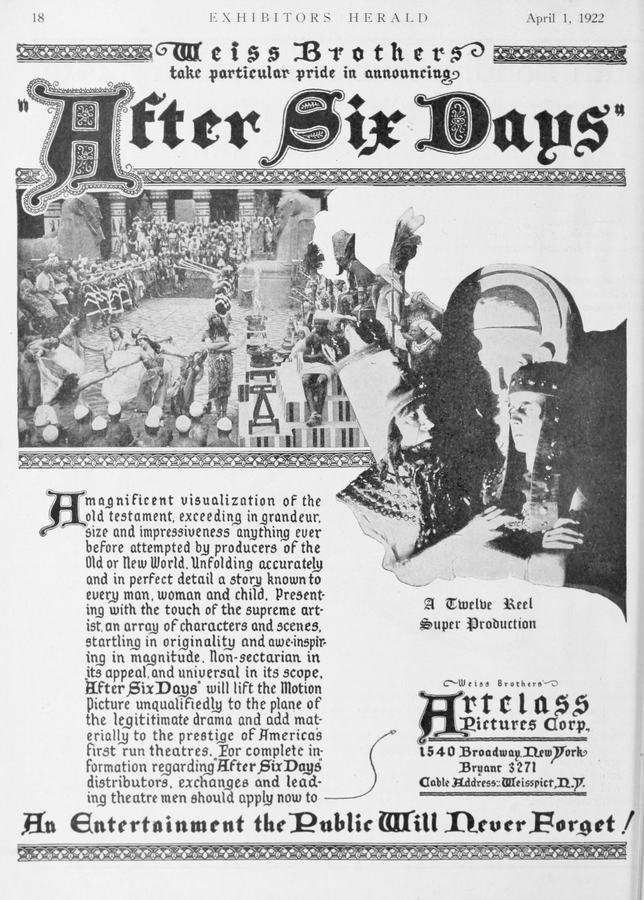
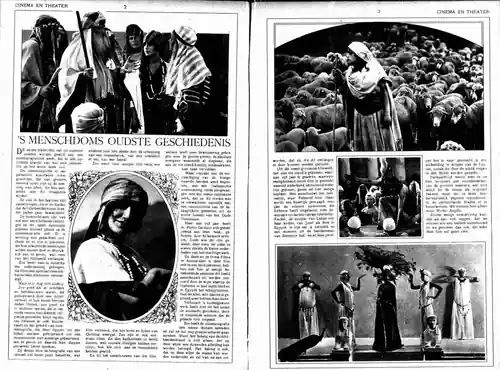
Touted at the time as a "$3,000,000 Entertainment for the Hundred Millions," this Old Testament spectacle delivered what it promised, "from the creation of Adam and Eve to the parting of the Red Sea." The advertising claimed it was filmed over a period of five years at the "Exact Locations of Biblical History." Little is known about the actual production, which has puzzled film scholars given its international box-office success. This edition was made from the only complete copy known to exist, a mint 16mm print of the 1929 7-reel sound reissue.
Decades after its release, After Six Days remains a vital piece of the cinematic puzzle. Its influence can be seen in countless modern works, solidifying Pier Antonio Gariazzo's status as a master of the craft in Italy and beyond.