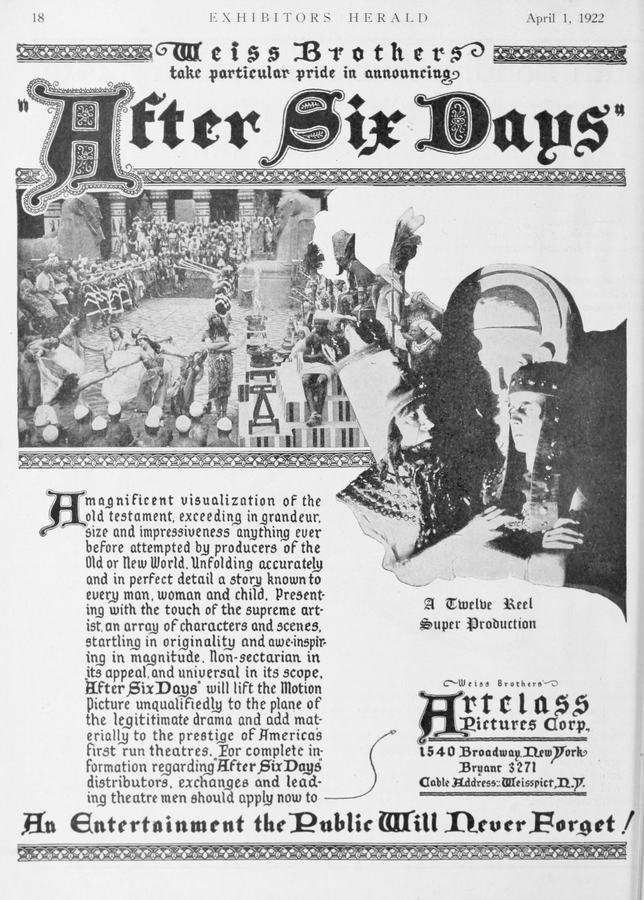
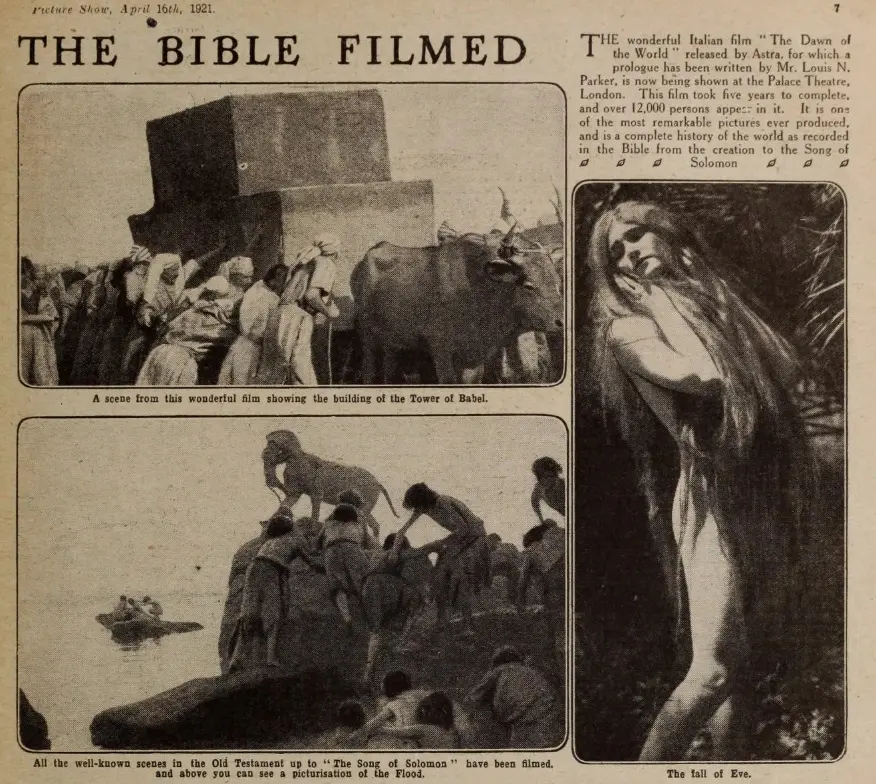
Touted at the time as a "$3,000,000 Entertainment for the Hundred Millions," this Old Testament spectacle delivered what it promised, "from the creation of Adam and Eve to the parting of the Red Sea." The advertising claimed it was filmed over a period of five years at the "Exact Locations of Biblical History.
Kathryn Stuart
Italy
The Antediluvian Ambition of Armando Vay To witness After Six Days (originally La Sacra Bibbia) is to gaze upon the skeletal remains of a cinematic leviathan. In the early 1920s, before the Hollywood studio system had fully codified the language of the 'blockbuster,' Italian filmmakers were already operating on a sc...
still_frame
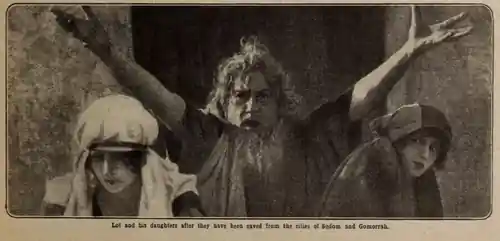
still_frame
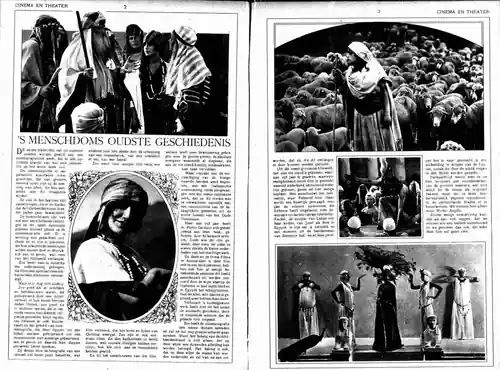
publicity

Comparing the cinematic DNA and archive impact of two defining moments in cult history.
Pier Antonio Gariazzo

Pier Antonio Gariazzo
Community
Log in to comment.
" The Antediluvian Ambition of Armando Vay To witness After Six Days (originally La Sacra Bibbia) is to gaze upon the skeletal remains of a cinematic leviathan. In the early 1920s, before the Hollywood studio system had fully codified the language of the 'blockbuster,' Italian filmmakers were already operating on a scale that defied fiscal logic. This production, touted as a $3,000,000 entertainment for the hundred millions, represents the zenith of that era's hubris and artistry. Unlike contem..."