
Cult Cinema
The Primordial Pulse: Unearthing the Proto-Cult Foundations and Maverick Visions of Cinema’s Forgotten Outliers

“A deep-dive exploration into how the silent era's narrative anomalies and genre misfits established the genetic blueprint for modern cult cinema devotion.”
The Genesis of the Maverick Spirit: Beyond the Mainstream Horizon
Cult cinema is often discussed as a phenomenon of the 1970s, a byproduct of midnight screenings and the counter-cultural revolution. However, the true genetic markers of the cult aesthetic were forged much earlier, in the flickering shadows of the silent era and the early talkies. To understand why we worship at the altar of the strange, we must look back at the maverick visions that dared to defy the burgeoning Hollywood hegemony. These were films that didn't just tell stories; they challenged the social fabric, experimented with narrative anarchy, and invited a specific kind of obsessive devotion that we now recognize as the hallmark of the cult following.

In the early 20th century, the cinematic landscape was a wild frontier. Before the rigid structures of the Hays Code or the formulaic demands of the studio system, filmmakers were operating in a space of pure alchemical experimentation. It is here that we find the roots of the transgressive, the weird, and the wonderful. These films, often dismissed as mere curiosities in their time, carry the primordial pulse of what would eventually become a global underground movement.

Industrial Nightmares and the Ethics of Ambition
One of the earliest indicators of a cult-adjacent narrative is the exploration of the dark underbelly of progress. In The Clarion, we see a scathing indictment of the patent medicine industry, where Dr. Andre Surtaine builds a fortune on a fraudulent cure-all. This theme of corporate skepticism and the corruption of the American dream is a recurring motif in cult cinema, from the dystopian futures of the 80s back to these early morality plays. Similarly, The Road of Ambition presents Bethel Steel foreman Bill Matthews as a man obsessed with eliminating waste in steel manufacture—a gritty, industrial focus that lacks the escapist glamour usually associated with early Hollywood but possesses a raw, human intensity that resonates with the 'outsider' ethos.

These films were not merely entertainment; they were mirrors held up to a rapidly changing society. They spoke to the disenfranchised, to the workers, and to those who felt the crushing weight of the 'Company' long before the term 'cyberpunk' was ever coined. The grit found in these narratives paved the way for the social-realist cult classics of the later century, proving that the rebel heart of cinema has always been beating in the shadows of the factory and the laboratory.

The Transgressive Feminine: From Vamps to Rebels
Perhaps no archetype is more central to the cult experience than the transgressive protagonist. In the early era, this was often embodied by the 'Vamp' or the 'Flirt.' In The Wolf Woman, Leila Aradella is presented as a narcissistic predator who reaps delight from ruining men both morally and financially. While contemporary audiences may have seen this as a cautionary tale, modern cult enthusiasts view such characters as icons of agency and rebellion against patriarchal constraints. This thread continues in The Flirt (1922), where Cora Madison’s reckless whims drive her family to sacrifice everything, and in The Fuel of Life, where Angela De Haven sets out to make all men pay for her husband's infidelity.
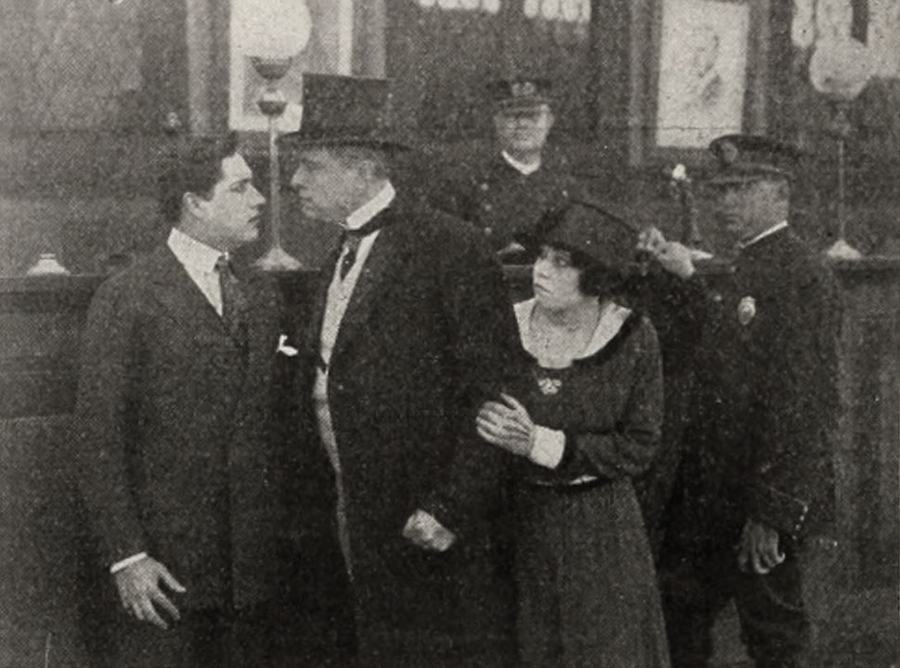
These characters represent a break from the 'damsel in distress' trope, offering instead a complex, often terrifying vision of femininity that refuses to be tamed. This is the same spirit that would later inhabit the heroines of John Waters or the fierce protagonists of 70s exploitation cinema. The devotion these 'dangerous' women inspired is the very essence of cult worship—a recognition of the power found in the unconventional and the socially forbidden.

Surrealist Sparks and Narrative Anarchy
If cult cinema has a visual language, it is one of surrealism and absurdity. This can be traced back to early shorts like The Boxing Kangaroo, where an Inkwell Clown engages in a bizarre pugilistic match with a marsupial. This kind of non-sequitur humor and visual playfulness is the direct ancestor of the underground animation movements and the 'weird for the sake of weird' aesthetic of modern cult hits. Similarly, The Show features a propman dealing with roosters that spit nitroglycerine—a moment of pure narrative anarchy that feels closer to the work of the Dadaists than to a standard theatrical comedy.

This willingness to embrace the illogical and the grotesque is what separates a standard film from a cult masterpiece. When we look at The Mysteries of Souls, with its story of an 'unnatural relationship' and a guardian plotting against his ward for an inheritance, we see the early blueprints of the psychological thriller and the Gothic horror. These films weren't afraid to lean into the 'uncanny,' creating an atmosphere of unease that lingers long after the credits roll. It is this lingering effect, this 'haunting' of the viewer's psyche, that fosters the kind of repeat viewings and deep-dive analysis that define a cult following.
Atmospheric Realism and the Documentary Impulse
Not all cult films are fantasies. Some find their power in the harrowing reality of the human condition. The Bottom of the World, a documentary chronicling Sir Ernest Shackleton’s ill-fated expedition to Antarctica, is a prime example of how 'real life' can be transformed into a cult legend. The imagery of the ship Endurance trapped in the ice is as haunting as any set designed for a horror film. It taps into the primal fear of the unknown and the resilience of the human spirit—themes that have always been central to the cult experience.
This documentary impulse is also seen in the social dramas of the time, such as Shattered, which depicts the crushing poverty of a track checker's family living by a railway line. There is a starkness to these films, a refusal to look away from the grime and the cold, that creates a profound connection with the audience. This isn't the 'sanitized' reality of the mainstream; it is a raw, unvarnished truth that speaks to the collective subconscious of the marginalized and the lonely.
The Pulp Roots: Adventure, Mystery, and the Exotic
Cult cinema often thrives on the 'pulp'—those high-concept, often low-budget adventures that transport the viewer to another world. The Jungle Goddess is a quintessential example, featuring a kidnapped girl who becomes the deity of a cannibalistic tribe in 'darkest Africa' after a hot-air balloon accident. It is absurd, it is problematic by modern standards, and it is utterly enthralling in its narrative audacity. This is the same energy that fuels the 'B-movie' obsession, where the sheer imagination of the premise outweighs the limitations of the production.
Mystery and crime also played a significant role in establishing the cult DNA. The Girl in the Web and The Lightning Raider introduced the 'master thief' and the 'socialite in peril' tropes, but with a twist of daring that set them apart. These films weren't just about solving a crime; they were about the thrill of the chase and the allure of the forbidden. In The Mystery of the Rocks of Kador, we see the early use of cinematic technique as a plot point, further blurring the lines between reality and the screen—a meta-narrative trick that has become a staple of cult filmmaking.
Conclusion: The Eternal Return of the Outcast
The 50 films referenced here—from the comedic mishaps of Oh, Daddy! and Hot Dog to the intense emotional stakes of Back of the Man and The Sins of St. Anthony—all contribute to a larger tapestry of cinematic rebellion. They represent a time when the rules were still being written, and the only limit was the filmmaker's imagination. Whether it is the 'wild' Southern girl in Wild Primrose or the reckless lover in Il miracolo della Madonna di Pompei, these stories celebrate the individual over the institution, the strange over the standard, and the heart over the machine.
As we continue to explore the vast archives of film history, we must remember that the cult movie is not a modern invention. It is an ancient spirit, a ghost in the machine that has been with us since the first flicker of light hit the silver screen. By unearthing these forgotten outliers, we don't just learn about the past; we find the keys to the future of cinematic obsession. The maverick pulse is still beating, waiting for the next generation of misfits to find their tribe in the dark of the theater.
Community
Comments
Log in to comment.
Loading comments…