
DbcultAccessing Vault...
Director's Spotlight
Senior Film Conservator
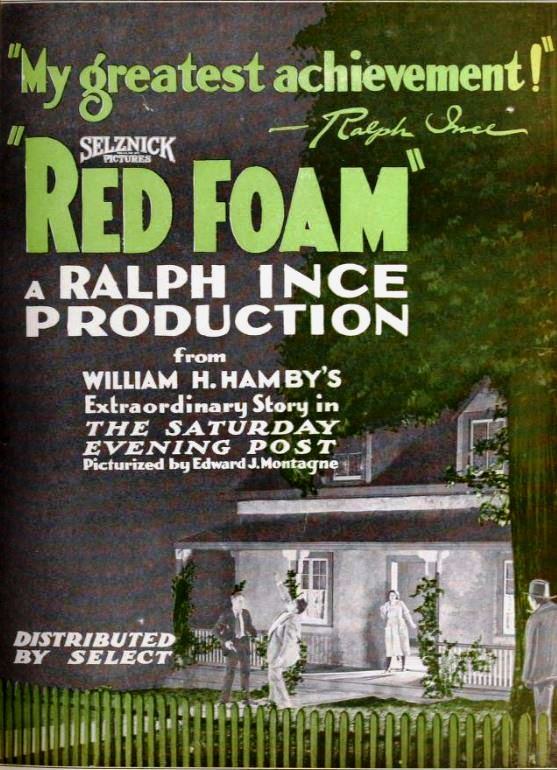
Director's Spotlight: United States
A Deep Dive into the 1920 Vision of Ralph Ince
Exploring the Drama underpinnings of Red Foam leads us to the uncompromising vision of Ralph Ince that defines this Drama masterpiece. Melding the raw energy of United States with a global Drama appeal, it echoes the profound changes occurring in United States during that era.
In Red Foam, Ralph Ince pushes the boundaries of conventional narrative. The film's unique approach to its subject matter has sparked endless debates and interpretations among cinephiles and critics alike.
While deeply rooted in United States, Red Foam has achieved a global reach, influencing directors from various backgrounds. Its ability to translate Drama tropes into a universal cinematic language is why it remains a cult staple decades after its 1920 release.
| Cinematography | Handheld |
| Soundtrack | Synth-Heavy |
| Editing | Disjunctive |
| Art Direction | Baroque |
Visualizing the convergence of Ralph Ince's style and the core Drama narrative.
Andy Freeman, a traveling salesman popular throughout the state, brings his young wife to live at Buckeye Bridge, Missouri where Arnold Driscoll, who operates a quarry, also resides. Freeman has discovered that Driscoll and his wife were once sweethearts, and he forces them to see each other constantly, hoping to cause his wife anguish. Posing as an injured husband, Freeman stirs up suspicion against Driscoll and the woman. After a struggle, Freeman is found dead, and Driscoll and Mrs. Freeman are arrested. A mob is about to lynch the pair when suddenly a man appears, confessing that it was he who shot and killed Freeman, because the latter ran away with his wife. Finally, Driscoll and Mrs. Freeman are happily wed.
Decades after its release, Red Foam remains a vital piece of the cinematic puzzle. Its influence can be seen in countless modern works, solidifying Ralph Ince's status as a master of the craft in United States and beyond.