
DbcultAccessing Vault...
Director's Spotlight
Senior Film Conservator
Director's Spotlight: United States
A Deep Dive into the 1916 Vision of Raoul Walsh
Few works in United States cinema carry the same weight as Pillars of Society, especially regarding the cultural zeitgeist captured so perfectly by Raoul Walsh in 1916. Utilizing a 1916-specific aesthetic that remains timeless, it serves as a blueprint for future generations of cult directors.
In Pillars of Society, Raoul Walsh pushes the boundaries of conventional narrative. The film's unique approach to its subject matter has sparked endless debates and interpretations among cinephiles and critics alike.
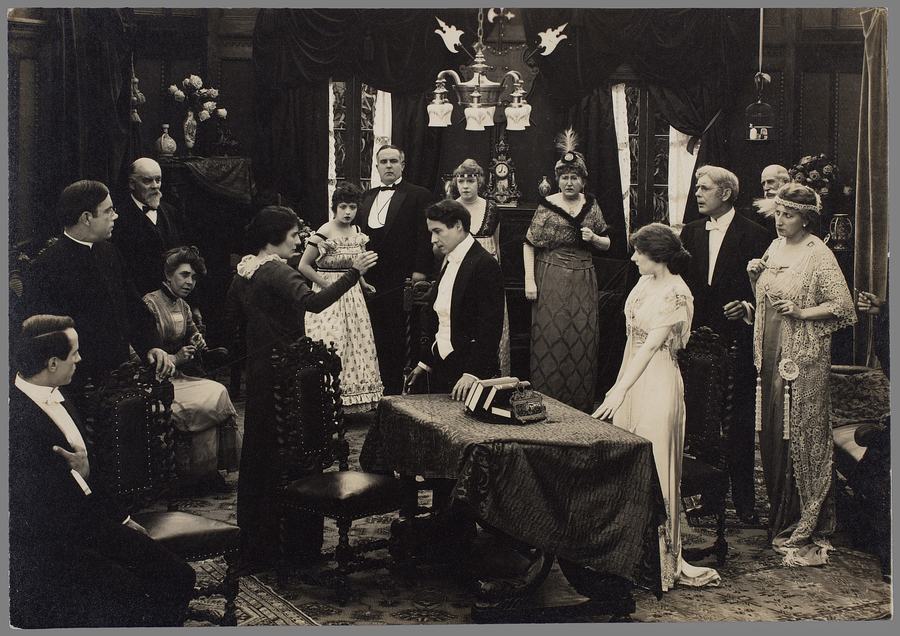
The visual language of Pillars of Society is defined by its use of shadows and framing, a hallmark of Raoul Walsh's style. By utilizing a 1916-era palette, the film creates an immersive experience that perfectly complements its cult themes.
| Cinematography | Handheld |
| Soundtrack | Orchestral |
| Editing | Slow-Burn |
| Art Direction | Brutalist |
Visualizing the convergence of Raoul Walsh's style and the core cult narrative.
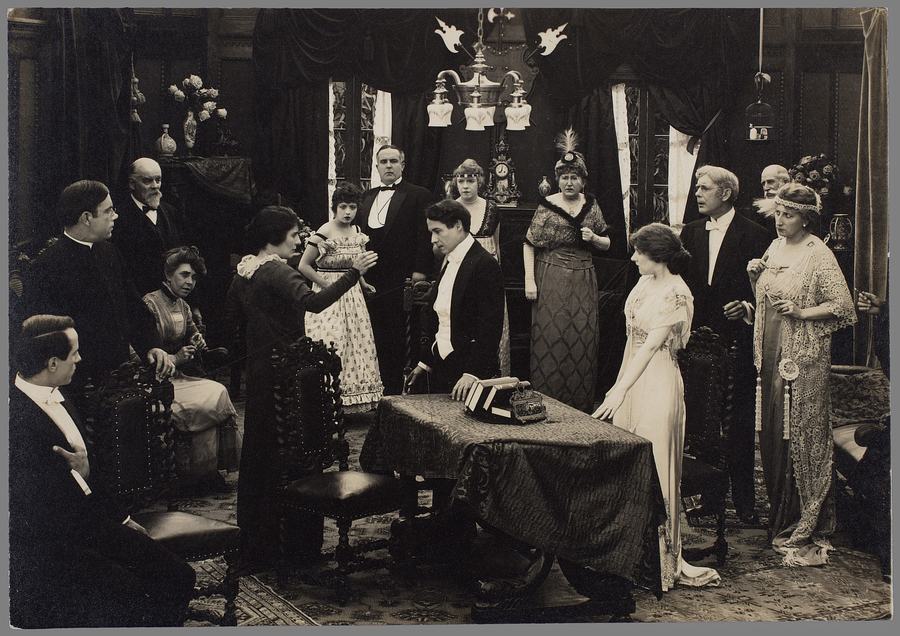
Karsten Bernick, last of the house of Bernick, whose shipyards are the mainstay of the town, is forced to return home from a Bohemian life to Paris to assume the management of the business which is nearly bankrupt. He breaks an engagement to Lona to marry Betty, her rich half-sister. With her fortune he saves the company and eventually comes to be known as a Pillar of Society. Then a certain Mme. Dorf, an actress, arrives in town and threatens o expose an episode in his history which occurred during his days in Paris. He persuades his brother-in-law, Johan, to take the blame for him. Johan agrees to do so for his sister's sake and then leaves for America with his sister Lona. Mme. Dorf dies and leaves her little daughter to Karsten's care. Karsten really fears to refuse the guardianship and wins new honors as an upright benevolent citizen. In the midst of his security in the community, Johan and Lona suddenly return, the former to clear his name, the latter, who still loves Karsten, to persuade him to establish his place as a Pillar of Society on a foundation of Truth instead of lies. Karsten defends himself vigorously on the grounds that a Pillar of Society must resort to subterfuge and deception in order to protect society which depends upon him. Johan falls in love with Karsten's little protégée, the daughter of Mme. Dorf, and renews his insistence that Karsten clear his name. Desperate, Karsten connives at their departure on an unseaworthy ship, but his plan reacts on himself, for his only child, Olaf, has run away and been discovered on the ship as a stowaway. The ship catches fire and there is a thrilling rescue of the little boy in a motorboat. Karsten is awakened to the truth of his position and at a reception given him by the townspeople as a tribute to their leading citizen, confesses the truth. Thus he learns that the Spirits of Truth and Freedom are the true Pillars of Society and not man, however powerful.
Decades after its release, Pillars of Society remains a vital piece of the cinematic puzzle. Its influence can be seen in countless modern works, solidifying Raoul Walsh's status as a master of the craft in United States and beyond.