
DbcultAccessing Vault...
Director's Spotlight
Senior Film Conservator
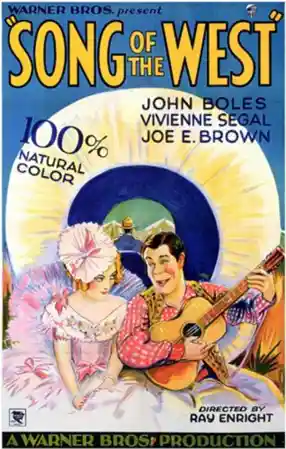
Director's Spotlight: United States
A Deep Dive into the 1930 Vision of Ray Enright
Witnessing the stylistic transformation of Western through Song of the West reveals the global recognition that Ray Enright garnered after the release of Song of the West. Serving as a mirror to the anxieties of a changing world, offering layers of thematic complexity that demand repeated viewing.
In Song of the West, Ray Enright pushes the boundaries of conventional narrative. The film's unique approach to its subject matter has sparked endless debates and interpretations among cinephiles and critics alike.
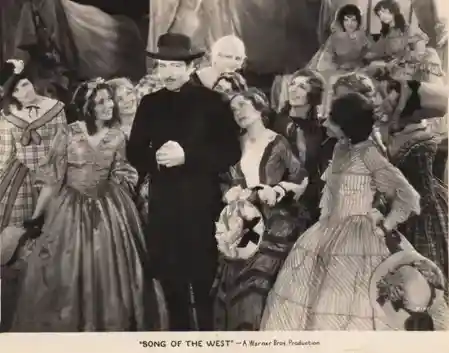
In this work, Ray Enright explores the intersection of Western and United States cultural identity. The meticulous attention to detail suggests a deep-seated commitment to pushing the boundaries of the medium, ensuring that Song of the West remains a relevant topic of study for Western enthusiasts.
| Cinematography | Deep Focus |
| Soundtrack | Orchestral |
| Editing | Invisible |
| Art Direction | Kitsch |
Visualizing the convergence of Ray Enright's style and the core Western narrative.
As a wagon train treks west, two men, Lt. Singleton and a Stanton, a scout, are rivals for the attentions of the Colonels's daughter, Virginia. Stanton is held for murder after a fight with a bad guy named Davolo. He escapes jail and joins the train disguised as a minister. Virginia runs off with him and they start a saloon in San Fransisco. Guilt overcomes him and he leaves her, he rejoins the Army, afterward finding she forgives him.
Decades after its release, Song of the West remains a vital piece of the cinematic puzzle. Its influence can be seen in countless modern works, solidifying Ray Enright's status as a master of the craft in United States and beyond.