
DbcultAccessing Vault...
Director's Spotlight
Senior Film Conservator
Director's Spotlight: United States
A Deep Dive into the 1926 Vision of Reginald Barker
The evocative power of The Flaming Forest stems from the unique collaboration between the bold experimentation that has become synonymous with Reginald Barker. Framed by the hauntingly beautiful landscapes of the production, it echoes the profound changes occurring in United States during that era.
In The Flaming Forest, Reginald Barker pushes the boundaries of conventional narrative. The film's unique approach to its subject matter has sparked endless debates and interpretations among cinephiles and critics alike.
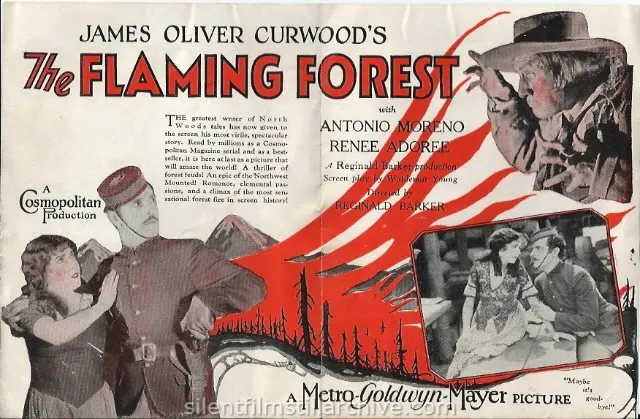
In this work, Reginald Barker explores the intersection of Romance and United States cultural identity. The meticulous attention to detail suggests a deep-seated commitment to pushing the boundaries of the medium, ensuring that The Flaming Forest remains a relevant topic of study for Romance enthusiasts.
| Cinematography | High-Contrast |
| Soundtrack | Diegetic |
| Editing | Rhythmic |
| Art Direction | Naturalist |
Visualizing the convergence of Reginald Barker's style and the core Romance narrative.
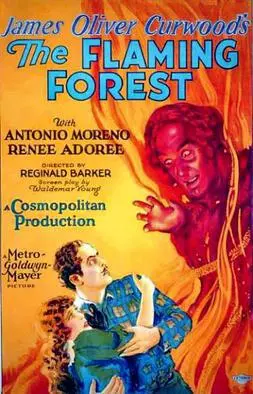
Jules Lagarre, a half-breed brigand, undertakes to dominate the Canadian Northwest with the aid of Indians and cutthroats. André Audemard, a trading post merchant, appeals to the government for help and is murdered by Lagarre's henchmen, Lupin and François, leaving his children, Jeanne-Marie and Roger. Lagarre attempts to establish himself as head of a provisional republic, but the Canadian government forms the Northwest Mounted Police to establish law and order. Jeanne-Marie persuades the settlers to remain, and she falls in love with Sergeant Carrigan. Roger murders Lupin and François in a rage, for the killing of his parents, and Carrigan comes to arrest him; as a result, Jeanne-Marie turns against him. Lagarre organizes an Indian attack on the post and orders the forest set afire to hem off the Mounted Police; however, the rescue is effected. Roger dies protecting Jeanne, and she is reconciled with Carrigan.
Decades after its release, The Flaming Forest remains a vital piece of the cinematic puzzle. Its influence can be seen in countless modern works, solidifying Reginald Barker's status as a master of the craft in United States and beyond.