
DbcultAccessing Vault...
Director's Spotlight
Senior Film Conservator
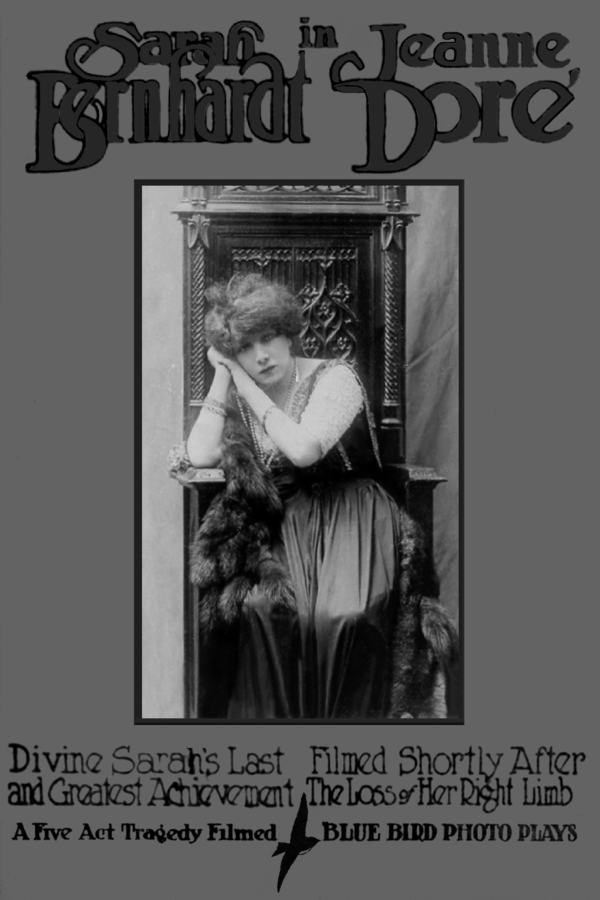
Director's Spotlight: France
A Deep Dive into the 1915 Vision of René Hervil
The brilliance of Jeanne Doré (1915) is inseparable from the visionary mind of its creator, René Hervil. Serving as a mirror to the anxieties of a changing world, it persists as a haunting reminder of our own cinematic history.
In Jeanne Doré, René Hervil pushes the boundaries of conventional narrative. The film's unique approach to its subject matter has sparked endless debates and interpretations among cinephiles and critics alike.
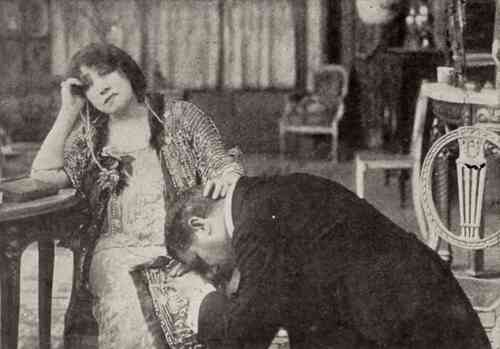
The visual language of Jeanne Doré is defined by its use of shadows and framing, a hallmark of René Hervil's style. By utilizing a 1915-era palette, the film creates an immersive experience that perfectly complements its cult themes.
| Cinematography | Deep Focus |
| Soundtrack | Synth-Heavy |
| Editing | Disjunctive |
| Art Direction | Baroque |
Visualizing the convergence of René Hervil's style and the core cult narrative.
Jeanne Doré's profligate husband is hopelessly addicted to gambling, and is threatened with expulsion from his club because of his heavy indebtedness to another gambler member. Confessing his disgrace to his wife (Mme. Bernhardt), she offers to save him from disgrace by selling her jewels. With the money thus obtained he goes to his club, determined to pay his debts and live up to the pledge he has made to his wife to gamble no more. However, the lure of the roulette wheel overcomes his resolve; he loses all his money on "just one more turn of the wheel," and rather than face his disgrace, commits suicide. Left with her young son to support, Jeanne Doré is forced to sell her remaining possessions and live as best she can until her husband's uncle takes pity upon her and buys for her a small stationery shop in Paris. Here mother and son prosper until the boy reaches early manhood. One day he falls suddenly and violently in love with a married woman, who comes to his mother's shop to make purchases. An intrigue with the unscrupulous female leads the young man to murder the same uncle who had befriended himself and mother. The youth, with the assistance of Jeanne Doré, makes good his escape. Well clear of immediate capture, the boy comes back to the scene of his crime and succeeds in his efforts to once more affect a liaison with his mistress. By accident he is discovered and captured, thrown into jail, is tried and convicted of the murder and sentenced to the guillotine. Even in these desperate straits he seeks to gain some response to his affection for the woman, who promptly spurned and repudiated him. He prevails upon his devoted mother to become a messenger in his service and her appeals, likewise, fall upon deaf ears. Instead of telling the boy that her quest has been fruitless, Jeanne Doré goes to the prison herself, on the evening before the boy's neck is to be given to the knife, and poses as the woman he had expressed himself, to his own mother, as the one he most wished to see. The boy goes to the guillotine, and the final scene depicts the devoted mother in the extreme agony of watching, from a window across the street, the execution of her son.
Decades after its release, Jeanne Doré remains a vital piece of the cinematic puzzle. Its influence can be seen in countless modern works, solidifying René Hervil's status as a master of the craft in France and beyond.