Summary
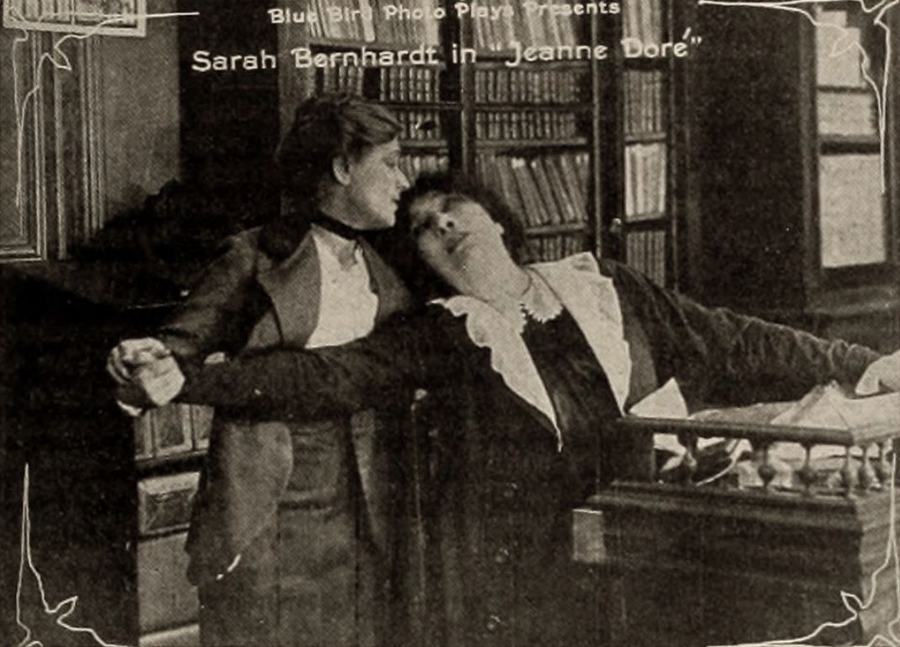
An absinthe-tinged Parisian fever-dream, Jeanne Doré unspools like a fin-de-siècle Stations of the Cross performed in a gambling den: a wastrel husband melts family diamonds into roulette chips, then into gun-metal; the widow peddles her last shimmer of lace to buy a monk-colored stationery shop where ink becomes bread; the son, nursed on paper dust and absences, forges his first love letter with the same hand that will plunge a knife into the uncle who once balanced the ledger of their lives. The mise-en-abyme of betrayals—husband to wife, lover to lover, mother to self—echoes down cobblestone corridors until the guillotine’s blade snaps the final reflection. Sarah Bernhardt’s Jeanne, a marble Madonna cracked by grief, ends the film framed against a garret window, her silhouette a paper-cutout pietà as the crowd below roars for blood that is both hers and not hers.
Synopsis
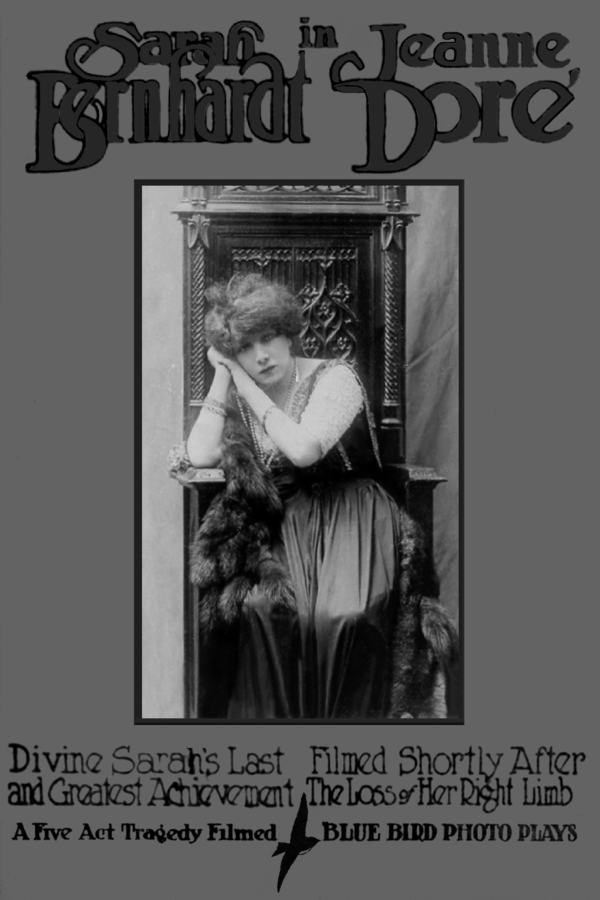
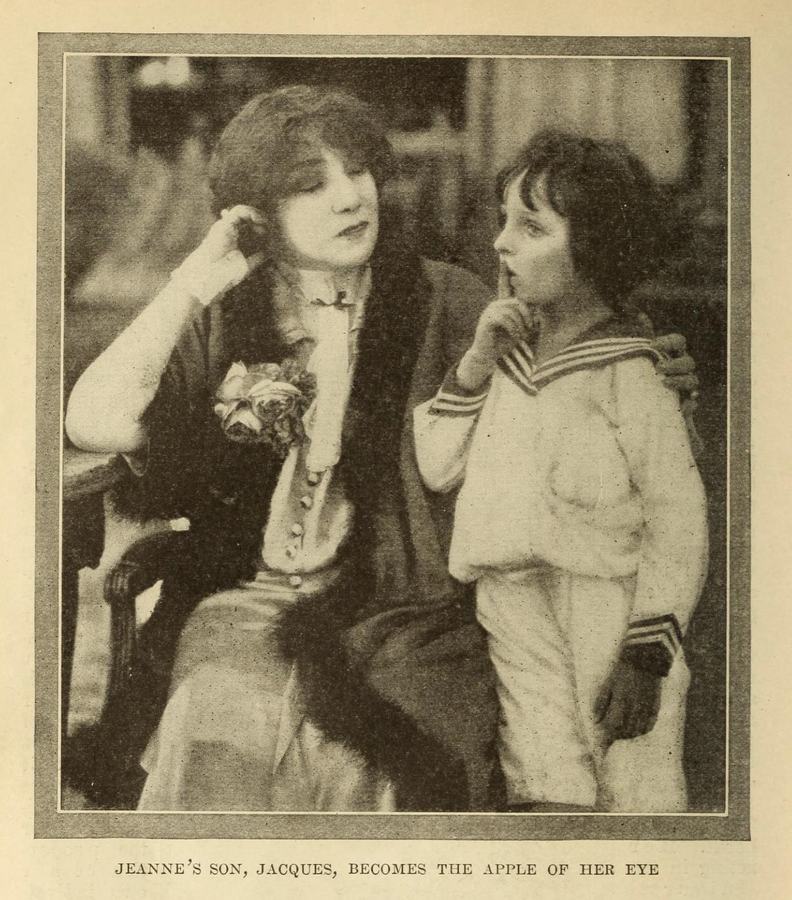
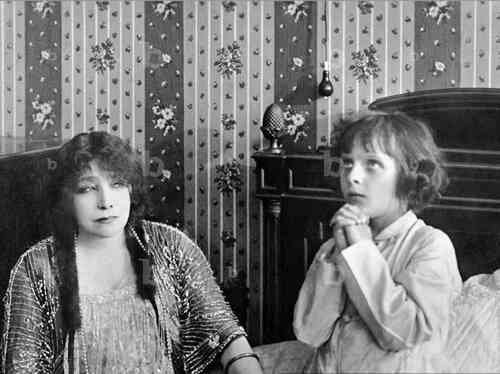
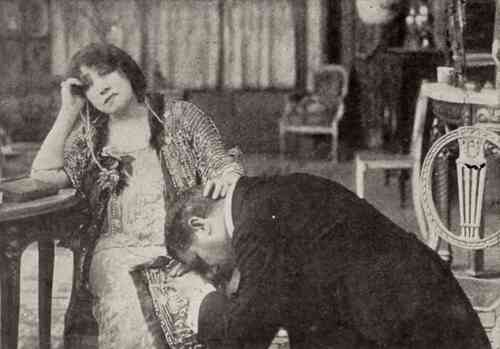
Jeanne Doré's profligate husband is hopelessly addicted to gambling, and is threatened with expulsion from his club because of his heavy indebtedness to another gambler member. Confessing his disgrace to his wife (Mme. Bernhardt), she offers to save him from disgrace by selling her jewels. With the money thus obtained he goes to his club, determined to pay his debts and live up to the pledge he has made to his wife to gamble no more. However, the lure of the roulette wheel overcomes his resolve; he loses all his money on "just one more turn of the wheel," and rather than face his disgrace, commits suicide. Left with her young son to support, Jeanne Doré is forced to sell her remaining possessions and live as best she can until her husband's uncle takes pity upon her and buys for her a small stationery shop in Paris. Here mother and son prosper until the boy reaches early manhood. One day he falls suddenly and violently in love with a married woman, who comes to his mother's shop to make purchases. An intrigue with the unscrupulous female leads the young man to murder the same uncle who had befriended himself and mother. The youth, with the assistance of Jeanne Doré, makes good his escape. Well clear of immediate capture, the boy comes back to the scene of his crime and succeeds in his efforts to once more affect a liaison with his mistress. By accident he is discovered and captured, thrown into jail, is tried and convicted of the murder and sentenced to the guillotine. Even in these desperate straits he seeks to gain some response to his affection for the woman, who promptly spurned and repudiated him. He prevails upon his devoted mother to become a messenger in his service and her appeals, likewise, fall upon deaf ears. Instead of telling the boy that her quest has been fruitless, Jeanne Doré goes to the prison herself, on the evening before the boy's neck is to be given to the knife, and poses as the woman he had expressed himself, to his own mother, as the one he most wished to see. The boy goes to the guillotine, and the final scene depicts the devoted mother in the extreme agony of watching, from a window across the street, the execution of her son.
Review Excerpt
"
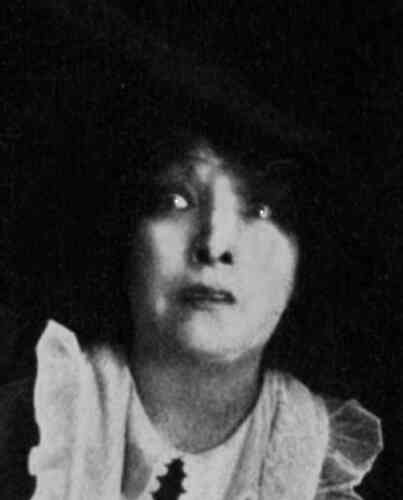
Paris, 1916. The city gaslights flicker like bad conscience while roulette wheels spin inside gilded tombs called clubs. Into this chiaroscuro steps Jeanne’s husband—nameless, faceless, a mere appendix of appetite—clutching promissory notes that smell of lilac and rot. One cut to a close-up of Sarah Bernhardt’s face—ivory, angular, already a death-mask—and you know the film will not forgive anyone.
The first act moves with the inevitability of melting ice: jewels cascade from velvet trays into..."