
DbcultAccessing Vault...
Director's Spotlight
Senior Film Conservator
Director's Spotlight: United States
A Deep Dive into the 1915 Vision of René Plaissetty
Analyzing Her Great Match (1915) requires a deep dive into the defining moment in cult history that René Plaissetty helped create. Defining a new era of United States artistic expression, it transcends regional boundaries to tell a universal story.
In Her Great Match, René Plaissetty pushes the boundaries of conventional narrative. The film's unique approach to its subject matter has sparked endless debates and interpretations among cinephiles and critics alike.
The visual language of Her Great Match is defined by its use of shadows and framing, a hallmark of René Plaissetty's style. By utilizing a 1915-era palette, the film creates an immersive experience that perfectly complements its cult themes.
| Cinematography | Static |
| Soundtrack | Experimental |
| Editing | Elliptical |
| Art Direction | Expressionist |
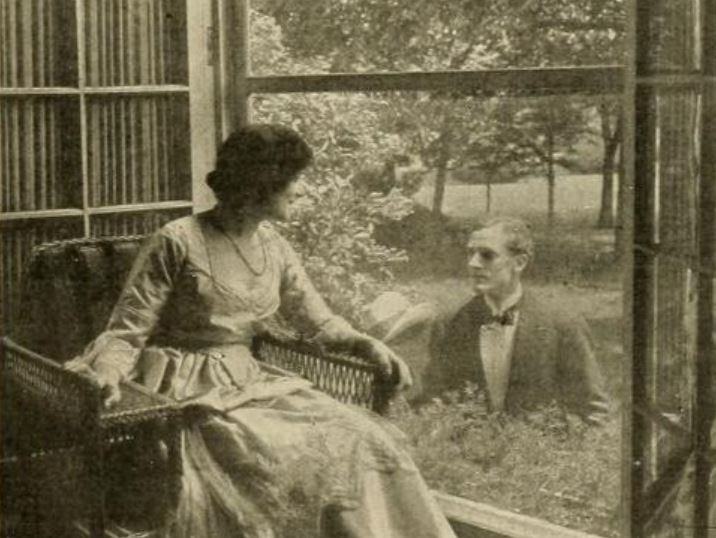
Visualizing the convergence of René Plaissetty's style and the core cult narrative.
Prince Adolph of Syravia, while on a pleasure trip through America, meets Jo Sheldon, a charming American girl. Some time later, at a Charity Fete, they again meet and fall in love. Mrs. Sheldon, Jo's stepmother, being deeply in debt, and unable to repay her creditors, forges Jo's signature to a note for the amount of her debts and gets the money from a Mr. Bote, a friend of the family and very wealthy, whose one ambition in life is to have the title of a Baron. The condition of the note is that Jo marry the Prince and have him bestow the title upon Bote. The Duchess Louise, worried by the love of Jo and the Prince, explains to him that he will be able to marry Jo, only by a morganatic marriage. When the Prince proposes this to Jo, she indignantly refuses. Mr. Bote, hearing of this, tells Jo that he will stop payment on the check and send her father and stepmother to prison. Jo, knowing nothing of the note, goes to her stepmother for an explanation, whereupon after being told everything, she agrees to the marriage to save her father. In the meanwhile, the Prince receives a decoy message that his father, the King, is dying. He informs Jo that he must leave immediately, and asks her to await his return. On reaching there, and finding his father in the best of health, he persuades his younger brother to reign in his place, telling him of his love, then escaping for America, to sacrifice the throne and become an American citizen. Mrs. Sheldon cashes the check and runs off to a foreign port, while Jo leaves for the country where her father's factory is located. The King, on learning of his son's escape, sends one of his men to America, to persuade him to return and stop the marriage. The servant arriving there ahead of the Prince, secures a position in Mr. Sheldon's factory. Jo is seriously injured in an accident, caused by the King's servant, who tries to make a getaway, but is caught and severely punished. The story ends happily, with Jo's recovery and a marriage between her and the Prince.
Decades after its release, Her Great Match remains a vital piece of the cinematic puzzle. Its influence can be seen in countless modern works, solidifying René Plaissetty's status as a master of the craft in United States and beyond.