
DbcultAccessing Vault...
Director's Spotlight
Senior Film Conservator
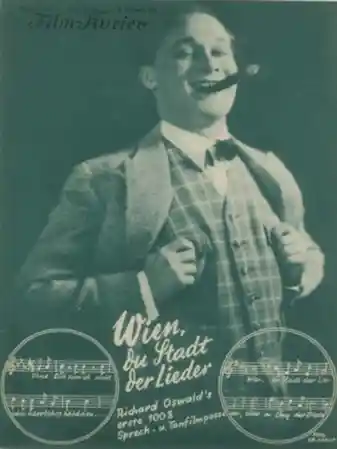
Director's Spotlight: Germany
A Deep Dive into the 1930 Vision of Richard Oswald
The 1930 release of Wien, du Stadt der Lieder marked a significant moment for the enduring legacy of Richard Oswald's artistic contribution to the genre. By challenging the status quo of 1930 cinema, it has cemented its place in the global cult cinema archive.
In Wien, du Stadt der Lieder, Richard Oswald pushes the boundaries of conventional narrative. The film's unique approach to its subject matter has sparked endless debates and interpretations among cinephiles and critics alike.
To fully appreciate Wien, du Stadt der Lieder, one must consider the cinematic climate of 1930. During this period, Germany was undergoing significant artistic shifts, and Richard Oswald was at the forefront of this Comedy movement, often challenging established norms.
| Cinematography | High-Contrast |
| Soundtrack | Diegetic |
| Editing | Elliptical |
| Art Direction | Expressionist |
Visualizing the convergence of Richard Oswald's style and the core Comedy narrative.
This film was shot in Ufa-Ateliers Neubabelsberg, intermittently from late January 1930 through early March of the same year. In all, the shooting added up to 15 days. On March 24th 1930, the Censors (Filmprüfstelle Berlin) authorize it for projection (document: B. 25457, Jf). Richard Oswald's first full sound film, it premiered on April 3rd 1930. Breaking with the then popular wine, women and song genre by filling most of the main roles with leading stars from Berlin's cabaret scene (in particular Max Ehrlich, Siegfried Arno, Paul Morgan and Paul Graetz), this film immediately met with enormous public acclaim. Steffi is in love with the unemployed musician Pepi. Still, her father the musical instrument retailer, Ignaz Korn, wants her to marry one of his card playing buddies, the butcher Burgstaller. When the typesetter, Cäsar Grün, purposely misprints a winning lottery number in the newspaper, Korn and Burgstaller, thinking they have won, pay the drinks for everybody in the Bock Café and then give away their businesses. Once the misprint is corrected, there is great disappointment and despair. However, in the end, orderly relationships are re-established on all sides ...and, back at the musical instrument shop, Pepi and Steffi are sitting together blissfully, their wedding announcement in hand.
Decades after its release, Wien, du Stadt der Lieder remains a vital piece of the cinematic puzzle. Its influence can be seen in countless modern works, solidifying Richard Oswald's status as a master of the craft in Germany and beyond.