
DbcultAccessing Vault...
Director's Spotlight
Senior Film Conservator

Director's Spotlight: United States
A Deep Dive into the 1917 Vision of Richard Ridgely
The brilliance of Passion (1917) is inseparable from a monumental shift in cult filmmaking spearheaded by Richard Ridgely. Occupying a unique space between cult and pure art, it serves as a blueprint for future generations of cult directors.
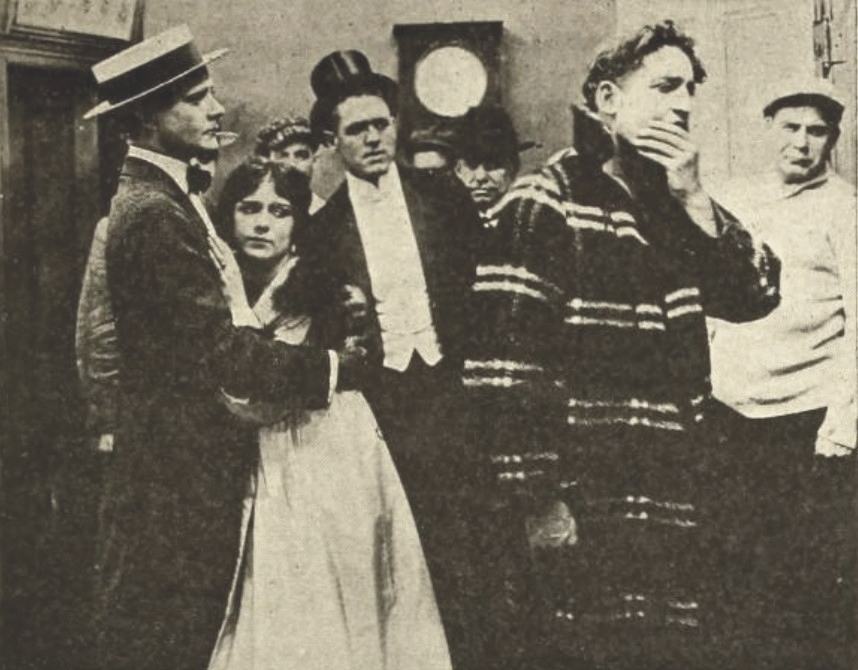
In Passion, Richard Ridgely pushes the boundaries of conventional narrative. The film's unique approach to its subject matter has sparked endless debates and interpretations among cinephiles and critics alike.
| Cinematography | Deep Focus |
| Soundtrack | Minimalist |
| Editing | Disjunctive |
| Art Direction | Baroque |
Visualizing the convergence of Richard Ridgely's style and the core cult narrative.
Escaping from "Pride," Eve Leslie next is tempted by the sin of "Passion." Eve goes to Coney Island and there sees Leonidas, a handsome strong man who is appearing in an athletic exhibition which includes a number or diving girls. In spite of Adam Moore's protests, Eve contrives to meet Leonidas, who employs her as a member of his troupe. Leonidas is a despicable person always posing, but Eve does not realize that. She does not know, either, that Leonidas is married and that he has practically deserted his wife. Eve finds herself in rough company. She thinks she loves Leonidas and she is blind to real conditions. She surmounts one difficulty after another, she passes through a series of thrilling scenes culminating with the evening at Madison Square Garden when Leonidas defeats the world's champion wrestler in a grueling battle. Through Adam's aid, Eve, who has unconsciously got herself into a terrible predicament, is saved from herself just as she was about to marry Leonidas, who had cast off his wife.
Decades after its release, Passion remains a vital piece of the cinematic puzzle. Its influence can be seen in countless modern works, solidifying Richard Ridgely's status as a master of the craft in United States and beyond.