
DbcultAccessing Vault...
Director's Spotlight
Senior Film Conservator
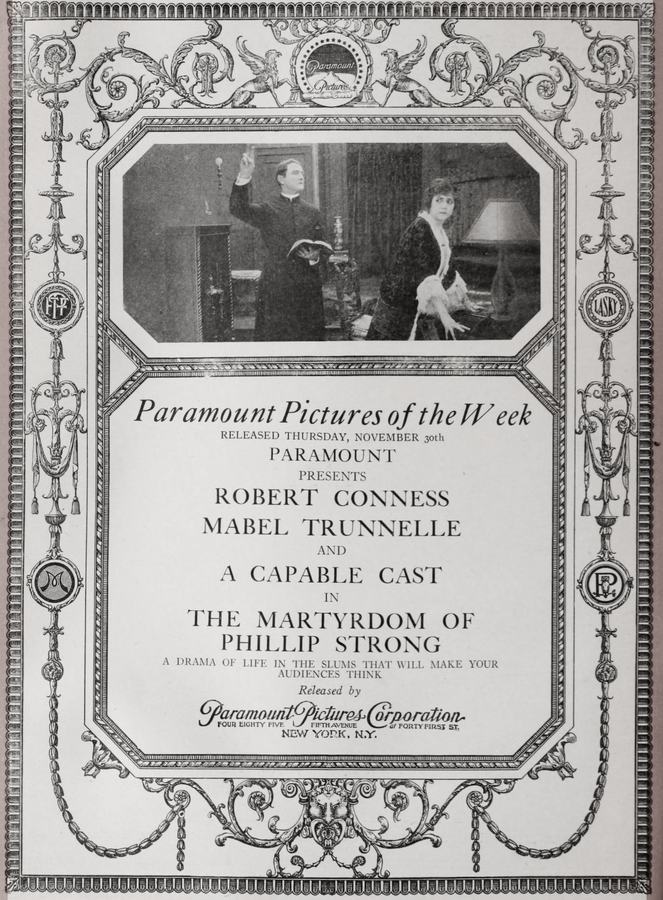
Director's Spotlight: United States
A Deep Dive into the 1916 Vision of Richard Ridgely
The evocative power of The Martyrdom of Philip Strong stems from the unique collaboration between the subversive storytelling techniques employed by Richard Ridgely in 1916. Synthesizing the best elements of United States and international cinema, it reminds us of the fragility and beauty of the 1916s.
In The Martyrdom of Philip Strong, Richard Ridgely pushes the boundaries of conventional narrative. The film's unique approach to its subject matter has sparked endless debates and interpretations among cinephiles and critics alike.
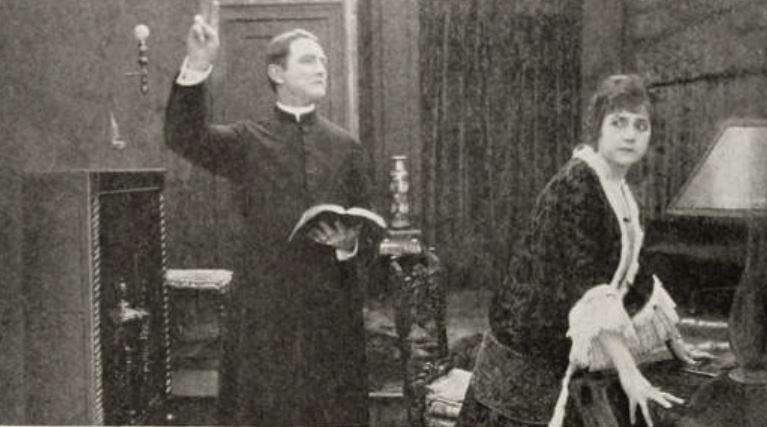
The visual language of The Martyrdom of Philip Strong is defined by its use of shadows and framing, a hallmark of Richard Ridgely's style. By utilizing a 1916-era palette, the film creates an immersive experience that perfectly complements its cult themes.
| Cinematography | Noir-Inspired |
| Soundtrack | Minimalist |
| Editing | Slow-Burn |
| Art Direction | Brutalist |
Visualizing the convergence of Richard Ridgely's style and the core cult narrative.
"Man, you are a living lie." Thus is Philip Strong, the rising young pastor of a fashionable Calvary Church, addressed by Brother Man (symbolizing the Spirit of Christ on earth). Surrounded by luxury, lionized by a wealthy congregation, Philip Strong suddenly realizes the force of these words. He has been preaching the doctrines of Christ, but his work has been the work of bare words only. To prove the truth of what he says. Brother Man leads Philip to the slums, and shows him the misery and squalor of a world which he has never known. The starving women and children, the kitchens of Hell where whiskey ruins the lives of men, impresses Philip deeply. He sees his real mission in life. He must help the downtrodden. Sarah, Philip's wife, wrapped in her social ambition, is horrified when Philip announces his determination. She refuses to permit her little daughter, Irma, to play with an orphaned child of the slums, whom Philip has brought home to shelter. She pleads with Philip to give up his new work. It means ruin and social ostracism. She scolds and bursts into a rage of fury, but Philip is firm. Goaded on by her mother, who pictures the disgrace of Philip's close association with the slums, Sarah leaves the home, taking Irma with her. Time finds Philip living in the slums, immersed in his work. Fighting the battle of the downtrodden, he arouses the hate of powerful forces. The rich of his congregation, owning the properties which house saloons, and the owners of these saloons, combine to bring about his downfall. Undaunted by threats of personal harm, he wages his war. Cheered by Brother Man in the moments when things seem most hopeless, he fights his battle with new energy. His friends gone, his little daughter dead, the wife whom he loves opposing him, he fights on. Scenting an opportunity to discredit him, the interests cause Sarah to believe that Loreen, a consumptive derelict, whom he has redeemed and sheltered in his home, is his mistress. The story is disproved and Sarah relents, but too late. The body bearing the spirit of Philip is not equal to the task. Wrecked by worry and ill-health, he gives up his life and his soul passes to the One Whose work he has been doing, and like Whom he has been crucified.
Decades after its release, The Martyrdom of Philip Strong remains a vital piece of the cinematic puzzle. Its influence can be seen in countless modern works, solidifying Richard Ridgely's status as a master of the craft in United States and beyond.