
DbcultAccessing Vault...
Director's Spotlight
Senior Film Conservator
Director's Spotlight: United States
A Deep Dive into the 1927 Vision of Richard Rosson
The 1927 release of Shootin' Irons marked a significant moment for the enduring legacy of Richard Rosson's artistic contribution to the genre. By challenging the status quo of 1927 cinema, it has cemented its place in the global cult cinema archive.
In Shootin' Irons, Richard Rosson pushes the boundaries of conventional narrative. The film's unique approach to its subject matter has sparked endless debates and interpretations among cinephiles and critics alike.

In this work, Richard Rosson explores the intersection of Drama and United States cultural identity. The meticulous attention to detail suggests a deep-seated commitment to pushing the boundaries of the medium, ensuring that Shootin' Irons remains a relevant topic of study for Drama enthusiasts.
| Cinematography | Noir-Inspired |
| Soundtrack | Diegetic |
| Editing | Rhythmic |
| Art Direction | Naturalist |
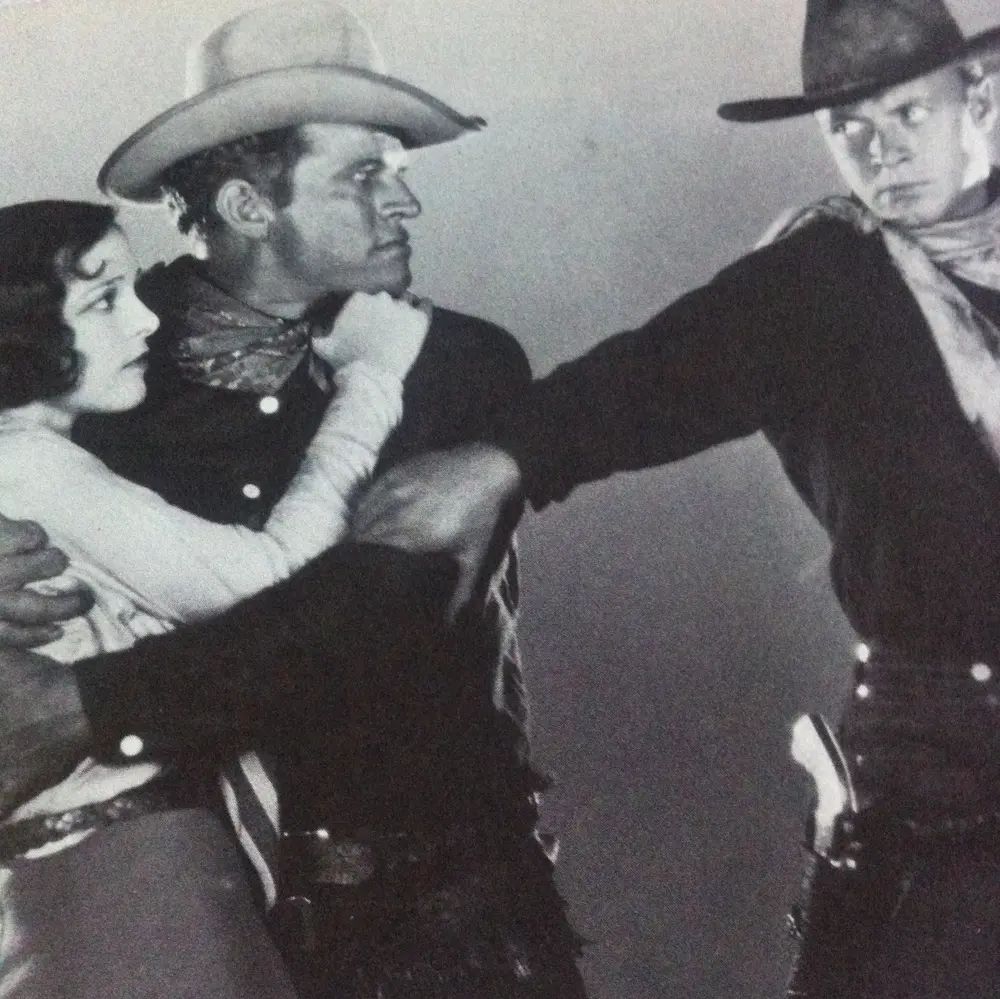
Visualizing the convergence of Richard Rosson's style and the core Drama narrative.
Pan Smith, a young Montana rancher, rescues Jim Blake and his daughter Lucy from a stampede of wild horses and invites the squatters to be his guests. Pan falls in love with Lucy, but rivalry develops soon between him and Dick Hardman, his foreman. At a barn dance, Pan learns from Lucy that her father is being hunted for a bank theft, though she knows him to be innocent; to stall the sheriff, Pan holds up the stage and while hiding the dispatch box, containing incriminating papers, is observed by Dick. Dick informs the sheriff and organizes a posse just as word reaches the judge that Blake is innocent. Dick then proceeds to overtake the posse, his arrival terminates the battle, and Pan is united with Lucy.
Decades after its release, Shootin' Irons remains a vital piece of the cinematic puzzle. Its influence can be seen in countless modern works, solidifying Richard Rosson's status as a master of the craft in United States and beyond.