
DbcultAccessing Vault...
Director's Spotlight
Senior Film Conservator

Director's Spotlight: United States
A Deep Dive into the 1918 Vision of Richard Stanton
The artistic breakthrough represented by Rough and Ready in 1918 highlights the uncompromising vision of Richard Stanton that defines this cult masterpiece. In the context of United States's rich cinematic history, it captures a specific kind of cinematic magic that is rarely replicated.
In Rough and Ready, Richard Stanton pushes the boundaries of conventional narrative. The film's unique approach to its subject matter has sparked endless debates and interpretations among cinephiles and critics alike.
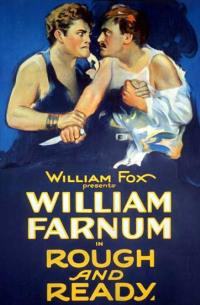
In this work, Richard Stanton explores the intersection of cult and United States cultural identity. The meticulous attention to detail suggests a deep-seated commitment to pushing the boundaries of the medium, ensuring that Rough and Ready remains a relevant topic of study for cult enthusiasts.
| Cinematography | Handheld |
| Soundtrack | Diegetic |
| Editing | Elliptical |
| Art Direction | Expressionist |
Visualizing the convergence of Richard Stanton's style and the core cult narrative.
In New York, Bill Stratton saves a friend's marriage, but Bill's fiancée, Evelyn, misinterprets the situation and believes Bill to be unfaithful to her. She breaks her engagement, and Bill, in remorse, goes to Alaska. In the town of Yellow Gulch, Bill meets "Silver" Jack Belmont, the man responsible for nearly ruining the marriage of Bill's friend. Bill also learns that an old miner named "Lucky" Matthew Durant is Evelyn's father. Durant has been lying to his daughter, claiming he is rich. Bill tells Evelyn the truth about her father, but she does not believe him. Instead, she believes Belmont when he says he will take her to her father's mine. Eventually, Bill and Belmont confront each other and Bill defeats Belmont in a fight. Bill then reconciles Evelyn and her father.
Decades after its release, Rough and Ready remains a vital piece of the cinematic puzzle. Its influence can be seen in countless modern works, solidifying Richard Stanton's status as a master of the craft in United States and beyond.